
Sheffield AI expert explains what needs to happen as GPs and police introduce chatbots

“Including your public, whoever they are, in the decisions is really important”
An AI expert working with councils across the country has said that it is “really important” the people are involved in discussions about how the new technologies are introduced into public sector organisations.
Dr Susan Oman works as a senior lecturer at the University of Sheffield, while also offering consultations with councils about the developing technology and supporting the “Let’s Talk AI” educational campaign.
Her work has become increasingly important as public services continue to adopt AI options in an effort to streamline their work.
.jpeg?trim=0,0,0,0&width=640&quality=65)

GP surgeries in Sheffield are now utilising AI receptionists, while the Government has labelled Barnsley as the UK’s first ‘Tech Town’ with it understood that data centres and new tech infrastructure could be coming developed there.
“It's very important to think about how AI enabled technologies, there are multiple of them, and some of them really do help people in ways that are really important,” Dr Oman said.
“But I also think, and in fact I know, that one of the issues that we have with the way that the public sector is dealing with AI and digital progress in general is it's not including the public with it.”
She claims that public organisations are not consulting with people about how they would like to see AI deployed, instead opting for an approach of “let's just do it and beg forgiveness or let's do it and hope that it will be okay.”
The University of Sheffield is hosting a public ‘Understanding AI’ meeting on November 7 - find out more here
“Rather than investing a lot of money in deploying a chatbot system with your local residents [...] ask them if they want it,” she continued.
“You know they're going to say no - save yourself the money, instead of paying for something that no one wants that you have to give up on somewhere down the line.”
Despite this, tech companies are selling the idea that AI can help improve public services’ efficiency and there’s increasing pressure from national and local government to adopt these technologies.
Dr Oman clarifies that these efficiencies are “for the public service rather than for those who use it.”
She went on to say: “When big tech organisations are going to public sector organisations, whether it's health services or social care or the local council, they are implying that it makes people's administrative jobs faster, easier, quicker.
“The current sell is ‘this is not to get rid of everyone's jobs because of course we don't want to make everyone redundant’. The sell is that this means that people have more time to actually be in care - you could spend more time with the actual patients because you'll spend less time on administrative things.
“What we don't have much evidence of is how these efficiencies - or so-called efficiencies - are distributing convenience to the actual customer or user.”
As such chatbots that are taking over receptionist duties at a number of GPs and now offering non-emergency advice for South Yorkshire Police may not in fact be making life easier for the public.
.jpeg?trim=0,0,0,0&width=640&quality=65)
“Every single one of us, in terms of common sense, knows that the things that are meant to make things more convenient just very rarely do,” Dr Oman added.
Police introduced the AI assistant ‘Bobbi’ on October 1 and say that since then it has “dealt with hundreds of questions from members of the public.”
The force released a video explaining how to use the new tool, with a statement adding: “Bobbi provides a speedy alternative to calling 101 for general enquiries and advice, providing answers in seconds.
“Bobbi has not replaced our control room staff, and we have a team dedicated to responding to live chat enquiries that Bobbi can’t answer itself.
“For more complicated enquiries, Bobbi will connect you with one of our human Police Contact Operators.”
On a national level, Prime Minister Andy Burnham has said that the UK should be an “honest broker” for AI and has introduced a new Minister for Artificial Intelligence role in his cabinet.
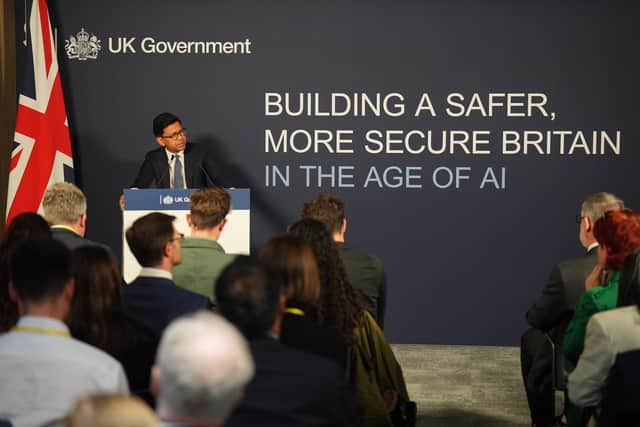
Dr Oman says that at the end of the day AI is a varied and complicated technology, that can have many positive and negative aspects.
However, she says that ultimately people should be free to have a say on how public sector organisations adopt AI tools in future.
“Including your public, whoever they are, in the decisions is really important,” she continued.
“Not just in terms of being a moral leader, as our dear Prime Minister wants us to be, but also it really means that the technology that you're providing or relying on will be better.”
- RELATED: 'Why the police are losing good officers' - Reader's letter
- RELATED: 'Emergency' as over 10,000 Sheffield children hospitalised with breathing problems
- RELATED: Green light for 8ft fence around school playing fields
- RELATED: Fire service issues "avoid area" warning after house fire breaks out