
'Tap and go' and live bus tracking could be on its way to Sheffield under Government's new transport strategy
Millions of passengers across England could soon benefit from simpler, cheaper and better connected journeys under a new national transport strategy launched today.
Millions of people across England could soon find it easier and cheaper to get around under the new Government transport plan.
The ‘Better Connected’ strategy aims to make journeys simpler by linking buses, trains and trams more effectively.
Below are the major changes that have been outlined.
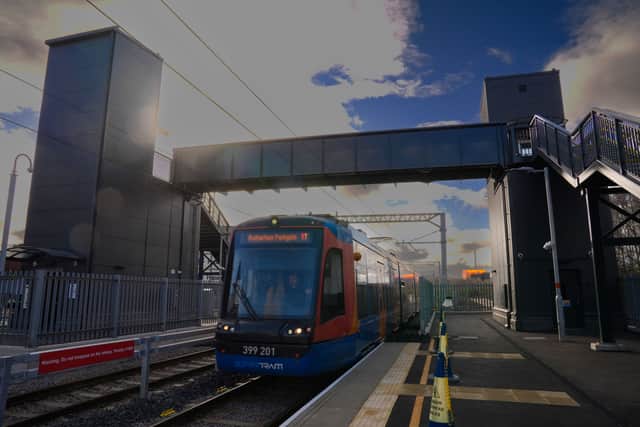

Tap-and-go travel could come to South Yorkshire
One of the biggest changes is the expansion of contactless “tap-and-go” travel.
This means passengers could use their bank card to move between buses, trains and trams without needing separate tickets or apps.
This system already works in places like London, Liverpool and Nottingham, and could now be introduced in more areas.
Max Sugarman, Chief Executive, Intelligent Transport Systems UK, said: “Technology has the power to bring different modes of transport together into one seamless network, providing smoother and easier journeys for the travelling public.
More control for local transport leaders
While local leaders will continue to decide whether to invest in contactless, tap-and-go travel, the Government has made it easier than ever by providing back-end technical support and long-term funding to bring it to their towns and cities.
To help local areas go further, the Government is also launching £40 million in new funding for local authorities to trial digital technologies to improve transport, reduce congestion and ease disruption.
Alongside these new features, the Government is also publishing new Local Transport Plan guidance giving local leaders clear blueprints for building joined-up transport, making the most of their funding and boosting local growth.
Recent measures like the rail fare freeze, bus fare cap and frozen fuel duty are also part of plans to make travel more affordable.
Live bus tracking on Google Maps
Passengers will also be able to track their bus in real time using Google Maps.
This is expected to be especially helpful in rural areas, where services are less frequent and harder to plan around.
Sarah-Jayne Williams, Director of Geo Partnerships at Google Maps, said: “By integrating real-time bus information across England into Google Maps, we are giving millions of passengers the confidence to plan their journeys accurately.
“This partnership with the Department for Transport ensures that whether you are heading to work or visiting friends, you have accurate, live arrival times right at your fingertips.”
Easier parking for drivers
Drivers could also see improvements, with changes to parking apps.
A new system will allow people to use any parking app at participating car parks, instead of downloading a different one each time.
RAC head of policy Simon Williams said: “These new ratings are a positive move that will help drivers understand how councils are performing when it comes to improving the state of local roads. While there are examples of good road maintenance practice taking place, this isn’t consistent across the country and means drivers have for too long been left with substandard roads.
“We hope this initiative, plus the promise of longer-term funding for councils to allow them to plan and carry out much-needed preventative maintenance, means we’re finally on the way to having smoother, better roads."
Peak District trial could benefit nearby areas
A £6 million pilot scheme in the Peak District’s Hope Valley will test better rural bus services.
Called the ‘Mini Switzerland’ project, it will look at running buses more often and timing them to connect with trains, helping both local people and tourists.
Mayor of the East Midlands, Claire Ward said: “This £6 million investment is a major step forward for transport in the Peak District.
“It builds on the work we’re already leading to improve connectivity for rural communities and shows that places like the Hope Valley can have the ambition and reliability people expect in our cities.
“Working with partners, we’re strengthening links across the Peak District. This ‘Mini Switzerland’ pilot goes further by joining up buses and trains through coordinated timetables and easier connections - so people can rely on public transport as a genuine alternative to the car.
“ If we can make this work in the Hope Valley, it can provide a blueprint for better rural transport across the region and beyond.”
Transport Secretary Heidi Alexander said: “For too long, getting from A to B has been more complicated than it needs to be.
“People want journeys to be easy and reliable. They want to be able to get off a train and straight on to a bus without having to battle through a confusing system or buy separate tickets for each part of their journey.
“That’s why we’re giving local leaders the powers to build transport networks that are simpler, more accessible and better connected, improving everyday journeys and supporting growth in every corner of the country.”