
"I had tinnitus, but when I was referred to a neurosurgeon my world fell apart": Man’s tinnitus leads to brain tumour diagnosis
A man has been diagnosed with an inoperable brain tumour after initially seeking help for tinnitus.
Darren Harris, 59, was referred for a routine hearing test two years after developing tinnitus, following advice from his GP.
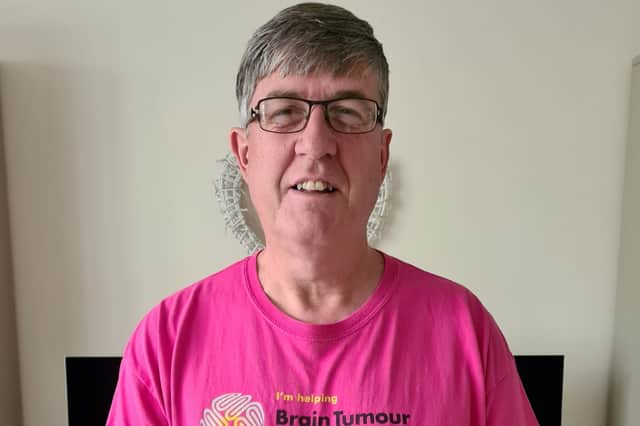

Although early treatments offered some relief, doctors ordered a series of MRI scans which ultimately revealed a tentorial meningioma - a slow-growing, low-grade tumour located at the base of his brain that could not be surgically removed.
Darren, a retired IT functional analyst from Paignton, said: “I had tinnitus for a couple of years, and my doctor sent me for a hearing test.
“They did a few treatments that helped and did an MRI, but then I was called back for more MRIs, one after another.
“I knew something wasn’t right, but no one would tell me why. When I was finally referred to a neurosurgeon, my world fell apart.
“They told me I had a brain tumour.”
Darren underwent gamma knife radiosurgery at BMI Thornbury Hospital in Sheffield, a procedure costing £35,000 that uses targeted radiation to destroy tumour cells while minimising damage to surrounding tissue.
The treatment required a metal frame to be fixed to his skull to keep him completely still, while specialists mapped the tumour in three dimensions and precisely targeted it.
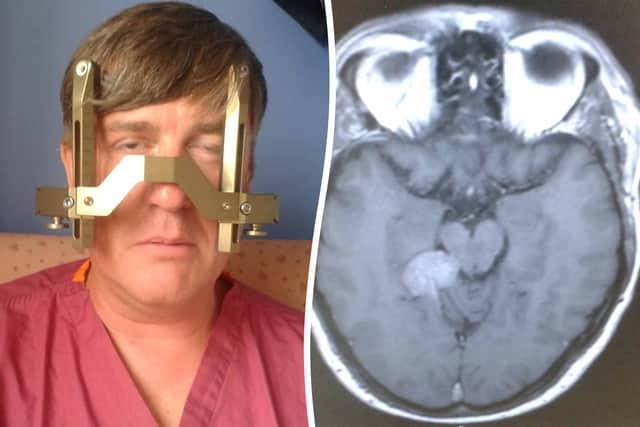
While the treatment successfully controlled the tumour, Darren later developed epilepsy and lost his driving licence.
He was also diagnosed with atrial fibrillation, a heart condition doctors believe was triggered by the physical stress of repeated seizures.
Since then, he has required several heart procedures and continues to experience neurological symptoms, including visual impairment and pins and needles down the left side of his body.
To mark a decade since his diagnosis, Darren and his wife Sharon, 57, organised a fundraising evening in aid of Brain Tumour Research.
The event, which featured meditation, spiritual messages and a tombola, raised more than £800.
Darren said: “Reaching 10 years since my brain tumour diagnosis is something I never take for granted.
“I know how incredibly lucky I am to still be here, and that’s only because of the treatments and knowledge we have today.
“But too many people aren’t as fortunate, and that’s why funding into brain tumour research is absolutely vital.
Darren reflected on the need for affordable options:
“The treatment cost £35,000. Luckily, I had private health insurance, but many families can’t afford that.
“We need more research and funding so that everyone can access the best treatments.”
Darren said raising more than £800 allowed him to do something positive.
He added: “It’s been a long road, but we believe in giving back.
“For anyone at the start of their brain tumour journey, take one day at a time and listen to your surgeons.
“For those that can, please donate to the Brain Tumour Research Christmas Appeal.”
Brain Tumour Research funds long-term research at specialist centres across the UK and continues to campaign for a national annual spend of £35 million to improve survival rates and patient outcomes, bringing them in line with cancers such as breast cancer and leukaemia.
Letty Greenfield, community development manager at Brain Tumour Research, said: “Darren’s courage and willingness to share his experience helps raise awareness of the need for greater investment in brain tumour research and improved access to life-saving technology.
“We hope that Darren’s story inspires others to support our Christmas appeal.”
To support Brain Tumour Research and donate to the Christmas Appeal, visit: https://braintumourresearch.org/pages/give-hope-this-christmas