
Protest group asks if family fun at Sheffield lamb feeding creates money-making demand for orphaned sheep

A protest group worries a family fun experience feeding baby lambs at a Sheffield farm reflects a meat industry that creates too many orphaned sheep.
Graves Park Animal Farm relaunched its lamb feeding experience in January this year, where visitors can pay £10 to bottle feed a motherless baby sheep.
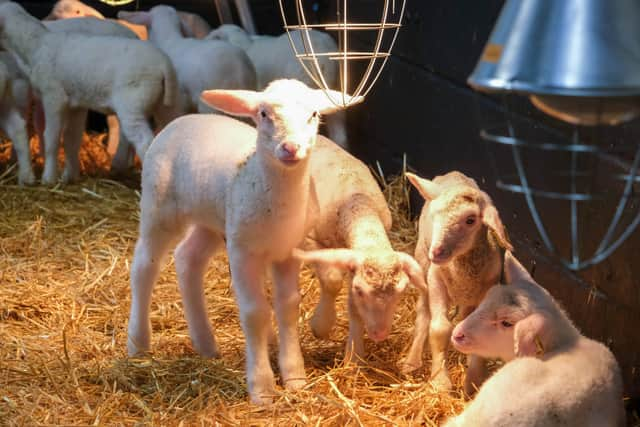

With 26 lambs to feed four-times-a-day, the experience has quickly become one of the free-to-enter working farm’s best yearly fundraisers.
However, a protest group from Animal Solidarity Sheffield convened outside the farm on March 30 and April 3 with questions about the practice.
The activists fear the experience is a symptom of a meat industry that overbreeds sheep, produces too many orphaned lambs - and could lead to a nationwide incentive where motherless animals are more profitable than otherwise.
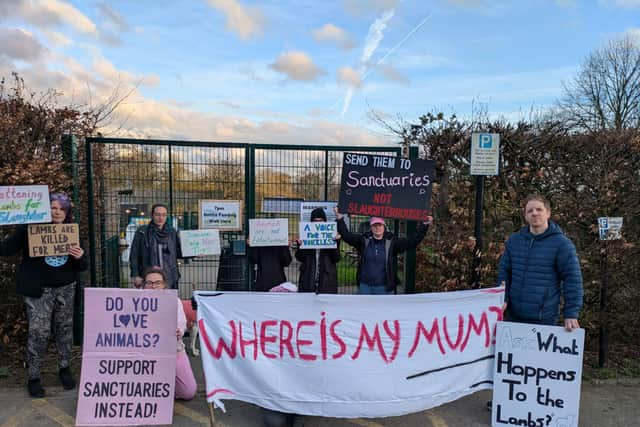
Member Jonathan Hogarth said: “We’re not here to be critical of Graves Park, as it has its operating costs.
“For years I thought lamb feeding was a sweet, caring act to do for kids to enjoy.
“But over time, we need to ask, ‘is it genuine? Is it caring? Or is it quite profitable for there to be more orphaned lambs?
“The meat industry is a system where sheep are overbred and can have triplets, but where the mother only has two teats.
“It eventually takes more work to keep that mother with her lamb than to move the lamb away, and feeding experiences like this make a ready-made market.
“We want transparency over where these lambs come from, where they go, and for the public to ask questions about what kind of system leads to 26 orphaned lambs with no mothers that need feeding like this, and how monetising it with feeding experiences does not solve that problem.”
Spring lambs for meat are typically slaughtered between three to five months old.
The Star contacted Sheffield City Council to ask whether the lambs from the feeding experience are slaughtered, and where the farm sources them.
A spokesperson said after bottle feeding, the lambs are weaned onto grass and “are either kept on the farm or rehomed.”
Lambs may then be sold directly to local farmers in contact with the council, including those who keep sheep as pets.
Lambs may also be sold through Bakewell market, which is a livestock auction and not a slaughterhouse.
Meanwhile, the lambs for the feeding experience are reportedly sourced from local farmers with larger flocks, where there is a “higher likelihood of triplets, orphaned lambs, or ewes unable to feed.”
The spokesperson claimed farmers will usually attempt to foster orphan lambs onto ewes with single lambs before bottle feeding.
They added that ewes may be unable to rear lambs for several reasons, including mastitis, ill health, or unsuitable temperament.