
Sheffield grandmother 'trapped' in three-bed council house after daughter moves into care
A Sheffield grandmother says she is trapped in a council home that no longer meets her needs after her daughter, who has Huntington’s disease, was moved into residential care - leaving her unable to downsize without risking being classed as homeless.
Denise Spray was given her current three-bedroom council property with a disabled-access wet room to support her daughter Zoe, who has lived with Huntington’s disease for more than a decade.
As Zoe’s condition progressed, she eventually moved permanently into a live-in care centre. Huntington's disease is an inherited condition that affects movement, thinking and mood, according to the NHS. It gets worse over time and cannot currently be cured.
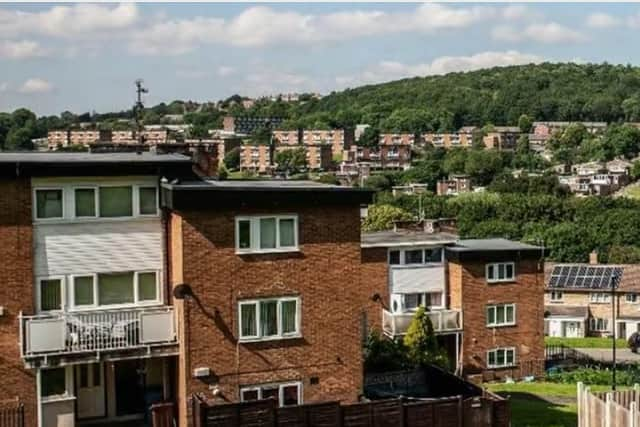

With her daughter no longer living at home, Denise says she wants to move into a smaller, more suitable property through a mutual exchange.
But she says she has been told the tenancy cannot be changed without ending it entirely - which could result in her being deemed ‘intentionally homeless’.
She said: “I worked in the NHS all my life as an occupational therapist, but now, when I finally need the system I feel like I’m being let down.”
Her current home includes adaptations she says she no longer needs, but which would be vital for another family.
Denise has independently set up a property swap with another family with four children - currently living in a two-bedroom property.
One member of that family has struggled with sepsis, and Denise says the wet room and accessibility features would better suit their needs.
Despite both households agreeing to the exchange, she says it cannot be completed because Zoe remains named on the tenancy, despite holding power of attorney for her daughter.
As a result, Denise says she feels stuck - unable to complete the exchange, but unable to safely leave the property without risking losing her home altogether.
This is particularly difficult for Zoe's son, Declan, 16, who Denise is the legal guardian for.
She says remaining in the family home has also been difficult for Declan, who still associates it strongly with his mother.
“He still sees this as his mum’s house,” she said.
“To live a more normal life, we need to move out. He sees his mum every Sunday, and she lights up when she sees him, but it’s especially hard for him coming back here.”
Alongside this, Denise continues to pay full rent.
“There’s no common sense in this situation, I’m just trying to do the right thing,” she said.
Sheffield South East MP Clive Betts has taken up Denise’s case and has been in contact with Sheffield City Council’s housing and legal teams in an attempt to find a solution.

He said the case had become entangled in a “muddle” of housing policy and tenancy law.
“Unfortunately, Sheffield Council appear to lack the drive or the imagination to find a way through this mess of their own making,” he said.
Mr Betts said Denise had acted responsibly by seeking to downsize, which would allow her to remain within her local community and existing support network, while also freeing up a larger family home at a time when the council faces a severe shortage of three and four-bedroom properties.
“It is totally unacceptable to leave Mrs Spray in the position she currently finds herself, in a home too large for her needs, and to deny another local family a home,” he said.
Sheffield City Council has confirmed officers have been in contact with Denise and her MP and have explained the steps required for the request to progress.
Council guidance states that mutual exchanges are a formal legal process requiring written consent and signatures from all parties involved and, in some cases, must be completed through a legal deed of assignment.
In this case, Zoe is unable to consent to the swap.
The council says officers have advised that an application to the Court of Protection may be required to allow the exchange to proceed and that officers will continue working with all parties to resolve the matter as quickly as possible.