
Tackling damp and mould: How Rotherham Council is turning the tide on housing disrepair

On a sunny morning in Thrybergh, Mark Ryalls steps into the home of a council tenant, ready to tackle a seemingly small but persistent problem: mould.
With 35 years of experience under his belt, Mark, a technical officer with Rotherham Metropolitan Borough Council, is no stranger to the challenges of maintaining healthy homes for tenants.
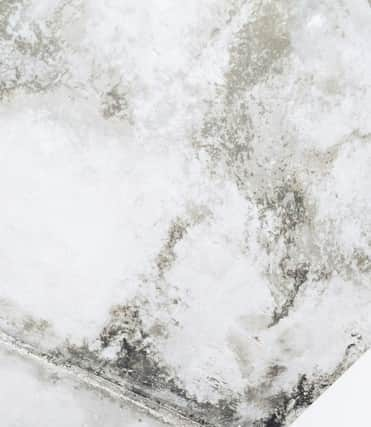
As soon as he enters, his keen eye spots a patch of mould in a corner—a problem the tenant only noticed after shifting some furniture. Without missing a beat, Mark measures the moisture levels in the walls and skirting boards, quickly ruling out rising damp.
“The tenant’s telling me she’s cleaned and it’s come back,” Mark explains, as he expertly treats the patch of mould with a specialist cleaner, and explains that the job will be referred to an external team to make sure these both walls get a proper anti-mould treatment.

Mark takes a moment to inspect the tenant’s fans and ensure there are no other repairs needed. It’s all part of the job—making sure that tenants are not just kept safe from the damaging effects of mould, but also from the frustration of ongoing repairs that never seem to solve the problem.
Damp and mould issues in council and social housing have become a growing concern in the UK, drawing increased attention following high-profile cases that highlighted the dangerous health implications and the poor living conditions some tenants face. A tragic case in 2020, where two-year-old Awaab Ishak died from mould-related health complications in a social housing flat in Rochdale, acted as a wake-up call for both local authorities and the general public.
In response to these rising concerns, the UK government and local authorities have begun to implement new policies and regulations. The Housing Ombudsman, for example, now plays a more active role in addressing tenant complaints about damp and mould, while councils are under increasing pressure to act swiftly and decisively. The government has also promised to allocate more funding to help councils manage housing repairs and improve living conditions, especially in the social housing sector.
However, councils face long-standing, systemic challenges when it comes to dealing with damp and mould.
Many local authorities are still dealing with ageing housing stock, some of which has been neglected for years. Budgets for repairs are often tight, and housing departments are under strain due to staffing shortages and the sheer volume of repairs needed. Mould issues, in particular, are difficult to eradicate entirely without substantial investment in property upgrades, and they often require ongoing maintenance to prevent recurrence.
In Rotherham, however, the council is taking a proactive approach to ensure any mould problems do not grow out of hand and are tackled at the root.
Lynsey Stephenson, head of the council’s housing and property services, explains the authority’s zero tolerance policy for damp and mould issues – despite an increase in reports.
“Any reports of damp and mould, we will go and visit,” says Lindsay, adding that in January 2025, RMBC received 526 reports, and visited more than 99 per cent of those within ten working days, with the average time between the report being received and the officers visiting the property 3.9 days.
Of these referrals, approximately 30 per cent are medium or higher risk and require a specialist damp proofing or mould removal contractor. The remainder are either lower-level cases, require advice or information to be shared with the tenant but no works, or upon investigation are found to not be damp or mould cases.
Rising energy costs have also led to people reducing heating, causing homes to remain colder and more prone to condensation. Additionally, the UK’s wet climate and frequent rainfall contribute to increased dampness in homes.
More people are also aware of the health risks linked to damp and mould, leading to increased reporting.
RMBC is also trialling sensors in some homes, which asses the risk level of mould forming in specific areas or rooms. The groundbreaking sensors can distinguish between environmental factors such as poor ventilation, and structural issues within the property.
The precise insight allows the council to address the root course of the mould more efficiently.
In addition to these technological advancements, residents receive practical advice on how to mitigate damp and mould. They are encouraged to keep their homes well-ventilated, maintain a steady indoor temperature, close doors when cooking or showering, and leave space between furniture and walls to allow airflow.
Andy Lumb, the council’s partnering manager who leads on mould, stresses that the council wants to help tenants who are experiencing damp and mould, not blame them.
He added that checks are in place once repairs are undertaken, at six and 12 month intervals, to make sure issues do not reoccur.
In line with this proactive approach, RMBC recently announced a £1.3 million initiative to inspect every one of its nearly 20,000 homes to ensure they meet good standards—moving away from a reactive model and instead focusing on pre-emptive action to prevent problems before they arise.
This week, the council’s cabinet also approved an investment in housing of more than £154m over the next four years. A significant portion will go towards improving existing homes, enhancing energy efficiency and making adaptations to help tenants live more comfortably.
The council will use the funding to carry out repairs such as re-roofing, replacing 1,700 boilers, and installing 200 new kitchens and bathrooms. Additionally, £121 million will go towards developing 1,000 new homes by 2027, with 27 set to be completed in 2025-26.