
Sheffield MP raises concerns about worsening situation in Kashmir as protesters killed
A city MP has raised the concerns of Sheffield’s Kashmiri community over the worsening situation there that has seen protesters killed by police.
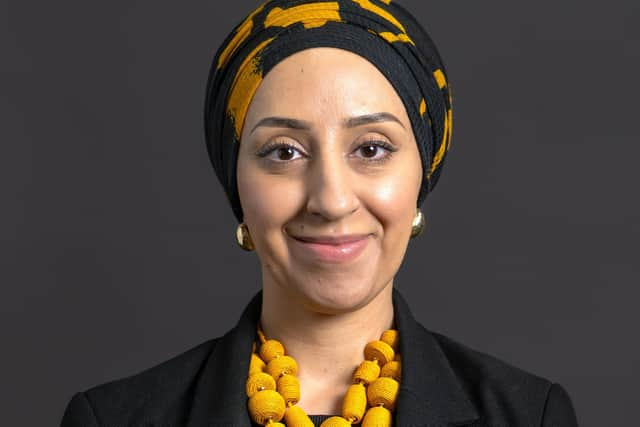
Sheffield Central MP Abtisam Mohamed recently met a delegation who spoke to her about how the Pakistani state is violently suppressing peaceful demonstrations in Azad Kashmir.

She raised the issue with foreign minister Stephen Doughty, who has responsibility for relations with Pakistan.
At least 50 people have been reported killed in mass protests held since June, in the run-up to local legislative assembly elections. Voting was due to end this week but may have to be extended amid the disruption.
Anger at 12 out of 53 of the assembly seats being held for refugees from India-held Kashmir helped to spark huge protests.
The assembly seats are often taken up by people living elsewhere in Pakistan who don’t share local concerns and don’t represent them, say protesters.
Struggle
Demonstrations also targeted an extreme cost-of-living crisis that sees families struggle to afford basics such as electricity and food.
The government outlawed protest umbrella group the Joint Awami Action Committee (JAAC) under domestic terrorism laws. The group refutes government claims that it is funded by India.
Kashmir has been a disputed territory between the two countries since the creation of Pakistan during the partition of India in 1947.
Outlawing the JAAC has led to police firing on attempts to march from the city of Rawalakot – where there was a long-running occupation of the streets – to the regional capital Muzaffarabad to put complaints directly to the prime minister.
Armed police are also reported to have targeted protests elsewhere, such as in the cities of Kotli, Mirpur and Bagh.
Anxious Sheffield families were unable to contact their loved ones because of a prolonged government internet blackout.
Worried
Heavy restrictions imposed on journalists have also impeded the flow of information. Additionally, foreign reporters were ordered to leave the area.
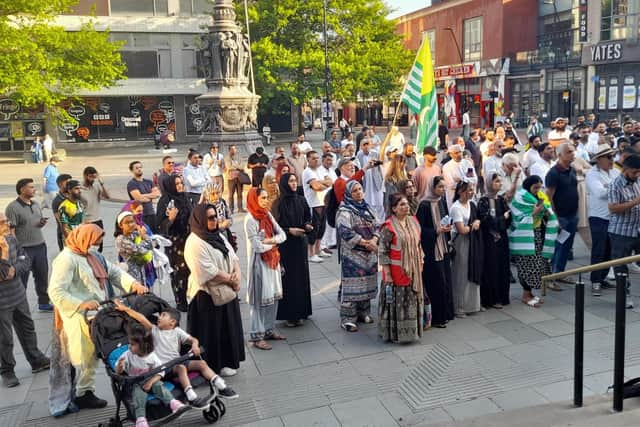
A demonstration held outside the City Hall last month called for de-escalation of the situation and solutions to the financial crisis.
Ms Mohamed said in letters to worried constituents that she shared their deep concerns. Reports of the killing of British national Mohammad Akhtar and videos of live fire against civilians are “completely unacceptable”, she said.
She said she had signed a joint parliamentary letter and also raised the issue with Mr Doughty. He told her that he had spoken about his concerns directly with his Pakistani counterparts.
The situation is being monitored by the British Commission in Pakistan, he added.
Ms Mohamed said: “Please be assured that I will continue pressing the government to use its considerable relationship and influence with Pakistan to protect peaceful protest and media freedom, secure humanitarian access, and pursue de-de-escalation and a peaceful political resolution.”
Interevention
Delegation member Rafia Hussain said: “We urgently need the government to step up its intervention. This is rapidly becoming a major humanitarian crisis and minimal intervention is no longer enough.
“The statements of concern and symbolic support are a good starting point but the situation has now moved far beyond the point where symbolism alone is sufficient.
“The government needs to act now, with practical and sustained commitment — including meaningful action and serious diplomatic pressure.
“At this stage, anything less risks falling short of the scale and urgency of the crisis unfolding.”