
Sheffield Local Plan: No legal grounds to refuse 3,500 green belt houses, say Government inspectors

The Government has signed off on a controversial plan to open up Sheffield’s green belt for housing, despite thousands of complaints.
Inspectors have given the green light to the council’s Local Plan and found no legal reasons to refuse building 3,800 homes on protected countryside by 2039.
It comes after a consultation over the Plan - which in total aims to build 38,000 new properties - received over 3,650 comments, the majority of which were complaints slamming the idea of building on green spaces.
A letter from independent Government inspectors, published today, signals Sheffield City Council to begin the next phase of development, with further public engagement to follow.
However, it does not mean construction will now begin. The plan still needs to be adopted by the council, which is anticipated to happened in July 2026.
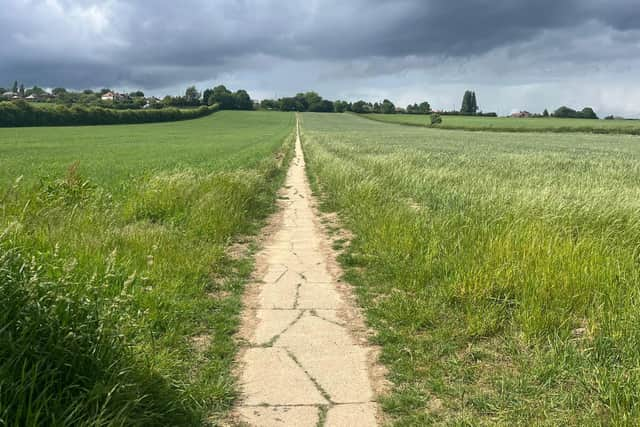

What is the Sheffield draft Local Plan?
The new Local Plan is a draft framework to outline where in Sheffield the council can approve housing developments.
The authority was set housing targets by No 10, and must build 38,000 new homes by 2039, as well as create 654 hectares of employment land for jobs.
But the draft also seeks to place over 3,800 of these homes on 14 greenbelt sites in Sheffield countryside, stating that brownfield and urban land has been exhausted. Three schools and two graveyards will also be built here.
It would be the biggest loss of protected green belt land ever in Sheffield, some 809 acres, or 3.6 per cent of the total area of 22,390 acres.
90 per cent of the sites fall on green belt land in S13 and S35, with critics arguing it will strain communities in those areas.

Demonstrations against the Plan in 2025 drew hundreds of protestors, such as the ‘Hands Off S35 Greenbelt’ march in June attended by over 500 people. Objections were raised at council meetings and thousands of complaints were submitted during a consultation process.
The letter today essentially means Government inspectors have looked over and approved the Plan in its entirety with some minor adjustment, but see no legal objections to building on green belt land. The exact phrasing used is that the plan is “capable of being found sound” should the council adopt it.
It also shores up the council’s ability to defend itself against legal challenges to building on green belt land as part of the Local Plan and beyond 2039.
Did the inspectors change anything?
There are minor adjustments to two green belt sites earmarked for development, leading to a reduction in the number of houses that can be built there.

Namely, a significant part of the ‘NES37’ and ‘NES39’ sites in Grenoside, off Wheel Lane, will be exempt due to impact on the landscape, bringing the number of homes possible there down from 148 to 66.
An area of Beaver Hill Road in Handsworth will also be limited from 868 homes down to 827.
The total number of houses proposed on the 14 green belt sites has fallen from 3,948 to 3,806.
Another shake-up in today’s announcement is a change to the number of homes per year required to be built by Sheffield City Council.
The council was previously set the task of building 2,236 homes per year. The inspectors have recommended moving these targets, such that the council is expected to allocate 1,780 homes a year until 2031/32 - then shooting up to 2,750 per year until 2039.
The council added that a “full schedule of modifications [by the inspectors] will form part of the upcoming public consultation process.”
What has the council said?
A press statement released today reads: “There are a small number of sites in the green belt proposed for development (representing approximately 3.5 per cent of Sheffield’s green belt overall)...
“However, not all of this land will be developed. For example, new accessible open spaces will be provided as part of new developments and important areas for nature will be protected.
“Several ‘golden rules’ will have to be met before any housing can be built on them, such as guaranteeing affordable housing and ensuring that infrastructure and homes are built together.”
Leader of Sheffield City Council, Councillor Tom Hunt, said: “Sheffield needs a Local Plan because we are a growing city. Having a Local Plan means control over where development happens and what gets built. But growth needs to be inclusive, and the Plan will bring real benefits for communities. It will help us to provide more affordable housing, regenerate derelict land, create new jobs, improve public transport and reduce our city’s carbon emissions.
“I would like to thank each resident and community group from across Sheffield who has shared their views with the Inspectors. The independent Inspectors have confirmed the Plan is sound in principle, subject to some required changes, and those changes must now be consulted on. I encourage people to take part in this next stage. It’s an important opportunity for residents to comment on the proposed modifications before the independent Inspectors issue their final report to the cLouncil.
“The Plan has a clear focus on developing brownfield land that has already previously been built on. It is a long-term plan and the majority of development won’t happen until the 2030s.
“The Plan means that more housing development will have to include affordable homes. It means ensuring that developments have the right infrastructure like public transport, children’s playgrounds, schools and health services. Continuing without a Local Plan means remaining at risk of speculative, unplanned development and developments built without any infrastructure and without affordable housing. This would be a failure and it is not what communities need.”