
Sheffield has a new, ambitious housing strategy but what is this actually?
Sheffield City Council has launched a new 10-year housing strategy aimed at “increasing the quantity and quality of housing in the city.” But what does this mean in practice?
Last week, the council’s strategy and resources policy committee approved Sheffield’s housing strategy, which will guide the city’s approach to housing until 2034.
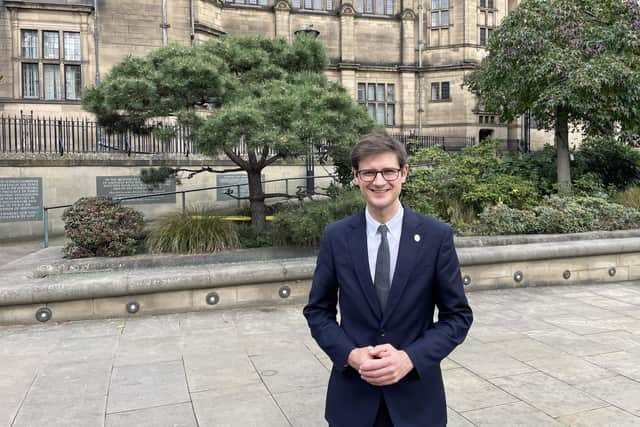

At the meeting, following a presentation of the report, Ajman Ali, an executive director at Sheffield City Council, said the housing strategy was “deliberately ambitious and we make no apologies for that”.
In an interview with the Local Democracy Reporting Service (LDRS), Cllr Tom Hunt, the leader of Sheffield City Council, explained that the new strategy outlines how the council plans to increase the quantity and quality of housing in the city, as well how the council will create “great neighbourhoods” and how the council will work with partners to end homelessness in the city.
He said that underneath the strategy there will be a whole series of delivery plans, like a rough sleeping action plan or a housing growth delivery plan.
Cllr Hunt said: “If we’re having conversations with the government or Homes England or housing associations, we can say to them ‘here’s our vision for what we want in the city’.”
While the strategy doesn’t include all of the very detailed implementation plans, he said “it was never going to”.
“This sets the overarching vision and more details will follow”, Cllr Hunt added, mentioning that some of it is already in place.
The strategy comes after the previous 10-year housing strategy ran out; however, the language of the two is similar.
The previous strategy expressed the council’s vision “to provide more homes and for housing to be at the heart of high-quality, safe and distinctive places to enable Sheffield’s communities to thrive.”
Cllr Hunt said it enabled the council to work with the mayoral combined authority and the government to “get housebuilding in this city”.
He said the government is committed to building 1.5 million homes over the next five years which is “in stark contrast with the last 10 years”.
“We had a government that was not interested in supporting local government, now we’ve got a Labour government treating us as an equal partner and we’re able to have an honest conversation about some of the challenges that we’re facing”, he said.
Cllr Hunt was also talking about the issues around funding – or the lack thereof in this case.
However, the former housing strategy had three top priorities and of those three, two were about making the best use of the city’s existing housing stock and helping the young, the old and the vulnerable to live independently.
How effective has this been?
Cllr Hunt told the LDRS that all of the work over the last years led to the development of the Sheffield Local Plan which is currently under government examination.
He said: “We know that our city needs 36,000 new homes over the next 15 years, 20,000 of them will be in and out of the city centre.
“We are working on three new neighbourhoods in and around the city centre, and the work on that is detailed.”
He emphasised that the housing strategy pulls together a number of things that the council was working on: new neighbourhoods, improving housing quality or working on ending homelessness in Sheffield.
He said: “This pulls together into one single place so whether you’re an investor, whether you’re a housing association, whether you’re a council housing tenant or whether you’re someone looking to move to the city and buy a new home, you can be clear what Sheffield City Council is seeking to do.”
This includes considerations about student accommodation in the city centre.
But is it clear to the people of Sheffield what success would mean for the strategy?
A survey conducted as part of the process found that while over half of respondents rated both the clarity of what the strategy will achieve and clarity of the actions to be taken with partners as good or better, only around 45 per cent of respondents felt similarly towards the clarity of success metrics.
Are we going in circles, Cllr Hunt was asked.
“No”, he said.
He added what they are doing is putting in place the plans to actually realise the ambitions and the strategy.
Cllr Hunt said: “When we talk about the 20,000 new homes in and around the city centre, there is detailed work underway with Homes England and this year they allocated £67million of funding for a new neighbourhood in Furnace Hill and Neepsend.”
He said this is just one example of the vision turning into deliverable plans.
He brought up a new government bill that would end no-fault evictions, which would prevent people and families from becoming homeless, thus helping to ease the pressure on local authorities as well, stating that there are concrete things happening now locally and nationally.
Part of the new housing strategy’s vision is “everyone in Sheffield has a home that supports good health and is suitable for their needs and aspirations”.
Is this realistic? Can everyone have a home that supports this in Sheffield?
Cllr Hunt called it a scandal that so many people across the country have been living in B&Bs and temporary accommodations over the last decade, and the council is “doing everything we can to ensure that people have got a stable home to live in”.
He admitted there are a lot of people in Sheffield but it would be wrong of him to say that he was happy to tolerate that some people don’t have a safe, secure roof over their heads.
He said: “Our focus is on everybody. There is nothing inevitable about homelessness; it can be prevented, and we’re doing everything we can with a range of partners to prevent people from becoming homeless in the first place.”
What does the council leader think of the Right to Buy scheme? The government, apparently, has no plans to scrap it.
However, as the LDRS reported in September, since the policy was introduced in 1980, thousands of council houses across Sheffield have been sold to tenants at discounted prices – leaving the council with a shortage in its housing stock.
Cllr Hunt said increasing the number of homes in Sheffield is like “trying to run a bath with the plug pulled out” because of a number of homes leaving the council’s affordable housing stock every single year.
He said a council report published earlier this year called for a reform to the scheme to reduce the level of discount that is available to those who wish to purchase their properties.
But why not eliminate it entirely?
Cllr Hunt said: “Because you would spend an awful long time in a very tired political debate around aspiration and, actually, I’m much more interested in what we can do to increase the supply of new affordable homes”.
The quicker way to do it would be to reduce the level of discount, he added.