
Residents' voice safety concerns as Sheffield Council continues to remove pelican crossings

Concerns remain over pedestrian crossings, nearly 10 years after tragic death
Nearly 10 years ago, a man tragically died on a pedestrian crossing on Penistone Road, Sheffield.
73-year-old Leslie Bingham’s died after a collision with a police car in January 2017 - but an inquest into his death raised concerns over the pedestrian crossing which he had been using at the time.


That crossing was one of a new type of so-called ‘puffin’ crossings.
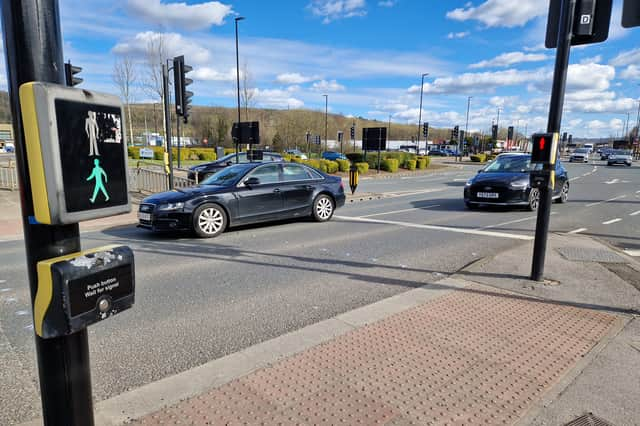
Unlike older crossings, puffin crossings lack a signal box with red and green men on the opposite side of the road.
Instead the signal to cross is placed at waist height at the point where pedesestrians stands to cross.
Sheffield Council has continued to roll them out ever since, and they now vastly outnumber the city’s traditional pelican crossings.
The coroner at the time of the fatal collision, Chris Dorries, wrote to Sheffield Council warning that the evidence showed that there was a significant possibility that a pedestrian approaching the A61 Penistone Road from Owlerton Green, adjacent to the Pizza Hut, may be misled by a green light actually intended for pedestrians crossing Owlerton Green at the junction - and thus miss a red light prohibiting them crossing the northbound lanes of Penistone Road.
Sheffield Council said following the conclusion of the inquest into the death of Mr Bingham, the council ‘complied with the Coroner’s requests in full’ and installed a safety barrier at the crossing at Penistone Road.

However, nearly 10 years after the tragic death of Mr Bingham, some Sheffield residents still have concerns about the crossings, which the council has continued to roll out, even though some other councils are now rolling out crossings which have a more traditional design with a green man on the other side of the road.
Among those who are not convinced of the safety of the new designs is Mr Bingham’s daughter Angela Pilkington.
She does not like to talk about her father’s death in 2017, as it brings back very bad memories.
However, she told The Star: “No, I don’t think they are safe at all. I'm so wary when I use them.”
At the inquest following Mr Bingham’s death, in January 2017, the crossing, which had several lights close to one another covering crossings in several directions and over several different roads, was described by the jury as "very confusing."

Some members of the public have told The Star that they are concerned that when they use puffin crossings they cannot see the green man illuminated at their side of the road if there are other people at the crossing at the same time. The low positioning of the signal boxes means they can easily be blocked, they say.
Sheffield Council’s contractor, Amey, maintains 512 traffic signals across Sheffield, of which 167 are puffin pedestrian crossings, 54 are pelican crossings and 219 have some form of pedestrian crossing facility.
The Star approached Sheffield Council to ask for figures on accidents since the new type of crossings were brought in, but we were told it would take too long for them to find the information.
The authority said it has access to accident data on the highway network but due to the intensive nature of searching, cross checking and compiling this data, it could not provide figures for the number of collisions at each specific pedestrian crossing.
The Star asked Sheffield residents in the city centre about how safe they felt on the new style crossings.
Heather Croft, from Fulwood, said she did not feel as safe with the new style ‘puffin’ crossings which have been brought in.
She said: “I prefer the original ones - the pelican ones. I prefer to see the symbol across the road from me.”
Chris Ray, of Woodhouse, said he did not feel safer with the new crossing, and did not like them. He would like a return to the old crossings.
He said: ”I don’t like them. I don’t feel as safe as how I do on a pelican crossing, where you can stop and see the traffic pull up. But here somebody might come through and you don’t see them.”
Keith Beal, of Parson Cross, said he did not feel safer on the new crossings, saying that you can not always see the green light. He said: “I’d sooner be on the old ones. I felt a lot safer on them.
“When you were at the side with the old ones, you could see what was happening, but with these new ones, you can’t tell exactly.”
John Gegniewicz. from Attercliffe, said he felt safer on the old style crossings. He said they were a lot better.
He said: “You’re used to looking up to the higher lights rather than the lower ones.”

However Derek Bettison, of Normanton Spring, said: “I’m partially sighted and I’m not good with moving traffic. So I’m happy to stand and wait until everything has gone. It’s irrelevant to me. I don't mind either way.”
While Sheffield is getting rid of ‘green man on the other side of the road crossings,’ London is installing more of them.
Transport for London told The Star that pelican crossings cannot be newly installed under current Government rules, but their preferred layout in the capital is what they called the ‘Pedex far-side arrangement’ - a red/green man across the road.
They said this had been chosen because it allowed for pedestrian countdown timers, showing people how long they had to get across the road before it changed.
They added: “TfL has not carried out a programme to retrofit puffin crossings with additional far‑side red/green man indicators. Our preferred design – the Pedex far-side format with pedestrian countdown – is installed when crossings are renewed or upgraded.”
Sheffield Council told The Star that puffin pedestrian crossings have been introduced in Sheffield since 2012 in accordance with national guidelines and are replacing pelican pedestrian crossings across the city with the aim of providing a more consistent crossing network.
Sheffield Council said: “The puffin pedestrian crossing visual display (green and red figures) is located on the nearside facing the oncoming traffic with the user being able to see the approaching traffic at the same time as the indicator. This can help pedestrians see when a vehicle is approaching rather than looking across the road and assuming all traffic has stopped.”
“The puffin pedestrian crossing can adjust the crossing times for slower pedestrians as well as cancelling a call if the user crosses before the ‘stop for traffic’ is implemented so provides an additional benefit, especially in traffic sensitive areas.”
What is a puffin crossing?
The puffin is a type of pedestrian crossing controlled by signals that can detect the movement of pedestrians, so that it can give them enough time to cross safely and keep any delay to drivers to a minimum.
The pedestrian crossing time varies according to the actual needs of the pedestrian.
Puffin crossings use sensors to monitor pedestrian movement, while pelican crossings rely on timers and flashing amber signals.
This avoids unnecessary delays to traffic if a pedestrian presses the button to cross but then walks away.
The signals for pedestrians are known as ‘near-side signals’. Unlike older crossings, puffin crossings lack a signal on the opposite side of the road, placing them at waist height on the near side, where the pedesestrian stands to cross.