
‘It’s not fair’: Sheffield residents speak up to save green belt from housing scheme
Concerned residents in a Sheffield community have voiced strong opposition to losing their green belt land to housing development.
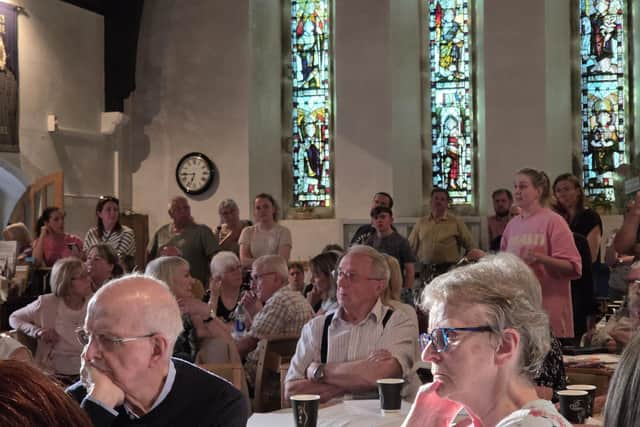
A significant crowd gathered at St Mark’s Church in Grenoside to attend Sheffield Council’s North Local Area Committee (LAC) meeting. They came to speak out against a major proposal that would see 945 new homes, schools, and a burial ground constructed in and around the area.
According to the Local Democracy Reporting Service (LDRS), Sheffield Council has earmarked 10 plots of land where 3,529 new homes could be built over the next 14 years.
Government inspectors have instructed the council to find sites for 38,012 new homes to be constructed during the lifespan of the Sheffield Local Plan, which is set to come into effect in 2026 and run through to 2039. This figure is 3,500 more homes than the council had initially planned for.

While inspectors acknowledged the importance of protecting the city’s green belt, they emphasised that the council must also meet its housing and employment land requirements.
Speaking at the LAC meeting, Cllr Mike Levery explained that a Local Plan developed in 2019 “had significant development in the green belt” but never reached the council, requiring the process to restart.
By 2023, councillors were presented with “five different spatial options to choose from” to move the plan forward. The selected option has since undergone review by government inspectors, including site visits and hearings.
This process resulted in the current proposal and the shortlist of 10 plots needed for the additional 3,500 homes.
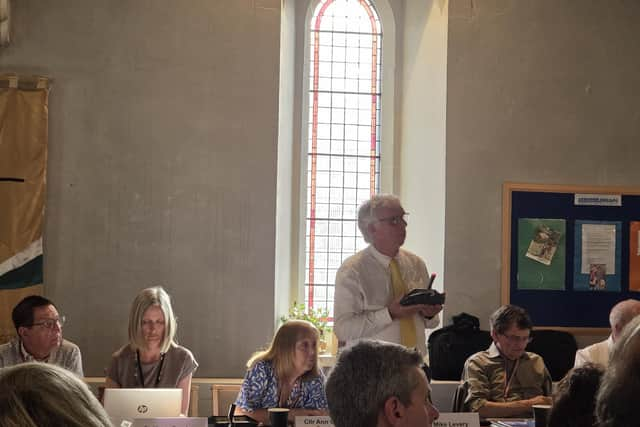
Cllr Levery noted that the Liberal Democrats opposed the inclusion of green belt sites in the plan, stating: “But the government insisted it has to be done.” He added that although councillors had shared their concerns, those views “had not been taken into account.”
He highlighted the uneven distribution of development: the area would bear 37 percent of the housing and 70 percent of the employment land. “We don’t think that’s right. It’s not fair, it’s not balanced,” he said.
Public meetings are planned in Chapeltown, Grenoside, and Ecclesfield after the Full Council meeting on May 14, where councillors will vote on the plan. Cllr Levery indicated that the plan could collapse if it fails to pass.
The next step, regardless of the vote, is a six-week public consultation from May 29 to July 11. Cllr Levery urged the community: “We want not hundreds but thousands of people responding to that, and give their views.”
During the Q&A session, attendees—who overwhelmingly opposed the development—were warned of the risks of rejecting the plan. If it fails, the government could step in and take control over where homes are built.
Cllr Levery emphasised that public participation in the consultation could still help shape the outcome.
Cllr Craig Gamble Pugh, a Labour councillor, also addressed the attendees, saying if the plan is voted down, it may be handed over to the planning inspectorate. “That will mean not only will it be frustrating and difficult for you to have your voices but also that means it stricts away that power from us, as your elected representatives,” he said.
When asked whether the land had already been sold to developers, Cllr Levery said he was “not aware” of that, though he acknowledged there had been significant land sales in the area, calling the pattern “obliquely odd.”
In response to a question about housing need, Cllr Levery said demand is high, with more than 20,000 people on the council house waiting list. “There is a huge pressure for houses to be built,” he said.
Asked about infrastructure plans, Cllr Levery admitted none had been shared so far.
At the council’s Strategy and Resources Committee meeting on April 30, the proposal passed by a narrow vote of 8–5. Liberal Democrats and a councillor from the Sheffield Community Group opposed it.
Councillors were warned that rejecting the plan now could trigger even stricter national housing rules, requiring them to find sites for an additional 10,000 homes.