
"It's a form of slavery": Visas system is leaving migrant care workers vulnerable to abuse, says Sheffield councillor
“People are brought here, provide amazing care, and then we treat them like rubbish”
A Sheffield says the visa system leaves migrant care workers "massively open to abuse" and has called for immediate change.


Councillor Mark Rusling, who seconded a motion to build a better social care system at a recent full council meeting, said this is a cause close to his heart.
“I lost my nan to dementia earlier in the year. She was cared for the last four to five years of her life in a care home," he said.
“I was incredibly struck by the big number of mostly ladies that cared for her spoke with eastern European and African accents."
He said his nan's carers were "absolutely brilliant," but the experience highlighted how many migrant workers deliver care in the UK.
"For a number of reasons, we struggle to recruit the right number of people to work in those roles.
“People are brought here, provide amazing care, and then we treat them like rubbish."
Currently, the care visa system ties migrant workers to their employer, which Coun Rusling said leaves them vulnerable to abuse.
He said: “Any system that links low paid workers' right to remain in the country with their employer, is massively open to abuse."
UNISON, a trade union that represents a lot of workers in the sector, are campaigning to treat migrant care workers fairly.
Through the union, Coun Rusling has heard many verified reports and statistics that suggest that employment related abuse is taking place under these rules.
One of the "harrowing" stories he heard from UNISON was about a care worker just outside Sheffield who wasn't paid for six months, working 16-hour days.
They tried to resolve it with the employer, but it didn't work.
"Obviously, that's a crime," Coun Rusling said.
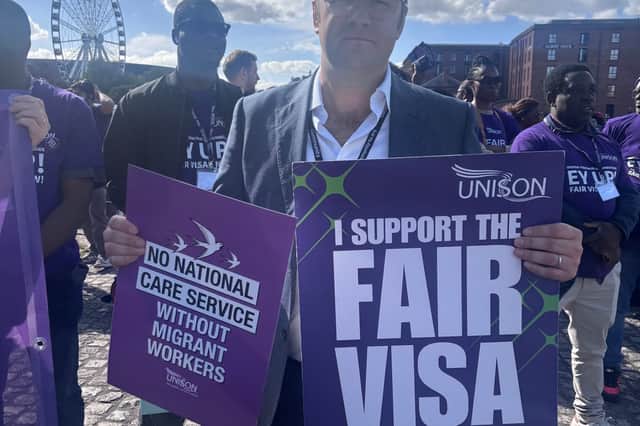
"But the care worker wouldn't go to the police and wouldn't raise it formally because there would be an investigation, the employer would found to be a breach and would have their license to bring care workers to the UK removed.
"Then the care worker would then have two months to find a new employer and if they don't, they are deported."
He said if people had migrated to work in banking, their wage might be enough to survive periods of unemployment, but for people who have come over to work in the care system, the pay wouldn't support that.
"It's a form of slavery, it's a form of neo-feudalism almost," he added.
"Before you were tied to the Lord of the Manor, and now these care workers are tied to their employer, and that's totally unfair."
He said people are coming to this country because "we have a clear need for them to be here."
"A little bit like people who came on the Windrush and afterwards to fill those gaps in the early NHS.
"We've got hundreds of thousands of mostly elderly people in care. They will continue to get care from migrant workers.
"They look after us. We should look after them.
"Without these workers, the care system collapses, and it collapses for everyone."