
Housing development on ‘rapidly dilapidating’ Sheffield industrial site approved
A plan to build eight new homes on a “rapidly dilapidating” industrial site along a busy Sheffield road has been approved.
The homes will be constructed on the site of the former Dyson Refractories on Baslow Road. The site—long abandoned and described as an eyesore—has not been used for major manufacturing for quite some time now.
The proposal was first submitted to Sheffield City Council’s planning department in August 2023.
Located near the boundary of Sheffield City Council and North East Derbyshire District Council, as well as the edge of the Peak District National Park, the application underwent several amendments and included hundreds of supporting documents. Planning officers have now given the project the green light.
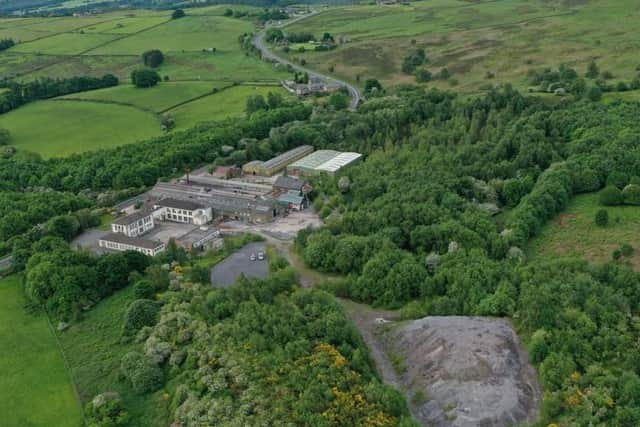

Originally, the plan called for ten homes to be built following the demolition of existing industrial structures. According to planning documents, the total volume of buildings to be demolished amounts to 52,667.663m³, with 15,917.872m² of hardstanding area also set to be cleared and redeveloped.
The initial plan for ten homes was later revised to eight, ultimately featuring four-to-six-bedroom detached properties.
A document noted: “Each proposed property design utilises flat green roofs, helping keep the height of the homes to a minimum, while introducing new habitat and reducing the visual impact of the properties from outside the site.
“The industrial and angular metal roofs of the existing building are to be replaced with expansive habitats that help local flora and fauna and attenuate rainwater discharge.”
Plans also include consolidating the site’s two vehicle access points into a single entrance and exit. This change is intended to simplify access and improve safety by allowing for better visibility and a roadway design tailored to the new development.
Despite the approval, the proposal received multiple objections from nearby residents and local organisations. Concerns raised included environmental and ecological impact, drainage, light pollution, safety, access, and other issues.