
Councillor calls out Yorkshire Water over "unacceptable" two-month leak

Repairs were carried out on the day a Sheffield councillor raised concerns on Facebook
A Sheffield councillor branded Yorkshire Water’s response over a two-month leak as “unacceptable”.
Councillor Mustafa Ahmed raised his concerns on Facebook last weekend, complaining that the region’s water utility company was “failing to respond” to complaints.
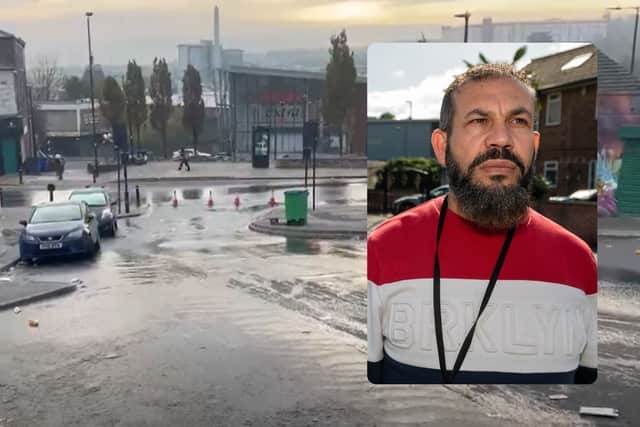

He claimed that there had been ongoing leaks across his ward in Burngreave, with one on Spital Hill going on for two months.
That leak has since been repaired.
Coun Ahmed said at the time: “There are several leaks across different parts of Burngreave, but the worst one is on Spital Hill, where water has been leaking continuously for almost two months.
“Emails have been sent, complaints have been raised, yet there has been no response and no meaningful action.
“This is completely unacceptable.”
He said “Burngreave residents deserve better” as he called for a fix to the ongoing problems.
In response, Yorkshire Water today (Monday, November 9) said the firm responded to the burst main on Spital Hill on Sunday, November 8 - the same day Coun Ahmed publicly raised his concerns.
A Yorkshire Water spokesperson said: “We attended a burst main at Spital Hill, Sheffield, yesterday, which unfortunately caused some surface water flooding and left a number of properties with low or no water until our engineers were able to complete the repair.
“Our team worked as quickly as possible to fully return supply and we would like to thank residents for their patience and understanding as we carried out the fix.
“We understand that leaks are frustrating for our customers, and reducing leakage on our networks is a priority for us. Leakage is the lowest it has ever been in Yorkshire, and it’s something that we work on all year round.
“We’ve reduced leakage by 18 per cent over the last five years and will be spending £38m over the next five years to continue bringing that number down.
“We’re also working on a £406m scheme to replace more than 1,000km of pipework to make burst and leaks less likely as well as investing in AI predictive models to try to reduce the likelihood of leakage events before they happen.”