
Welcome for Sheffield city centre transport transformation plans
Plans to transform travel into and around Sheffield city centre, including the new-look Castlegate area, have been welcomed by city councillors.
Members of Sheffield City Council’s transport, regeneration and climate policy committee agreed on Wednesday (December 17) to a city centre transport access and movement plan and a separate plan focusing on Castle Street.
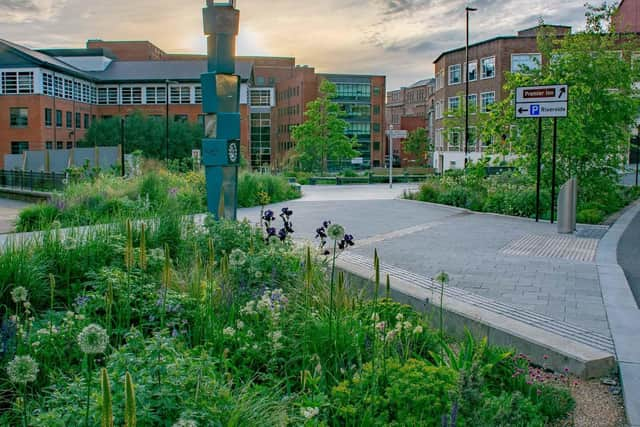

A report on the city centre scheme said that the council aims to have 18,000 new homes and thousands of new jobs in the city centre by 2040. That is expected to significantly increase travel into and around the centre.
The report said: “Current access to the city centre is often considered to be poor, with a reliance on the private car, often due to a lack of high-quality alternative travel choices.
“This is something that needs to be addressed not just to facilitate growth, but to address the climate emergency the city is facing and the inequalities experienced by many users of the transport network.” The plan aims to improve travel for tram and bus users, cyclists, pedestrians and people with limited mobility.
The report said that the plan been developed after “extensive engagement with residents, businesses, transport operators, institutions and other stakeholders.
Support
“Feedback from this engagement showed strong support for better walking and cycling environments, greener and more attractive streets, more reliable and accessible public transport and safer and clearer street layouts.”
Key streets will become walking and wheeling priority routes, with improvements to pavements, crossings, lighting, public areas and route markers. A “more coherent” cycling network would link existing and new neighbourhoods and include an orbital route and a north–south spine through the city centre. Public transport changes will include key bus and tram corridors, improved interchange locations and future park-and-ride connections.
Car access is “proposed to be focused on those who need it, with through traffic consolidated on the Inner Ring Road.
Conflicts
“Appropriate arrangements will be made for freight and servicing, so that essential vehicle movements can still take place efficiently, whilst reducing conflicts with other road users.”
Coun Ian Horner said: “This is a very good plan but the most important thing is that we deliver public transport improvements because it’s one thing to say let’s stop people coming in to Sheffield city centre by car but we’ve got to provide them with viable alternatives.”
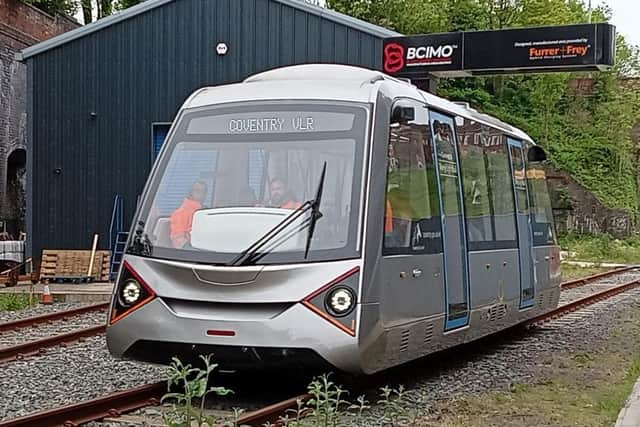
He referred to the Coventry Very Light Rail (CVLR) scheme in Coventry and said all types of public transport should be considered.
According to the Coventry City Council website, CVLR is under development and brings the advantages of a tram system at a fraction of the cost for rail the infrastructure. The ‘hop on, hop off’ tram cars are battery powered.
Coun Richard Shaw said that too many cars with a single occupant cause traffic hold-ups on the roads. He welcomed an increase in Blue Badge parking for disabled drivers.
Coun Dimond said that a workplace parking levy in Nottingham raises £10m a year. That income could be used to fund oublic transport upgrades.
Better
Committee chair Coun Ben Miskell said: “There are a huge number of people coming to our Christmas markets. That demonstrates how creating people-friendly streets allows us to improve health outcomes for people and makes our city centre a better place to live.”
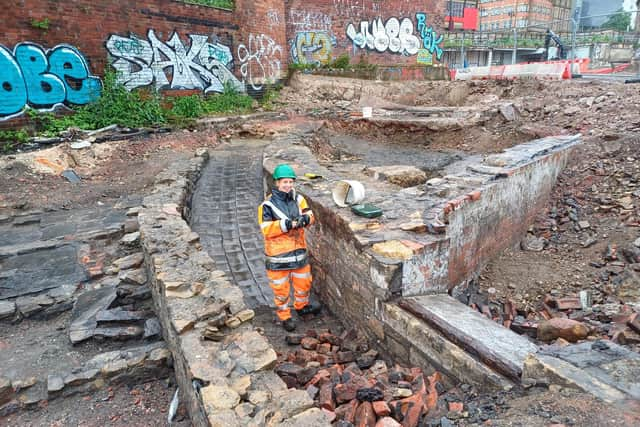
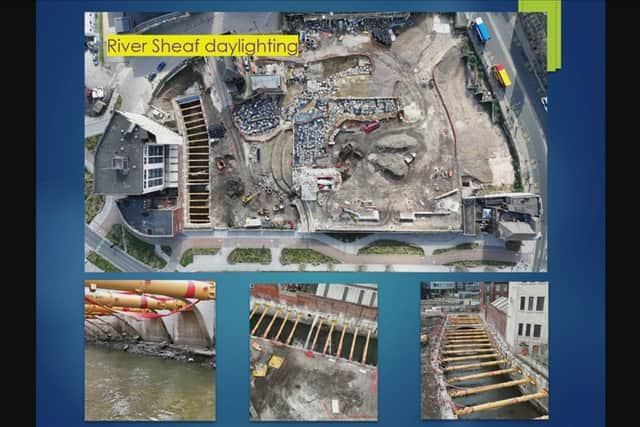
Councillors also approved a traffic regulation order for Castle Street, bringing in a new signal-controlled junction. This will allow permitted access to the new park opening next year which will showcase the remains of Sheffield Castle unearthed by the recent archaeology project and the deculverted River Sheaf.
A report to the committee said: “It will also deliver new walking, wheeling and cycling routes connecting the Exchange Place (Grey to Green 2) to the city centre via Exchange Street, Castle Street, Bank Street and Campo Lane.” Grey to Green is a project bringing green spaces with distinctive planting into the city centre.
Changes
The main changes will be:
- A direct, separated walking, wheeling and cycling corridor from Exchange Place to the city centre, with improved crossings, footways and kerb-protected cycle tracks on Castle Street;
- An upgraded, signal-controlled junction and crossings for pedestrians and cyclists at the junction of Waingate, Exchange St, Haymarket and Castle Street;
- The relocation of a taxi rank from Castle Street to Haymarket;
- Creation of a new loading bay on Haymarket;
- Updated waiting and loading restrictions as a result of changes to the taxi rank, and introduction of a controlled crossing;
- Minor improvements to Exchange Street, with a developer-led project to follow;
- Upgrades to Castle Street to match the design of the rest of the city centre.
The proposal with the least support from public consultations was the relocation of the bus stop on Castle Street to Snig Hill, with 67% of respondents in support of the proposal.
Gradient
A report to the committee said: “Feedback suggests that this may be due to the gradient of Snig Hill and potential accessibility concerns arising from it.
“This will be discussed further with SYMCA’s [South Yorkshire Mayoral Combined Authority] Bus Partnership, who are in favour of the additional Snig Hill bus stop.”
Coun Janet Ridler, the council’s heritage champion, said that many people will be very excited to visit the historic site in an area of the city that has been suffering from decline so for so long.
She said it is a once-in-a-lifetime chance to give that area something to shout about.
Coun Miskell welcomed the regeneration of the Castlegate area. He added: “These are fabulous changes as we prepare for more people to be living nd working there.”