
Sheffield Council budget overspend increases by £800,000 to £34.8m
Sheffield City Council’s budget overspend has risen to £34.8 million and it will face difficult decisions in coming years, a finance boss predicted.
Years of central government underfunding, rising prices and increasing demand for some services such as temporary accommodation, social care and home to school transport for children with extra needs remain the main issues that the council is battling with, the council’s finance and performance committee heard on Monday (February 17).

A report to the committee welcomed extra government funding for the special educational needs and disabilities (SEND) system, social care and homelessness. It also said that the government decision to adopt a multi-year funding settlement will allow the council to plan ahead better than getting an annual settlement.
The figure for the revenue budget overspend for the current financial year has risen by £800,000 since the second quarter of the year, which equals 7.1% of the net revenue budget, said Jane Wilby, assistant director for finance and accounting.
Big increases include an increase of £1.5m for adult social care, which Ms Wilby said was driven partly by rising care costs, largely for people with learning disabilities. The overspend for learning disabilities is now £9.3m and the adult social care committee’s overall overspend has hit £11m.
The children’s social care budget worsened by £2.3m, which brings the overspend up to £16.2m. In home to school transport, 2,378 children receive the service, which is costing more than £22.7m to deliver – £7.1m over budget.
Expensive
Ms Wilby said the council has been working to cut costs by training more young people to travel independently and offering families the option of personal travel budgets. This is in order to move away from more expensive modes of travel such as taxis.
Temporary accommodation costs for people who are homeless have dropped by £600,000 in the quarter. This is down to work to turn around vacant council properties for re-letting faster and other changes, said Ms Wilby. The numbers in temporary accommodation dropped from 332 in October to 270 by December.
The cost of looking after the council’s ageing housing stock was named as a major factor in a £7.3m overspend in repairs and maintenance services.
The council is cutting budgets and using almost all of its budget contingency reserves to bridge the spending gap.
A Future Sheffield programme has been introduced to decide spending priorities from 2025-26, which the report described as “a critical initiative aimed at transforming services to create a more sustainable and efficient operating model”.
It added: “This transformation is essential to ensure the delivery of statutory services and to drive initiatives that support city growth, aligning with the council’s broader strategic goals as outlined in the medium-term financial strategy. The need for long-term financial sustainability underscores the importance of these ongoing transformation efforts.”
Austerity
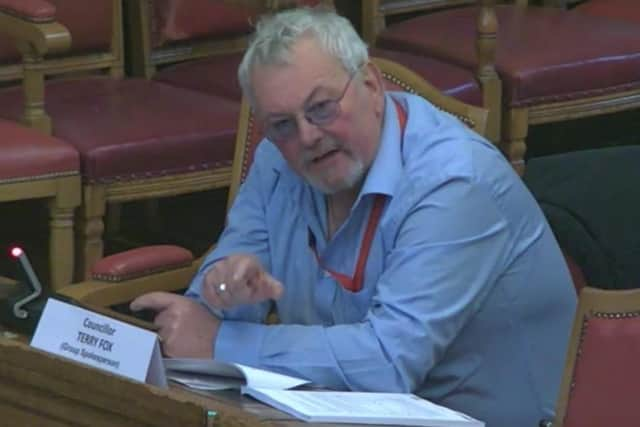
Coun Terry Fox said: “I’ve been a member of this council for a large number of years, and been a cabinet member and also been leader of this council, and had to make some severe savings that we would never have made under normal circumstances under that last Tory government that put historic austerity into us.”
He said that the rise in budgets under the committee system over the past three years has been “astronomical” and said the council cabinet would have made “holistic changes” throughout the year.
“It’s obvious the policies cannot be working. For us to sit here now with £35m overspend, our reserves are near the bottom, other councils are rushing into 114 [effective bankruptcy] and I’m not suggesting we’re near there at the moment – we’re not far away.
“We need to know what is and isn’t working as members within this system that we’re working so we’re able to make those interjections, those amendments to policy.”
He said that overspending had increased in spite of measures that had been taken. Coun Fox said that priority budgeting would deliver a big improvement.
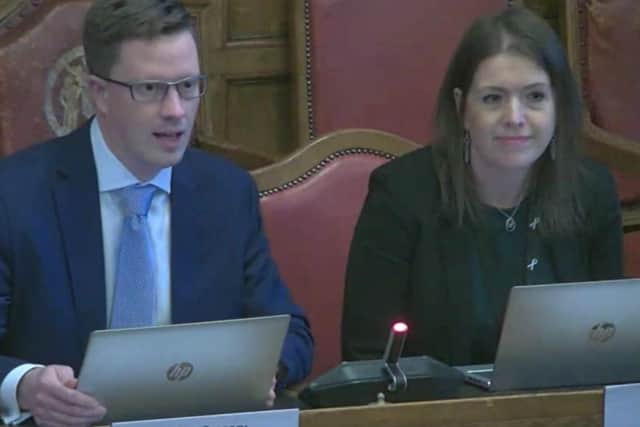
Philip Gregory, council director of finance and commercial services, said: “We’ve been looking at issues that require fundamental changes, such as supporting temporary accommodation more effectively. We’re starting to see those numbers coming through.”
Unpopular
He added: “Some of those policy decisions will be difficult and unpopular, and we can look to social care, where there will be policy changes coming through committees in the next few months, where we can see clearly that proposals are being made that will be difficult to make, but will be the right things to do for those committees.
“Proposals are being made that are difficult to make but are the right thing to do in terms of those committees.
“There has been a lag but they’re coming through now. It’s not like turning the tap off when you make a decision and the money stops flowing,” said Mr Gregory.
“There’s a trajectory where that decrease happens but we are starting to see that and I think we’ve confidence that we will continue to see that.
“As we get into the priority-based budgeting more in earnest, we will start to see areas where we can say there’s an area where we can stop spending because it’s not meeting a priority, and then there are areas where we will say we will continue to meet, and we need to put more money in those, because they’re more the priority.”
Committee chair Coun Zahira Naz responded: “I think the council is focusing on the Future Sheffield programme and I think that’s a very critical initiative aimed at transforming services.
“I think that will play a major role in terms of our overspending in the budgets.”