
Labour-Green split will cause major repercussions for Sheffield Council

Zionism row led to major political fallout and finally a severing of cooperation
The Labour-Green split on Sheffield City Council will clearly have a major effect on how the city is governed politically.
The full repercussions are still not completely clear, eight days on from the point where the parties seemed to have pulled back from the brink of a political split in their row over Zionism.
Events took an unexpected turn last Wednesday (November 4). Council leader Councillor Fran Belbin announced that Labour and the Greens could continue working together after all.
The declarations since last night by both Labour and the Greens that a deal was no longer possible put paid to that. The Greens said they weren’t prepared to be dictated to by Labour’s national executive committee.
Labour used the Jewish Chronicle’s coverage about the social media output of Green councillor Mustafa Ahmed to allege “blatant antisemitism” in the party ranks.
The start of last week’s meeting had been delayed by an hour to enable an initial agreement to be thrashed out.
Labour then dropped its plans to argue for it to become a minority administration and take over all key political jobs.

Reform UK at least had a different idea and proposed that all political groups should have a proportionate share of chairs. The motion was defeated.
The campaign It’s Our City!, which won a local referendum pulling the council back from centralised power, said opposition parties should oppose such a “back-door and insurgent attempt at reverting to executive ‘strong leader’ politics”.
Public trust in the council is already fragile following the street tree scandal and other divisive issues such as the clean air zone and red lines road plan.
Questioned by Reform about whether the row would disrupt council services, Coun Belbin said that plans had been put in place for the council to continue to function normally.
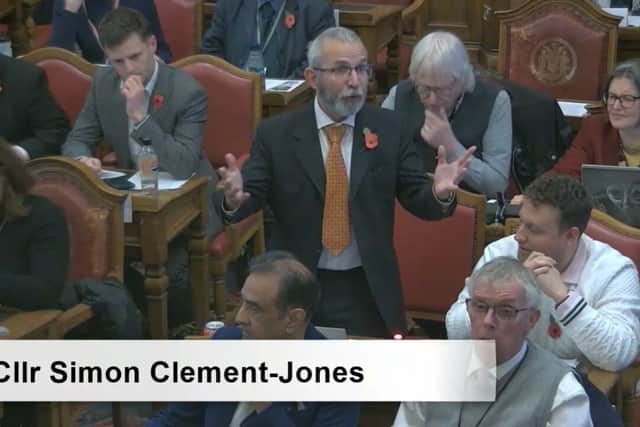
LibDem Coun Simon Clement-Jones still went ahead to propose that Couns Alexi Dimond and Maroof Raouf should lose their chairing roles as they had proposed the divisive Green Party conference motion. That was voted down.
He denounced the affair as a “self-indulgent psychodrama”.
Labour had told its councils to pull out of power-sharing arrangements after the Greens at their conference passed a motion saying that Zionism is a racist ideology and proposing a single sovereign state of Palestine.
The Local Democracy Reporting Service has seen a list of proposed Labour committee chairs that never made the light of day last week. It may be that this will be proposed again at the next full council meeting on Wednesday, December 2.
As Sheffield City Council is in its fifth year of being under no overall political control, the three leading parties have in the past collaborated in a joint administration.
The LibDems pulled out of the relationship in May over their opposition to the loss of green belt for development in the Sheffield Local Plan.
Labour are the biggest group with 26 out of 84 councillors, LibDems have 22 and Greens have 19. Reform UK are fourth with 11 members.
When the LibDems went into opposition, Labour and the Greens split all the committee chairing jobs between them proportionately.
If it wasn’t clear before, the events of the last few weeks show that all the main parties have major differences despite attempts to work together. Major losses by Labour at the May elections to both the Greens and Reform UK show a volatile situation is likely to continue.
Voters will have to wait until May 2029 to have their say, though.