
Ending of Sheffield business support criticised as lack of government trust in councils
The ending of a government business support fund that brought millions of pounds into Sheffield has been criticised as showing a lack of trust in local authorities to deliver growth.
Members of Sheffield City Council’s economic development and skills committee meeting last Thursday (February 6) discussed the phasing out of the UK Shared Prosperity Fund.
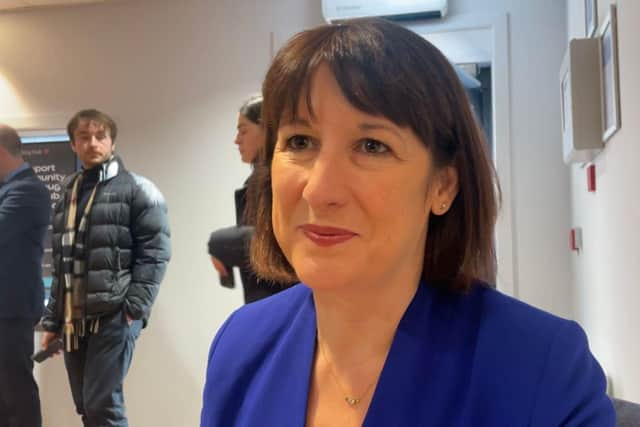

Chancellor Rachel Reeves announced in the October 2024 Budget that the programme would be extended for one final ‘transition’ year but with funding reduced by 40% at a national level from 2024/25.
In South Yorkshire the revenue funding has been cut from £19.7m to £16m. Capital funding will increase from £4.9m to £6.4m, although £4.1m must be set aside by the South Yorkshire Mayoral Combined Authority (SYMCA) to support the early development of local growth plans and priority investments.
The funding has been used in Sheffield over the past three years to support high street and new start businesses and give grants to firms and community organisations to improve their productivity and energy efficiency and also to support social enterprises.
Training
It also helped to provide training for voluntary and community sector workers, supported the promotion of culture and tourism. Additionally, the fund supported the provision of Welcome Places, where public buildings open during the day to help people hit by the cost of living crisis to stay warm during the daytime.
In total, it involved nearly 4,000 businesses and 3,000 city residents.
Coun Simon Clements-Jones said: “I’ve heard a lot of rhetoric from the government around growth and how they’re focusing on it. This doesn’t seem to match that rhetoric.
“I’m disappointed that central government doesn’t allow local government to do this sort of thing. They want growth but they don’t trust local government to provide it.”
Ben Morley, head of programmes and accountable body, said the change does provide a chance to review programmes and see what is still working. As the council would act as an accountable body for the transition period as the fund winds down, he said that decisions could be made without so much South Yorkshire Combined Mayoral Authority (SYMCA) involvement.
Council director of economy, skills and culture Diana Buckley said that work has been done to map priorities with the other South Yorkshire councils that make up SYMCA, including a shift towards employment and skills.
One is Pathways to Work, a government-funded scheme worth £3.08m to help people get back into work.
Integrated
A report to the committee described the scheme: “Proposed employment support activity in Sheffield will form a key component of an integrated employment, skills and health system, where the focus is on providing personalised support for the individual based upon their own specific needs.”
Coun Nikki Belfield said: “I remember when the Arts Council were very critical of Sheffield, in terms of we weren’t ambitious enough in terms of our vision and therefore we didn’t get much funding.
“I think the Culture Strategy, the Developing Growth Strategy, all show that things have changed and therefore I would hope, given the expertise in your department and the team that you’ve built, that we would be able to forge our own plans.”
She said that £1.6m of remaining funding could be well spent continuing to develop the culture sector and projects for the ‘public realm’ – outdoor spaces.