
Council boss welcomes new laws to tackle selfish pavement parking
It's a daily annoyance for many people and has been a source of frustration for councillors.
Now new Government plans to tackle pavement parking have been given a cautious welcome by council bosses.
Cyclists and pedestrians - particularly people in wheelchairs, those who are partially sighted, and mums with buggies and small children - have complained for several years about selfish drivers parking on Sheffield's pavements.
Coun Bob Johnson, Cabinet member of transport, has been equally annoyed and even put concrete blocks on a city centre street to stop a repeat offender.
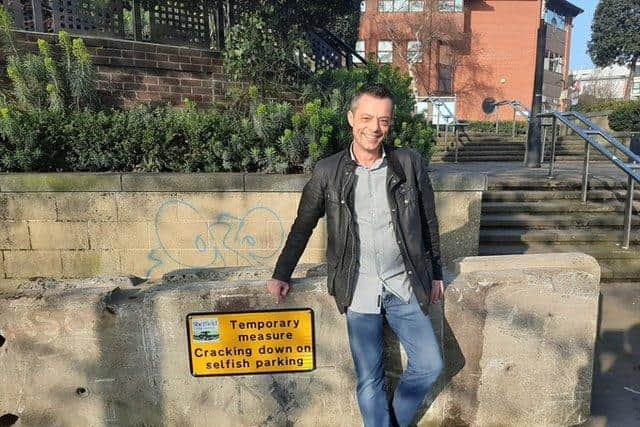

Over recent years the council has consistently called for more powers and now a major shake-up of legislation could help.
The Department for Transport is consulting on three options in relation to pavement parking - a nationwide ban; making it easier for councils to prohibit pavement parking and giving councils the power to fine offenders.
A change in policy has been discussed for a while and last year the council submitted written evidence to the government's Transport Committee’s Pavement Parking Inquiry, saying it wants to find a “flexible solution” to tackle problematic and perilous parking.
Coun Johnson said: “Obstructive pavement parking presents dangers for people with disabilities or mobility restrictions, and for parents with buggies.
"It can also be dangerous for cyclists as cycle lanes often run on the footway. It’s not good enough and it has to be dealt with, for too long the government has done nothing.
“I’m aware of some shocking parking in Sheffield, and the council has been forceful in asking the government to give us the powers we need to sort out this problem.
“Of course it's hard to impose a total ban on pavement parking, as sometimes there is no option but to park partially over a kerb given the nature of many of Sheffield’s roads but this should not be seen as an excuse across the city.
"We need to ensure that any plans are right for Sheffield so we'll be responding to the consultation, keeping pressure on the government, and will draw-up plans for what new powers could enable us to do locally."