
Campaigners say the new way to question Sheffield council means they need “psychic powers” and is not democratic
“These changes were introduced not to improve public engagement, but to make it more difficult for residents to ask challenging questions and scrutinise the council's decisions”
Campaigners are uniting over Sheffield council's new approach to taking public questions at meetings, claiming the procedure is not democratic and means they need "psychic powers" to guess what might come up.
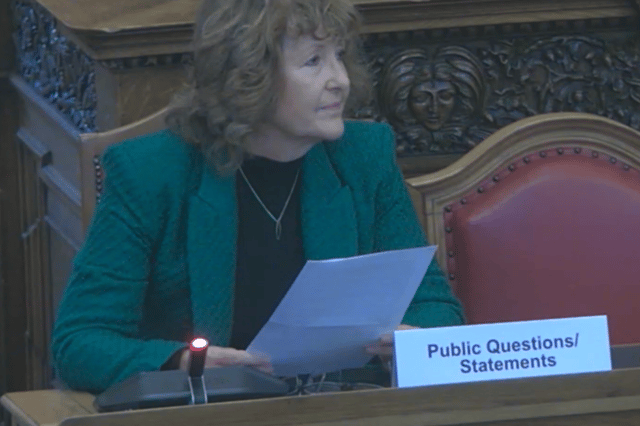

Changes to the system were announced in June, which Sheffield City Council said will "make it simpler and more accessible for residents of the city to ask questions of their elected representatives."
Under the new rules, questions must be submitted by midday, six clear working days before the council meeting.
However, this is the same day the agenda report, which can be legally complex and hundreds of pages long, comes out.
If the agenda is published early on, for example at 8am, it gives the public four hours to digest it before the deadline, on a working day.
If it is published after midday, the public do not have the opportunity to question the most up-to-date council plans.
Political magazine Private Eye reported: “Sheffield residents must become psychic, as the council appears to expect them to submit questions about issues discussed at meetings before papers revealing those issues are actually published.”
In a social media post, local campaigner Nicole Jewitt shared the Private Eye piece and told followers she had wanted to ask a question at a full council meeting in early November.
She said: "The deadline for questions was October 26. The agenda wasn't published until October 27. And the political developments I wanted to question weren't even announced until November 2.
“Apparently Sheffield residents are still expected to possess psychic powers if they want to hold their elected representatives to account.”
The public can submit statements instead of questions by midday four working days before meetings, but statements do not get a response.
Sheffield Council were asked about the new deadline for questions, but it did not respond.
Campaigners say this isn't the only part of the process they feel has been made far less democratic than before.
No chance to prepare follow up questions
Graves Park, Palestine and Sheffield's green belt campaign groups have all raised concerns in the Town Hall about receiving written responses from the council just before they enter the chamber for the meeting.
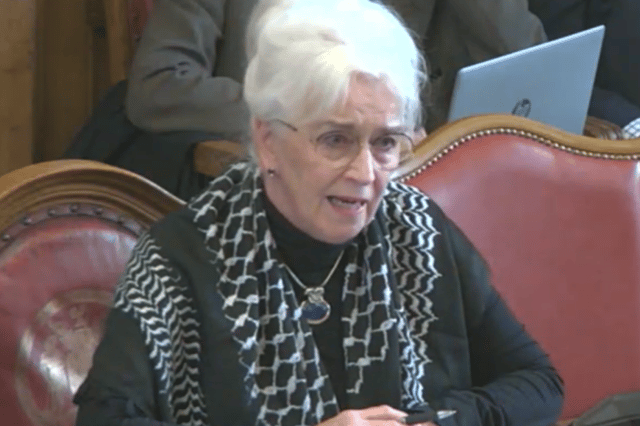
At a finance and performance policy committee meeting back in October, Annie O’Gara of the Palestine Solidarity Campaign said she had not had time to consider and prepare a supplementary question.
She said: "The procedure here has been inadequate in terms of ensuring that the public can fully participate in local democracy."
Ms O'Gara said the new deadline gives council officers plenty of notice, but that isn't mirrored for the public, who are not given "due time to think".
Green belt campaigner Robert Ritchie, who wears hearing aids, told a strategy and resources policy committee the new procedure is "ageist".
He said a response came through as he was travelling to town to ask the question, he couldn't access it because he doesn't have emails on his phone, and because of the acoustics in the chamber, he could not hear Councillor Belbin's response.
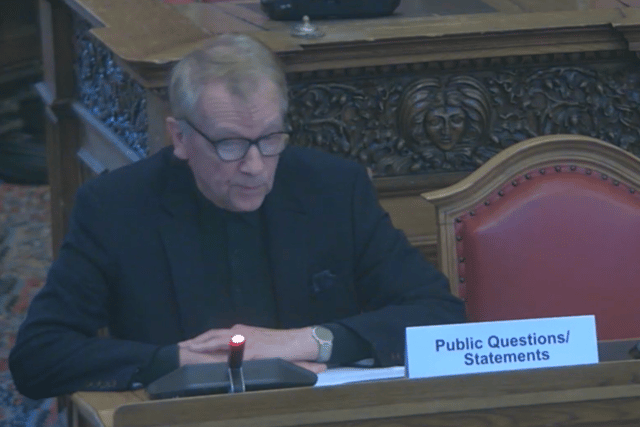
“This entire new procedure where literally we get about an hour's notice, doesn't just discriminate against people with disabilities it's actually downright ageist," Mr Ritchie said.
“Under the previous procedure we used to get the [answer] in writing a day before. Now we're lucky if we get them an hour.
"There's no chance of actually being able to read them, analyse them and put together a proper response to them, which I'm perfectly sure that's what has been deliberately designed to do under this new procedure."
Mr Ritchie and his wife Gillian Travis, who asked her own green belt questions at the same meeting, told councillors they had tried to guess what the council would say to help them prepare their response.
Council leader Fran Belbin responded: "It’s something our governance committee will be reviewing and making sure that people can get proper notice in order to be able to ask relevant supplementary questions."
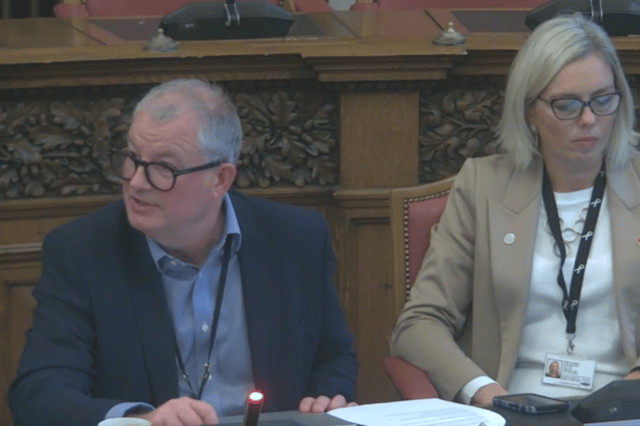
David Hollis, general counsel and monitoring officer, explained the public used to be given their answers the day before council meetings, but he said this "didn’t give proper time to give responses."
He said: "The intention is that [supplementary questions] are meant to be an immediate follow up arising from the answer that has just been given, rather than the opportunity to answer additional questions."
Gillian Travis told councillors: “This is a very unfair, stressful and in my view, as a qualified HR professional, discriminatory process, where you are particularly discriminating against the protected characteristics of age, disability and race with regards to giving these answers to questions literally as you walk through the door."
Ms Travis, who has experienced both public questions procedures in her campaigning against green belt development over the past 18 months, shared these concerns formally in a letter to the council's chief executive and Mr Hollis.
She explained it discriminates against people who face digital barriers, people with autism, dyslexia, ADHD, where English isn't their first language, or those like her husband who have hearing difficulties.
She wrote: “There is also a growing perception among Sheffield Green Belt Alliance members that these changes were introduced not to improve public engagement, but to make it more difficult for residents to ask challenging questions and scrutinise the council's decisions.
“I recognise that this is a perception rather than an established fact, but the experience of using both systems has done little to dispel it."
She asked for the upcoming Governance Committee review to consider the experiences of "those who actually use the process" if the council "genuinely intends to improve public participation."
David Hollis said: "We do appreciate that there are issues with the notice period for committees and we are going to look at that."