
Attempts fail to save historic Sheffield coffee house from partial demolition
Most of a former Sheffield coffee house described as an important part of the city’s working-class history can be demolished as part of a housing scheme despite calls to save it.
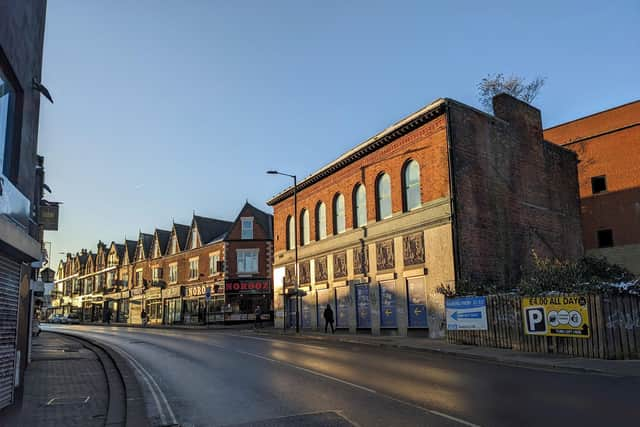
Only the front and side facades of the Victorian-built Highfield Cocoa and Coffee House on London Road will be retained in a new housing and commercial development.
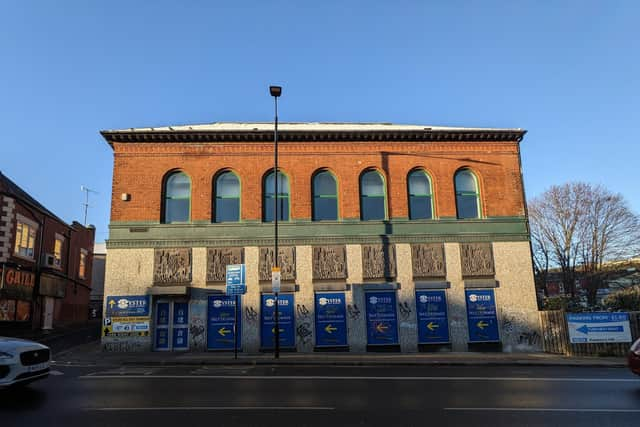

The scheme was supported 6-3 by Sheffield City Council’s planning and highways committee (January 13).
The rest of the building will be demolished and the original roof will be replaced by a two-storey modern one, in order to expand the number of apartments inside the building.

A former office block behind the old coffee house will also be turned into flats and a six-storey building can be built next to the coffee house on land once occupied by the Tramway pub. This will provide more apartments plus ground-floor commercial space.
The total number of apartments across all three buildings will be 65.
Heritage
The proposals were opposed by several heritage groups and council heritage champion, Coun Janet Ridler. She acted to prevent its demolition three years ago.
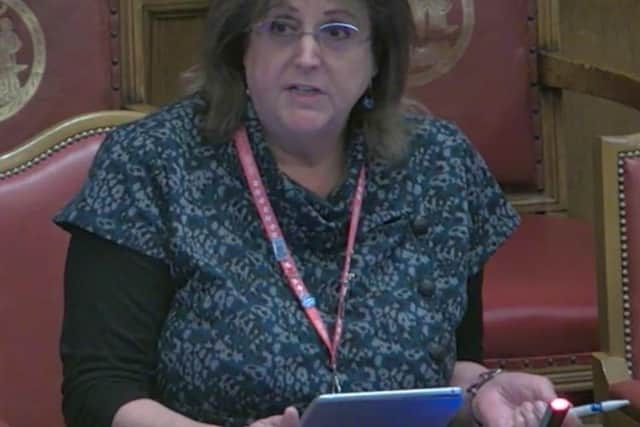
Coun Ridler, who is a member of the committee, stepped back from the decision in order to speak against the proposal.
Planning officials said that one issue is that the council currently cannot show that enough housing land is available to build enough homes over the next five years. Therefore, planning rules give developers extra leeway, which is known as the tilted balance.
The coffee house does not have the extra protection of a listed building as it is only a ‘non-designated heritage asset’. Planning officer Chris Heeley said that attempts to get the building listed in 2023 were rejected by Historic England.
Highfield Cocoa and Coffee House, also known as Mappins Coffee House, was built in 1877 as a meeting place for working-class men and their families to socialise without having to go to a pub. It was the first of a network around the city.
Industrialist
It was financed by Victorian industrialist Sir Frederick Mappin.
Coun Ridler said: “The Highfield Coffee House is not a grand building but its quite historic importance must not be overlooked. It has huge significance in the working-class history of Sheffield through its temperance role in the Victorian period.”
She said that the building should be “converted, not destroyed” with a more sympathetic approach taken that has worked in the past.
Coun Ridler said that the recent loss of the Wiley & Co Tudor-style shop facade on Haymarket in the city centre shows how vulnerable retained historic facades can become.
Nether Edge and Sharrow ward councillor Nighat Basharat also spoke to oppose the plan. She said: “I am speaking on behalf of many people, residents and people who value preserving our heritage, which this building represents.
“Local people feel very strongly that the building should be saved which is why I campaigned with them to oppose demolition.”
Detract
Both councillors said that the proposal would detract from the Victorian streetscape on London Road.
Nigel Slack from the Victorian Society pointed to other objections from Hallamshire Historic Buildings, the Council for British Archaeology and the 20th Century Society.
He said: “The applicant has already tried twice to demolish the building, so claims they care about its heritage are a bit shaky.”
Mr Slack that ‘facadism’, where only exterior parts of a building are retained in a development, is an unacceptable practice.
It also fails to preserve interior fixtures and fittings, of which there is evidence.
Applicant Michael Barlow said that he is from the fourth generation of a family shopfitting company that for many years used the coffee house building as a showroom.
Viable
He said that the rise of “out-of-town sheds and online shopping” meant the company had to go into liquidation. Mr Barlow said that about half of the site, which includes other buildings and land owned by the firm, has been repurposed as a self-storage company and two car parks.
Mr Slack said that new life could be breathed into the area if councillors approved the application.