
13 years into Sheffield's £2.2bn Streets Ahead contract - has Amey kept its promises?

“City roads are worst in country. But £2bn investment will make them the best,” read The Star’s frontpage in June 2012.
Sheffield’s roads were branded the worst in England in 2012, after eight per cent of the city’s highways were damned as “poor” by the Department for Transport - twice as bad as both Doncaster and Barnsley.


Out of this came the Streets Ahead contract - a 25-year agreement for council contractor Amey to spend five years resurfacing more than half of all roads in Sheffield, overhaul infrastructure like street lights, and fix all potholes for the next 20 years.
All this and more for £2.2billion - £800m+ from Sheffield’s budget, and £1.2bn from No 10 under a ‘private finance initiative’ (PFI).
"Sheffield will go from having the worst roads in the UK to having the best roads in the UK," announced Mike Notman, Director of Highways PFI at Amey in July 2012.

Urgent meeting
Fast forward 13 years, and Sheffield City Council called an emergency all-councillors meeting with Amey under the weight of complaints from residents, members and MPs.
An Amey spokesperson said it would draft in “extra repair teams” to handle demand.
One councillor, Maroof Raouf, for Nether Edge and Sharrow, was unimpressed.
“I felt we were fobbed off with vague answers. All the councillors were pretty aggrieved,” he told The Star.
“Amey was asking for specific pothole locations as if they didn’t know where they are, despite people reporting them on Fix My Street.
“As councillors we are getting it in the neck from constituents and rightly so.
“An Amey person said the roads weren’t meant to last the length of the contract... And they said the perception was worse than the reality - but I disagree.
“We have absolutely no leverage whatsoever and it's unacceptable.
“The people of Sheffield need to see the contract and councillors and officers need to be bold and brave and how to hold Amey to account.”
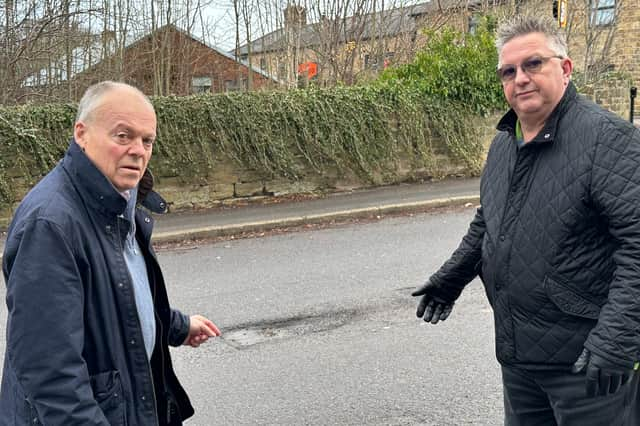
Lib Dem Councillor Martin Smith for Dore and Totley added: “What we're seeing is the same roads failing again and again. Amey patches a pothole, it breaks up within weeks, and the whole cycle starts over.
“That isn't value for money - it's a sticking plaster on a broken bone. We're pushing for a proper assessment of which roads need to be fully rebuilt to a standard that can actually cope with the traffic they're carrying."
What does the Streets Ahead contract say?
So what does the Streets Ahead contract say - and, 13 years and over £1bn into the contract, has Amey followed up on its promises?
The Streets Ahead contract, worth approximately £2.2bn, is an agreement for Amey to maintain nearly all of Sheffield’s highways and infrastructure until 2037.

It was originally negotiated by a Liberal Democrat led council but was finalised under Labour and signed in 2012.
It began with resurfacing 65 per cent of the city’s roads in the first five years plus upgrading all streetlamps into LEDs. These were accomplished.
Amey is now tasked with maintaining roads, bridges, footpaths, traffic lights, bins, and litter picking. It was also, infamously, tasked with managing trees.
It is worth noting the contract does not cover major upgrades - only maintenance.
It means if the council ever wanted to upgrade the aging roads underneath the resurfacing works or other infrastructure, it would need separate funding.
An unredacted copy of the Streets Ahead contract - which runs in total to over 1,000 pages, and was negotiated behind closed doors - has never been released to the public.
Indeed, in 2017 during the Tree Felling Scandal, The Guardian claimed several of the city’s most senior officials at the time, include council leader from 2011-2021 Julie Dore, had not read an unredacted copy of it either.
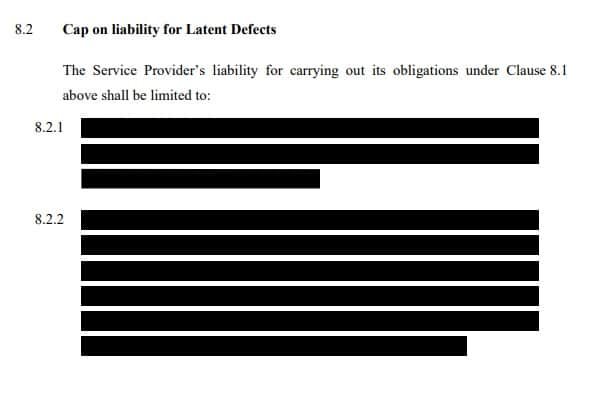
It includes instances like the clause 8.1, ‘Cap on liability for latent defects,’ which would appear to cover potholes.
It states: “The Service Provider’s liability for carrying out its obligations under Clause 8.1 shall be limited to...” - and is followed by nine solid black lines.
Dozens of more pages specify what does and does-not classify a ‘category 1’ serious pothole, and the timeframe Amey must follow to fix them.
Meanwhile, a cost-of-borrowing agreement signed off in 2018 means Sheffield taxpayers will be paying millions towards settling the contract until 2057, 20 years after it ends.
How do you fix a pothole anyway?
The vast majority of complaints received by The Star take aim at “shoddy repairs” slammed as “patchy” with “black gravel” strewn across roads.
A prominent, recent example is a pothole in Rushdale Road, Meersbrook, which local councillors pictured themselves measuring as six-inches deep and a metre wide.
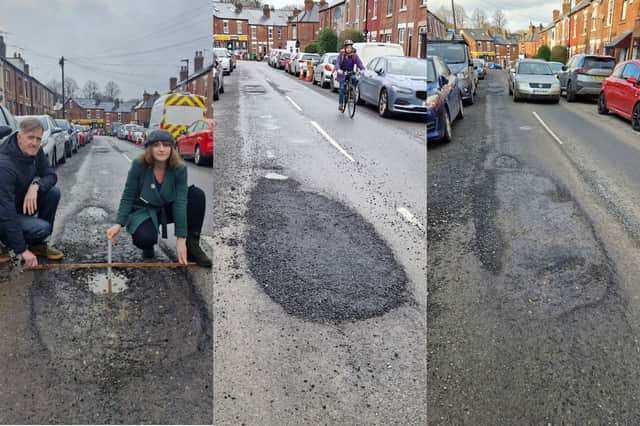
The deepest, most dangerous part of the pothole was repaired, but within two weeks it had frayed with black gravel spread across the road.
Councillor Marianne Elliot said it was “clearly inadequate” and demanded greater scrutiny of private company Amey, which has a £2.2bn contract over 25 years to maintain streets.
But it is a useful example of the public perception towards temporary pothole repairs done using cold lay asphalt.
There are two main ways to repair a pothole:
| Method | Looks like | Used for |
| Cold lay asphalt | Pouring in cold specialist black gravel from a bag, tamper it down with a plate compressor | Temporary and urgent repairs |
| Inlay patch, or hot lay asphalt | Cut a square hole around the pothole, pour in hot asphalt, level with a road roller | Permanent repairs |
Both Amey and SCC strongly deny that cold lay asphalt is used for permanent repairs.
Both the contract and a 2025 report by the council states that any pothole that poses a significant danger (Category 1) must receive a temporary repair within 24 hours using cold lay, followed by a permanent hot lay repair within 28 days.
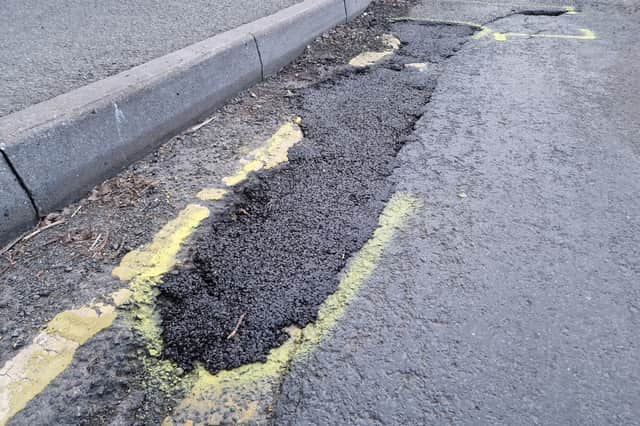
But The Star, across hundreds of pages of the Streets Ahead contract and reports, has been unable to find how everyday potholes that rattle car chassis and make for bumpy roads are prioritised.
As an example, this pothole on Campo Lane is severe enough to see the cobblestones underneath, but does not pose a danger. The Star pictured it in October 2025, and it still has not been fixed as of time of writing (March 13, 2026). It does not appear to have been reported on FixMyStreet.
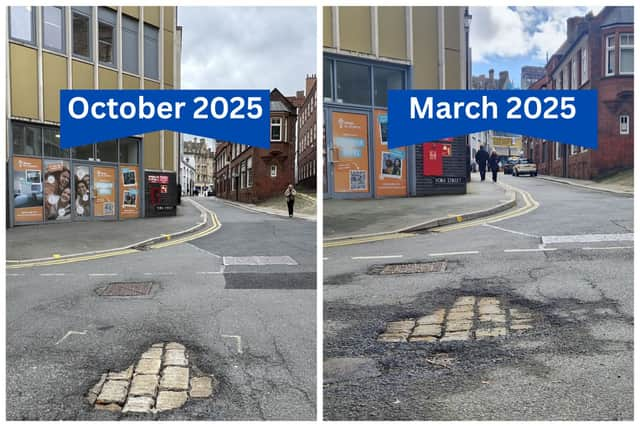
The frustration among the public is how residents see severe potholes treated with temporary repairs before permanent fixes are carried out, how minor potholes can go without repairs for weeks, and how the full Amey contract is not available to the public.
So, with that in mind, how are Sheffield’s roads doing in 2026?
State of Sheffield roads in 2026
“I have had more complaints about Sheffield’s roads in the last few months than I’ve ever seen,” says MP for Sheffield South East Clive Betts, who has been in the job since 1992.
Like Councillor Raouf said earlier, councillors and MPs have been inundated with complaints about the state of roads, and even led MP Marie Tidball for Penistone & Stocksbridge to raise it in the House of Commons on March 8.
“The roads in Sheffield were in a pretty shocking state in 2012,” said Mr Betts.
“What the contract did was to bring the roads up to standing in a short period of time, and replace the street lamps with energy efficient ones, which was well done and Sheffield probably now has some of the best in the country.
“What I think has happened is the standards of maintenance have fallen, and everyone can see it.”
Sheffield Council figures show that the number of potholes, and pothole repairs, have tripled in recent years.
Estimate number of Category 1 (severe, dangerous) potholes filled:
| 2020/21 | 2021/22 | 2022/23 | 2023/24 | 2024/25 |
| 2,348 | 2,707 | 2,862 | 5,762 | 6,179 |
Estimate number of Category 2 (not dangerous) potholes filled:
| 2020/21 | 2021/22 | 2022/23 | 2023/24 | 2024/25 |
| 2,448 | 1,539 | 1,650 | 1,586 | 5,770 |
The number and cost of claims to the council for damages to vehicles because of potholes in 2024/25 were also at their highest for nine years, according to Sheffield Council figures.

In a statement, Sheffield City Council said this rise is because of prolonged wet winter weather in the UK and traffic rising back to normal levels after the pandemic, adding that “a rise in repairs often reflects weather conditions, reporting levels and ageing infrastructure.”
Meanwhile, a DfT report rated the overall condition of Sheffield’s roads in 2025 as “amber” - the same as 124 other local highway authorities - and SCC is challenging the rating.
However, as Mr Notman (Director of Highways PFI at Amey) said in 2012, Sheffield was promised “the best roads in the country”.
‘We must hold Amey to account’
The fact the Streets Ahead contract cannot be seen in full has led to concern that Amey is not being held to account.
The sudden drafting of more repair teams as a result of an urgent all-councillors meeting has not helped this perception.
Clive Betts, Maroof Raouf, Marie Tidball and Marieanne Elliot have all called for more scrutiny from the council over Amey.
Mr Betts specifically claimed the council has “no oversight”, while Lord David Blunkett called for more punishments saying: “It is a great pity that there were not clearer penalty clauses built into the contract, as although many of the roads in the city improved dramatically, a combination of poor continuing maintenance, and extraordinarily bad weather has taken us sadly a real step back.”
What does the council say?
Responding to claims the council does not have oversight over Amey, Councillor Joe Otten, chair of Environmental Services and Regulation Policy committee, fought to reject this and said the council is involved “every day.”
He said: “This is not a ‘set and forget’ contract — it is actively managed every day. Sheffield taxpayers deserve value for money, and we will continue to hold Amey to the standards residents expect. Our goal remains the same: a safe, resilient road network that serves Sheffield well for decades to come.
“A spike in potholes during winter does not necessarily indicate contract failure, provided defects are repaired on time and the overall road condition is maintained across the inspection cycle.
“We are not passive in this process.
“While we do not monitor every single repair, we carry out regular sample checks and independent audits, and we have full access to Amey’s records.
“We use the contract to challenge poor performance, and we have already pushed Amey to shift towards stronger preventative maintenance. In 2025, we refreshed parts of the contract to tighten expectations and improve how performance is managed.”
The council was unable to provide a record of resurfacing work carried out in Sheffield, but assured every repair in the city is logged.
A spokesperson added: “The Streets Ahead contract is robustly monitored by the client team at the authority.”
Oversight includes:
- A dedicated Highways Client Team that inspects work, checks materials, monitors complaints and enforces standards.
- Regular performance reviews and scrutiny at Council committees, with detailed reporting on Amey’s compliance and key performance measures.
- Contract mechanisms that makes Amey financially responsible for rework, it is in their interest to ensure repairs last.
- A contract refresh in 2025 that strengthened asset management and clarified performance expectations.
What does Amey say?
The Star asked Amey why the number of pothole repairs have risen so sharply in recent years.
“A rise in repairs does not automatically mean the roads are worsening or that repairs are poor quality,” said a spokesperson.
“Easier reporting through online tools and apps means more defects are being logged, which increases repair numbers even when overall condition hasn’t significantly changed.
“Recent winters have brought more heavy rain and freeze–thaw cycles, causing road damage across the UK - not just in Sheffield.”
Amey also detailed it has “significantly expanded” what it calls preventative maintenance, where Sheffield’s roads receive surface dressing to seal roads, slow deterioration and restore grip.
- RELATED: Sheffield's best bits: City resident Darcie Peskir has her say
- RELATED: New heritage champion says Sheffield’s past needs stronger backing
- RELATED: 'The perfect week to welcome back Whitworth to The Star'
- RELATED: A new place for your Sheffield weekend reading is here so you make most of the city