
The continuing relevance of Joan Maynard
Joan Maynard served as the Labour Member of Parliament for Sheffield Brightside from 1974 to 1987.
Vilified by the right-wing press – who had labelled her “Stalin’s granny”, a smear revealing more about the misogyny of the parliamentary lobby than Maynard herself – she stood as a standard-bearer for democratic socialism within the Labour Party and across the country. She was deeply committed to land justice, a lifelong focus of hers, and which remains as relevant now as it was then, with vast swathes of the country still held and exploited by the wealthiest one percent.
Maynard once remarked: ‘If you stole a duck off the common, you were sent to prison. But if you stole the common you were sent to the House of Lords, if you were not already there.’ The idea itself was not a new one. It echoes the eighteenth-century poem, The Goose and the Common, which asked whether the real criminal was the one who stole the goose form the common, or the one who stole the common from the goose. Maynard’s revision – appointing our thief to the Lords – was likely informed by the many she met during her thirteen years in Parliament.
Though she represented an urban constituency, Maynard brought with her a deep commitment to land justice, shaped by her upbringing in rural North Yorkshire and her work as an organiser and later Vice-President of the National Union of Agricultural Workers. One of her key achievements was to bring the use of the ‘tied cottage’ system to an effective end. The tied system saw agricultural workers forced to live in housing provided by their employers, leaving them vulnerable to homelessness if they lost their jobs. A feudal hangover that somehow persisted well into the 1970s.
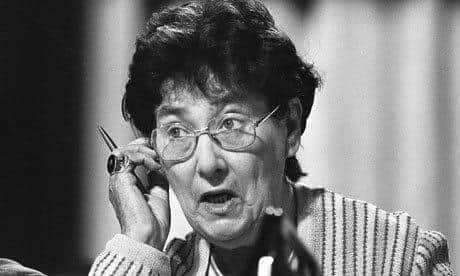

A few years ago, I wrote to Gavin Strang, the agriculture minister who oversaw the passage of the 1976 Rent (Agriculture) Bill, which had tackled the practice. He told me how he and Joan had both grown up on farms, and how they had worked together on a range of issues as part of that Labour government’s efforts to improve conditions for agricultural workers. It feels almost unusual now to think of Labour representatives coming from rural backgrounds – something that, in part, reflects how effectively the Wilson government had, with Maynard’s prompting, worked to address rural poverty.
For Maynard, the fight against tied cottages wasn’t simply about improving conditions for agricultural workers but also reflected her commitment to land reform and the restoration of the commons. The tied cottage system was a direct legacy of enclosure: the privatisation and mass theft of common land by aristocratic landowners. Enclosures forced working-class people off land they had worked for generations, making them reliant for wages from agricultural labour. The same class that had taken their land now controlled their livelihoods, meaning workers’ housing, income, and security were all at the mercy of employers.
She knew that ending tied cottages alone wouldn’t be enough to transform conditions for agricultural workers, which would require addressing wider issues of ownership and other continuing feudal practices. At Labour’s 1972 national policy conference, she successfully proposed a resolution calling for land to be brought into common ownership.
Her motion was clear: ‘Conference believes that all land should be publicly owned’, and the party should include in its next manifesto a pledge that ‘all land will be brought under public ownership’.
Her reasoning still stands today. She told the conference that public ownership of land was essential to ‘rid agriculture of the faceless landlords, the investment trusts, the insurance companies and the other speculators who are coming in and buying up land’. This remains true: the super-rich continue to snap up vast swathes of farmland, primarily motivated by tax relief. James Dyson, currently the UK’s largest private landowner, has bought over 36,000 acres of farmland to benefit from tax breaks. Jeremy Clarkson openly bragged about buying his farm for tax purposes. These are only some of the more high-profile examples.
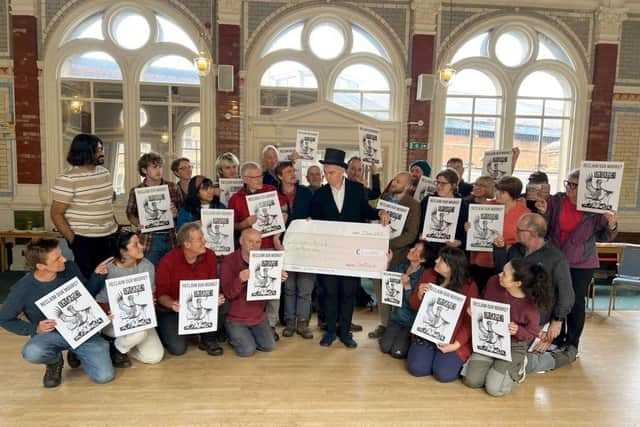
Maynard also warned the conference that too much land was used as a ‘playground for the rich… [for] the hunting, shooting and fishing’, and that the only way to ‘put a stop to this use, or misuse, of our land’ was through reclaiming it for the public good. That warning is just as urgent today. The Duke of Rutland regularly devastates the Moscar moor, 6,000-acres that are subjected to routine burning to prepare for grouse shooting. These acts of environmental vandalism damage peatlands and regularly pollute our city’s air. This estate could be serving climate, biodiversity, and community, but is instead sacrificed for the bloodlust of the aristocracy.
Local campaigners from Reclaim our Moors are urging the duke to hand over the estate so that it can be brought into community ownership and properly managed. Their message is one that Maynard would have readily endorsed: mismanaged and degraded lands should not remain in destructive private hands.
Maynard was consistent throughout her life. In her last speech in parliament, in April 1987, she stated that ‘as a socialist I want land to be publicly owned’, because only when ‘land is publicly owned will we give the right weight to environmental concerns and less to making profits.’ Sadly, her message remains unheeded, and the degradation of our natural environment has continued at pace.