
Sheffield rugby player diagnosed with MND aged just 29 “loves” the sport but hopes it will be made safer
A Sheffield rugby player diagnosed with Motor Neurone Disease (MND) aged just 29 says he still “loves” the sport but hopes governing bodies will “adapt” and make it as safe as possible.
Tom Davies, now 30, began playing aged 9 or 10 just after England won the World Cup in 2003, in the second row most often and sometimes as flanker or number eight.
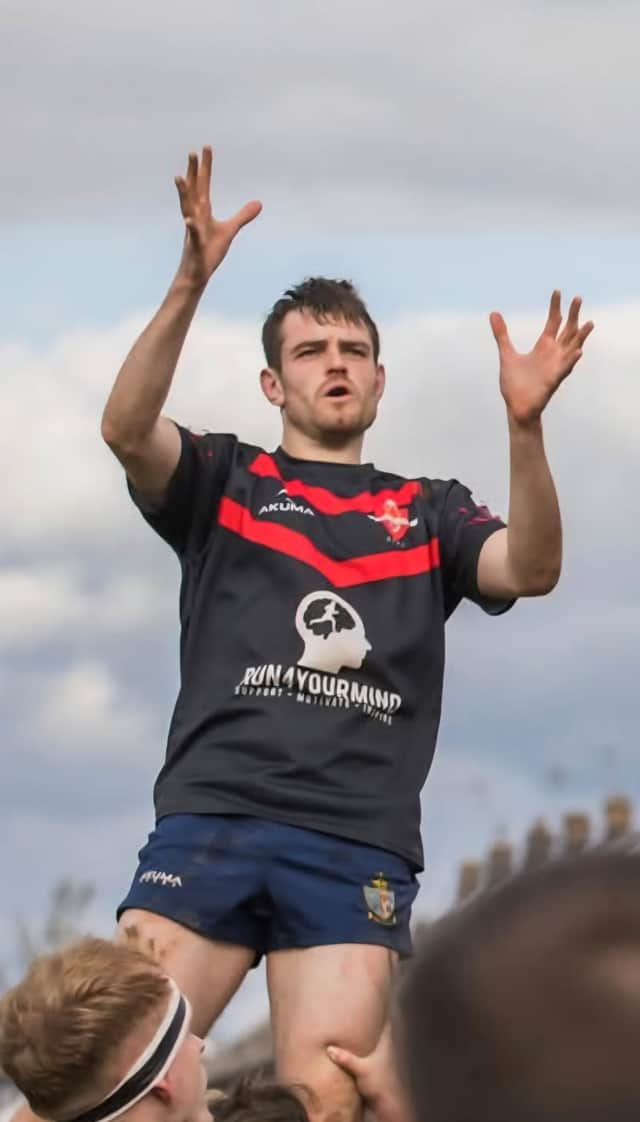

The former biochemistry and PHD student remembers lot of cuts and bruises but cannot recall being severely concussed though he witnessed this happening to team mates.
However in July 2024 he was told he had motor neurone disease, having initially noticed changes to his voice followed by a weakening in his hands.
Speaking about his rugby career, he said: “I never thought that I would get any long term brain related issues from playing, my only concern was that I might get some joint or muscle problems later in life.”
Tom played for Sheffield Medics RUFC from 2013-2021 before joining Sheffield Hallamshire RUFC shortly afterwards, where he is still a dedicated clubman to this day.
In April, Tom’s childhood rugby side from his home town of Birmingham, Sutton Coldfield, will come together with Sheffield Medics and Sheffield Hallamshire during the charity-fundraising Tom Davies cup on Hallamshire RUFC’s pitch at Bolehills, Crookes.
Ahead of the event Tom spoke with The Star over email from his accessible and adapted Crookes flat using a head mouse to type.

Speaking about the his daily life, he said: “I don't really think much about the limitations beyond what's necessary in a practical sense.
“I try to focus on what I'm doing day-to-day and week-to-week and plan lots of fun things to do. My partner Alex and my friends and family are also really good at getting me out and doing nice things too so that all helps.
“We've started going to the local comedy night with a few friends which is a lot of fun, and we sometimes go to the pub quiz too or just having friends coming round for a film or a game.
“I also just like going round the local park and going for a coffee too. Alex is really good at finding accessible activities too, so we've done cycling, climbing and swimming on occasion too.”
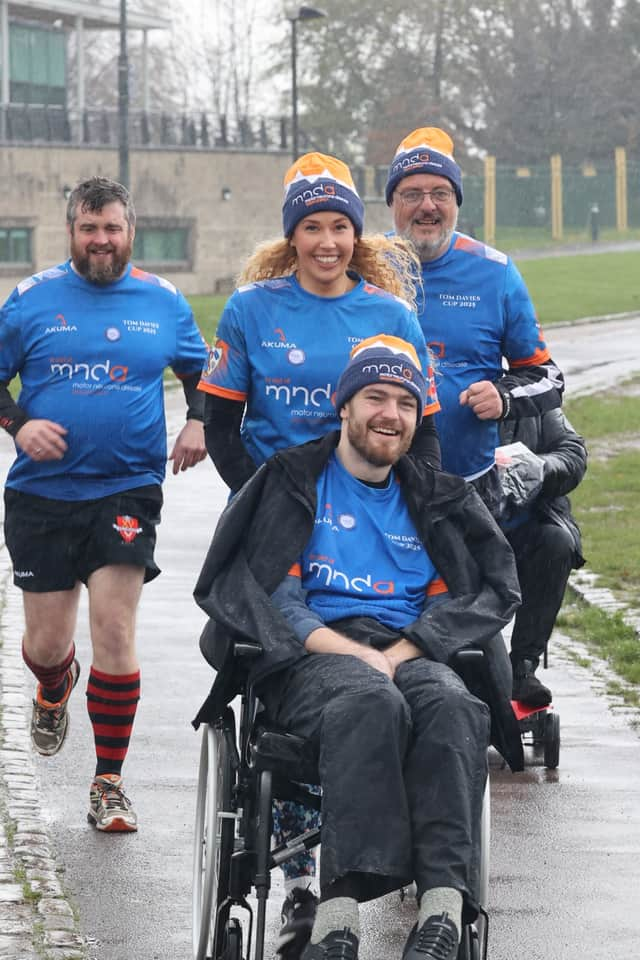
Tom’s symptoms have continued to progress since his diagnosis. He is now reliant on a PEG feeding tube for almost all his nutrition and uses a wheelchair as he is unable to stand unaided, and has very little function now in his arms and hands.
Commenting on possible links between the sport and MND, he said: “At present it's a really understudied area so it's impossible to know for certain.
”Ultimately we don't know much about why some people develop MND. But I think there will be more research into the potential links between rugby and MND as more high profile players seem to be getting diagnosed with the disease.
“But I hope that the governing bodies continue to adapt and make changes as new evidence comes out to make it as safe as possible for all involved.
“I think things are moving in the right direction with tackle height and concussion protocols in place. Limiting contact time in training and the number of games played per year would also help, especially for under-18s.”
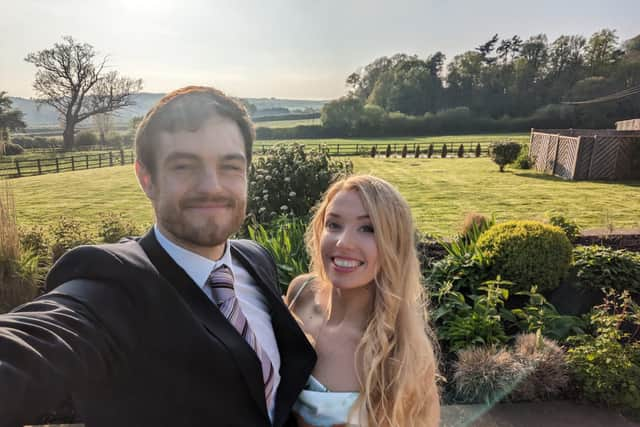
Tom met his devoted partner Alex Ross, 30, on dating app Hinge five years ago. Speaking about their life together now, she describes him as a “wonderful partner” who is “incredibly thoughtful and generous”.
She said: “He’s a genuinely lovely soul and still an incredible friend to everyone around him. We still have a really good life together - we have a lot of fun and laugh every day.
“And we’ve got such good family and friends around us. Tom doesn’t let the MND define him, it’s just a part of him - he’s still Tom at his core.
“I already knew he was a phenomenal person but my admiration for him just grows all the time.
“When I see how he just tackles it and stays positive, he values his wins so much that you forget about the losses sometimes. I try and reframe my thinking to be more like Tom.”
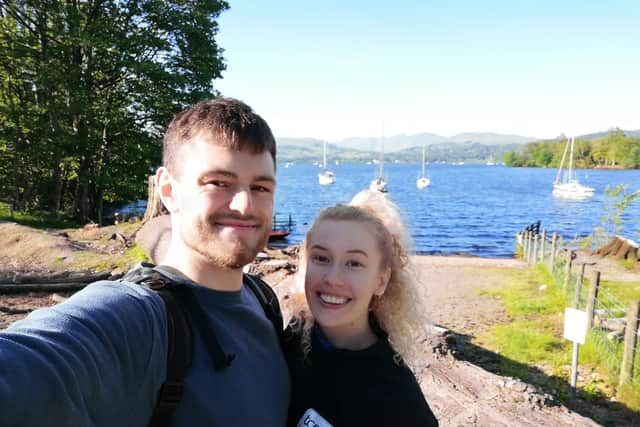
Speaking about dealing with the disease and thoughts of the future, Alex said: “It’s certainly challenging at times. Motor neurone is such a cruel disease.
“One of the most challenging things is the uncertainty with motor neurone disease. We have no idea what kind of time scales we’re looking at and it’s impossible to predict how Tom’s body will change.
“That makes planning for the future really impossible. Because of that we just try and take one day at a time. We always have something to look forward to.”
Last weekend the couple ticked off one of Tom’s “bucket list” items - seeing Wales beat Italy from the player’s bar at Cardiff’s Principality Stadium courtesy of former Wales player Alix Popham’s charity Head for Change.
The Tom Davies cup - supporting Sheffield Institute for Translational Neuroscience and the Motor neurone Disease Association - will take from on April 25, starting at 12pm.
Anyone wishing to make a donation can do so HERE.