
Outrage as historic rock monument on Hallam Moors in Sheffield defaced by vandals
A historic natural monument on the Hallam Moors has been defaced by vandals who have etched lettering into the rock.
The Head Stone, otherwise known as Stump John, the Priestley Stone or the Cock Crowing Stone, can be found at the head of the Rivelin Valley in the Peak District National Park.
It sits just above the moorland skyline and is a prominent landmark which some say has cultural significance, with many using the rock formation as a stopping point on circular walks from Wyming Brook.

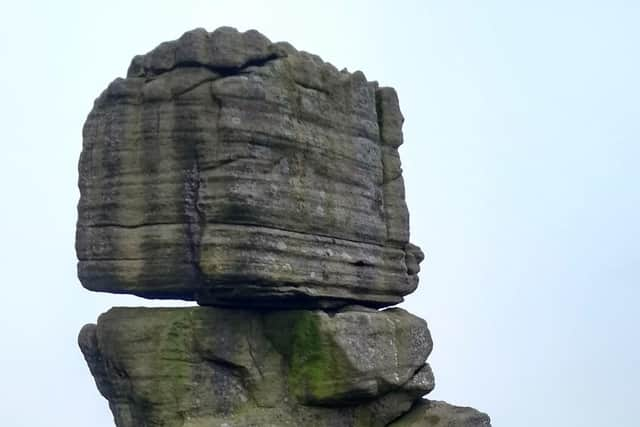

However, the natural monument has now been damaged by vandals who have chipped away at the rock face.
Worrall resident Michael Smith first noticed the ‘graffiti’ in November but after visiting the site within the past week says more has now appeared.
He said: “The west face has been defaced by chipping into it what looks like Phillip 1933 then M+H 2020 was added at a later date.
“It is a pity they chose to damage such a magnificent pristine outcrop to make their mark. Sadly, everyone else now has to put up with their graffiti.”
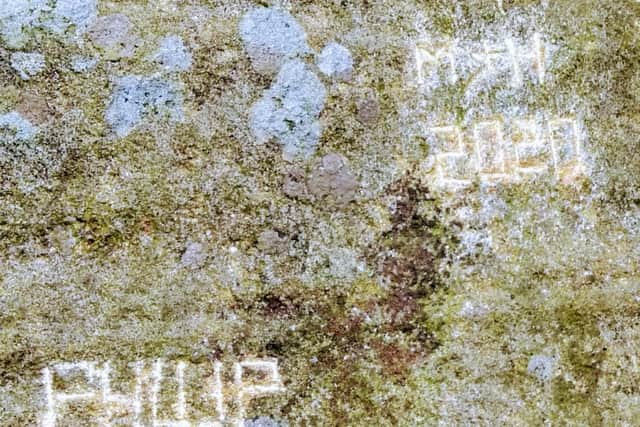
Mr Smith said he was disappointed and described those who had made the markings as “thoughtless.”
He added: “There are some comparisons to be made with much older carvings, there are for instance loads of bronze age carvings which are now considered heritage. There’s an awful lot of Victorian intials carved in sometimes on boundary stones by local gamekeepers and the like.
"I guess if they’ve got dates in the 1800s people think they are historic in some way but it is a debatable point as to whether these are future heritage items or what I consider to be vandalism or thoughtless graffiti.”
A spokesperson for the Peak District National Park said: “Whilst any vandalism or graffiti to features in the landscape is frustrating to see, this type of permanent, physical damage appears particularly senseless.
"The ‘Head Stone’ would have likely been a key navigational aid in times past, but like so many of these prominent rock formations there remains much we also still don’t know about their historical significance.
"Whatever the individual motivations behind this particular incident, we would ask that people respect the landscape of the Peak District National Park for everyone to enjoy, now and in the future.”