
Dame Julie Kenny died after 'missed opportunities' in treatment, Coroner rules
DAME Julie Kenny DBE DL – one of the region’s most “driven and tenacious” businesswomen, an “ardent philanthropist” and the champion of Wentworth Woodhouse – died of multiple organ failure after “missed opportunities to fully explore her symptoms”, a Coroner has ruled.
The inquest into the death of the mother of three, grandmother of eight, wife and step-mother who was “loved by everyone who knew her” was concluded today, (Thursday, June 11) at Doncaster Coroner's Court.
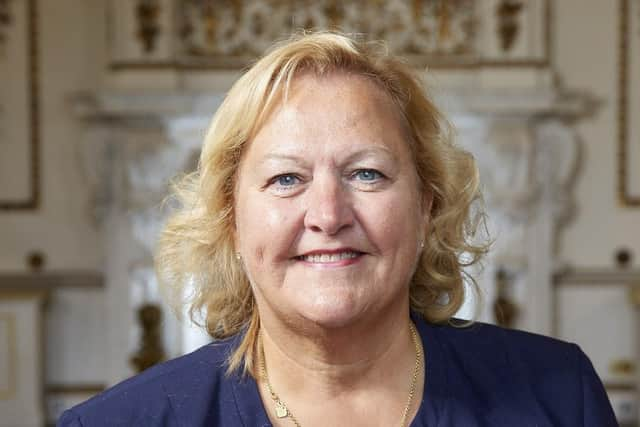

Dame Julie – who was awarded a CBE in 2002 and made a Dame at Buckingham Palace in 2019 – died at Doncaster Royal Infirmary at the age of 67 on February 21 last year, 13 days after she was admitted to Bassetlaw Hospital on February 8 with severe abdominal pain.
The inquest into the death of the former High Sheriff was opened at Doncaster Coroner’s Court between February 24 and 26 2026.
While the conclusion was initially set to be handed down on the final day, the Coroner, Nicola Mundy, determined that additional time was needed to obtain and consider further evidence – in particular the outsourcing of radiology reports – before a final conclusion could be given.
The court heard Dame Kenny's pain on February 8 had moved into her back and there were episodes of vomiting.
Blood tests were done and a CT scan was carried out with the scan results outsourced to Everlight Radiology “for interpretation.”
The inquest had earlier heard that "swirling” or “whirlpooling” of the intestines was not always included in the CT scan report by radiologists as there were “differing views” on it.
But it was a “significant feature” in Dame Julie's case and “should have been included,” Ms Mundy said in her summing up.
If it had, there could have been a “robust management plan to monitor Dame Kenny before any further deterioration.”
Instead her symptoms were treated as pain related to her gall bladder.
Dame Julie had also previously had a gastric bypass, which increased the risk of twisted or herniated organs.
By February 14, her condition was beginning to “significantly deteriorate” and her family previously shared with the court conversations and texts from her at the time saying she was in “horrendous and excruciating ongoing pain.”
Those who treated Dame Julie “did not have the full picture of the pain she was experiencing, the fullness and severity.”
“A CT scan should have been done on the 14th of February ”, said Ms Mundy, as it would have led to “urgent and further surgical intervention.”
She described it as “missed opportunities to fully investigate her symptoms”, later adding: “I accept the evidence that had surgery taken place place on February 14 it is likely on the balance of probabilities Dame Kenny would have survived.”
Instead a CT scan was booked for the following day when Dame Julie had suffered “clear and significant deterioration.”
The scan on February 15, also analysed by Everlight Radiology, led to urgent referral for surgery.
Dame Julie was operated on the same day and was found to have ischemia of the bowel – when blood flow to the intestines slows or stops.
She later died at DRI on February 21.
Ms Mundy gave the medical cause of death as multiple organ failure due to bowel ischaemia with volvulus due to previous gastric surgery.
She gave a narrative conclusion to the inquest – a brief factual summary statement instead of the standard short-form conclusions which does not attribute the cause to an individual.
The Coroner would not be requesting a prevention of future death report as she did not feel the threshold had been met.
“With regard to Everlight, the evidence I have heard and accept is the reporting radiologist has changed his practice in light of this case as has the organisation as a whole,” she said.
But she will be writing to the Royal College of Radiologists “drawing this case to their attention” and supplying documents from the inquest to understand if there are differences in reporting when radiology services are outsourced.
She described Dame Julie – who grew up as one of six children in Sheffield – as “driven and tenacious”, a highly successful business woman and an equally strong presence in the life of her family.
An “ardent philanthropist”, Ms Mundy highlighted in particular her work with the Wentworth Woodhouse Preservation Trust.
Offering the family her sincere sympathies, she told the court: “She was loved by everyone who knew her.”