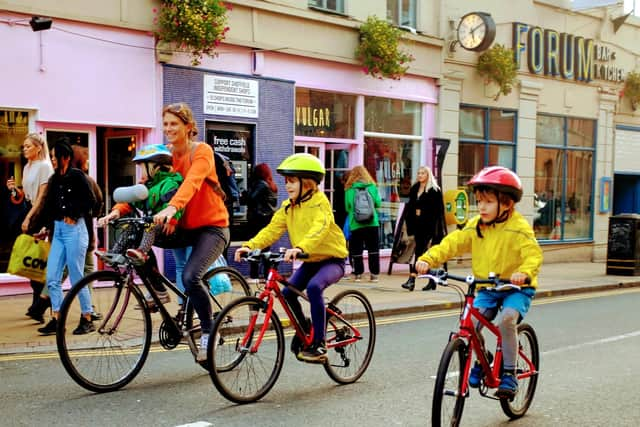
Cycle-free streets could be key to recovery for Sheffield retailers
It is easy to get a misconception about where business comes from on a typical shopping street, says Sam Wakeling.
“The cars are big and obvious and parked there in front of you, so it’s easy to focus on them,” he says. “But business comes from people.”
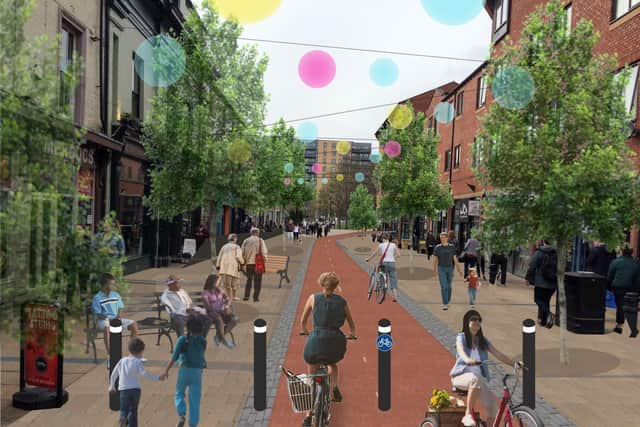

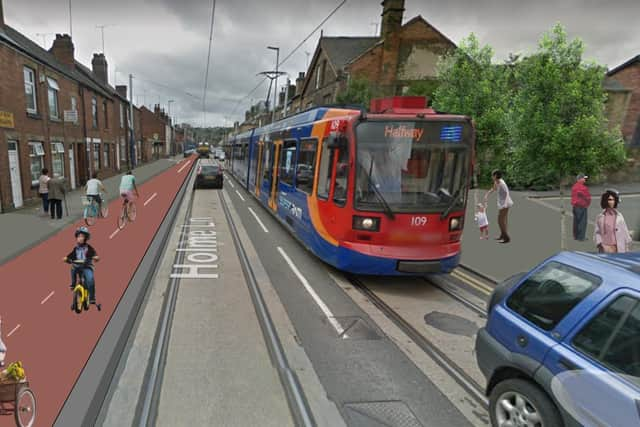
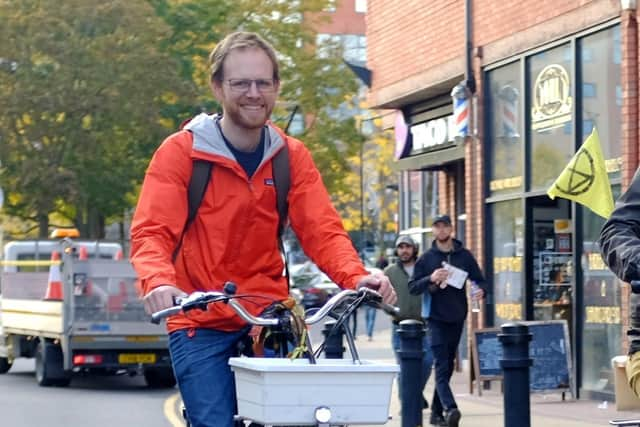
Over the last year, Sam, a local designer, has reimagined his city in photo mock-ups of key city streets; South Road with tricycles instead of speeding traffic, Kelham Island with trees and cafe tables, Division Street full of pedestrians rather than car parking.
“It’s powerful to play with the idea of looking at this space we’ve got between the buildings,” he says, “and say what could we use it for if it was laid out differently?”
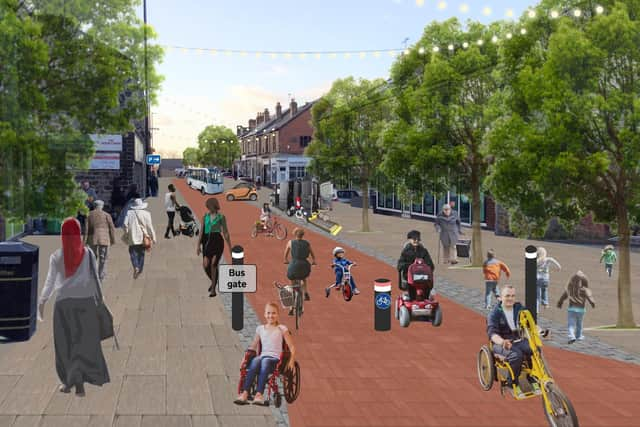
The reimagined cityscapes have received far more positive comments than negative, wherever they are posted – in Walkley, the new view of South Road almost won an art competition.
Sheffield’s commitment to a 2030 carbon neutral date will require dramatic reductions in car use within a handful of years, Sam says.
“So we have even more reason to shift to ways of using our streets which do us more good, for our health and community and local economies.”
The arrival of coronavirus brought further urgency.
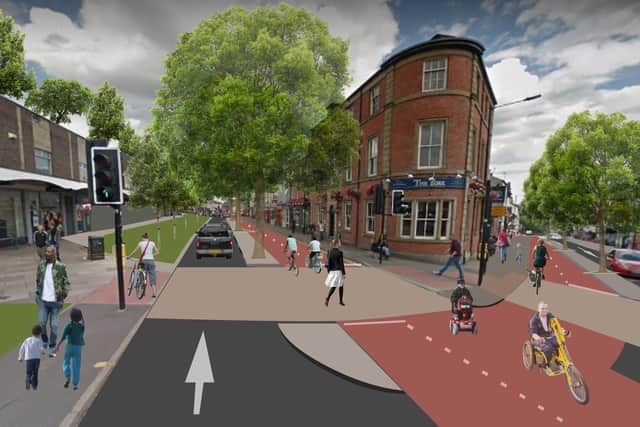
This week, Sam’s vision of Division Street will begin taking shape, after a trial pedestrianisation last year.
Retailer Debbie Moon, of MoonKo, says: “Division Street is a vibrant independent retail quarter. By reducing traffic, you reduce air pollution and open up the street to a possible increase in footfall.
“And on a practical level with the easing of lock down, there will be more room for people to manage social distancing and access cafes and shop spaces outside.”
Karl Hallam, of opticians Eye Eye, says: “When the road was closed for the trial people lingered longer.
“Social distancing will only allow safe socialising on streets like Division Street if we create space for it.
“Pity we had to wait for a pandemic before it became obvious to decision makers.”
Not all retailers support streets designed for people, not cars. However, the evidence is there, from cities around the world.
The Living Streets charity says the ‘pedestrian pound’ is grossly underestimated by businesses.
In most case, they say, there is strong evidence that pedestrians spend more than people arriving by car.
Jenny Wiles of Living Streets, an adviser to the Sheffield City Region on active travel, says: “When streets are regenerated to boost walking there is a corresponding increase in footfall and sales by up to 30 per cent.
“Research shows shoppers on foot can spend up to six times more than those who arrive by car.
“And shopping areas with a good pedestrian environment stand to fare better in these times.
“It’s incredibly important people feel safe right now.
“Streets with fewer cars and more space to physically distance are going to be the places people want to visit and spend time.”
Sam points out that his pictures are about priorities, not bans.
People who need cars or vans to make deliveries, or because they have disabilities, will find using their vehicles easier because there is less congestion. But if there’s less car space, where does that congestion go?
Sam says: “Traffic is not like water in pipes. It’s about people making decisions about their journeys.”
When streets change to favour walkers, for example, drivers choose to walk or cycle instead, or drive on different roads, or change their journey plans and visit local shops rather than shopping centres.
As the government pushes more walking and cycling before and after the Covid-19 era, there is a local realisation that if most people choose to travel by car rather than public transport over the next few months, there will be further damage to the economy and public health through city gridlock and a dangerous rise in air pollution.
So Sheffield Council says there’ll be more schemes to help walkers, cyclists and wheelchair users cope with modern times – and Sam’s pictures give an idea of how that might look.
He says: “These ideas are very popular.
“Now it’s about decision makers being bold and getting on with it.”