
‘You can’t take my memories away’: Star readers reveal the biggest changes in Sheffield in their lifetime
From lost landmarks to disappearing industries, Star readers have been sharing the biggest changes they’ve witnessed in Sheffield over the years.
By far the most common response from readers was the removal of the ‘hole in the road’ - a landmark so unforgettable that dozens mentioned its filling in as the biggest change they’ve seen in Sheffield.
“The hole in the road being filled in and the tram lines being constructed,” said Andrew Cox.
“The filling in of the hole in the road,” added Christopher Philip Hartley, who later wrote: “You can take hole in the road away but you can't take my memories away.”
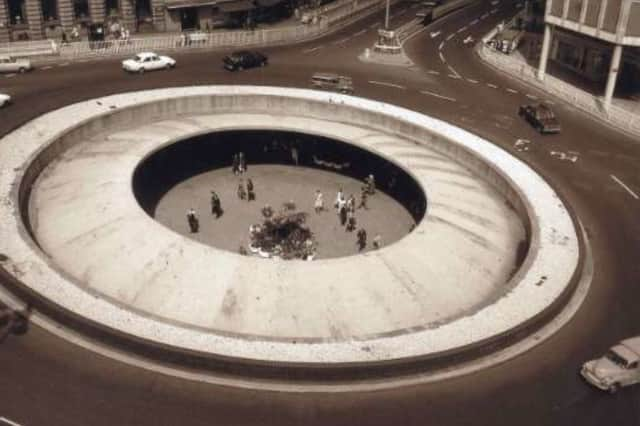

Others echoed the same thought almost word for word: “Ole int road filled in,” said Phil Gladwin.
“No more hole in the road,” wrote Scott Hirst.
“The hole in the road being filled in,” said Sarah Graville Thompson.
For many, nothing symbolised Sheffield more than the Tinsley cooling towers.
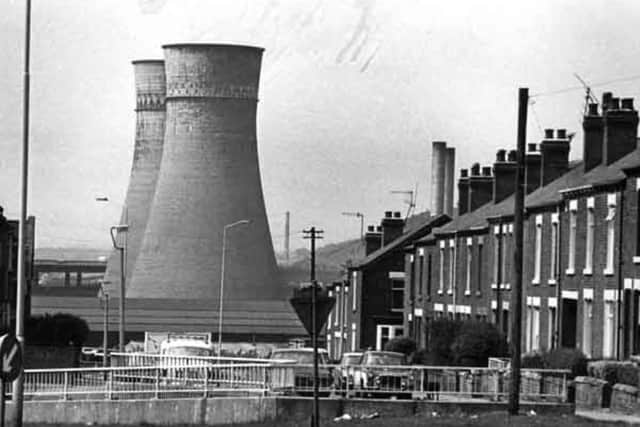
“The cooling tower. Everyone who driven on M1 knew they finally home when they say them,” said Zulfi Khan.
Some readers reflected on how the city’s traditional industries and social spaces have changed.
“Loss of Working Mens Clubs,” wrote Rob Helliker.
“No iron foundries now, no overhead cables for the trams, Victoria station gone,” said Paul Wilkinson.
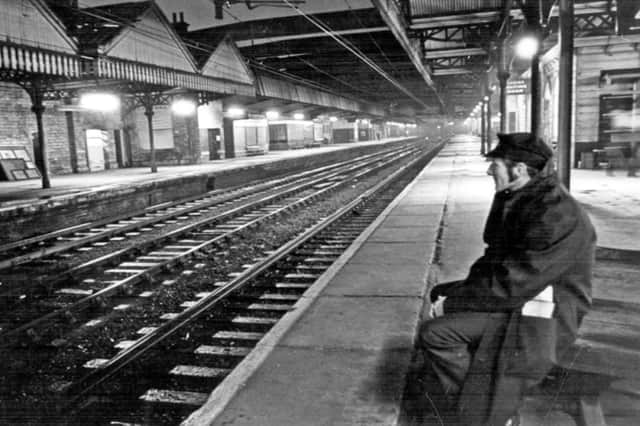
Transport and nightlife also made it into people’s memories.
“In the year 60 and 70s the outer circle bus would take me around Sheffield and I would catch it at Longley Park. And the bus Service was great,” recalled Keith Mellalieu.
“The demise of the massive corridor of boozers, from The Wicker to Tinsley. That crawl was legendary! Everywhere evolves and changes over time, but Sheffield still has it's own unique identity, love it,” said Chris Scales.
One of the most vivid recollections came from Caroline Mozley, who remembered visiting the city as a child, and comparing it to what it is now.
“I have never known why but my WW2 war veteran father once took me on the bus into Sheffield. I must have been about six or seven years old having been born in 1947,” she recalled.
“What I saw of Sheffield left an indelible image in my mind. Everything was black, and charred. I asked my father why and his reply was 'The work of the devil'.
“It was only as I grew older that I understood what he meant but now I am happy to walk around Sheffield and see the ever growing changes that have taken place since that day I walked into a black hole clutching my father"s hand.”
“I love going into the cathedral and what I appreciate most is the Railway Station which has been modernised and boasts a beautiful fountain.
“George Orwell might also be happy to see the changes that have taken place were he alive. Sheffield would be a far cry from the one he described in 'The Road To Wigan Pier'.”
Some readers focused on how Sheffield’s green spaces have transformed.
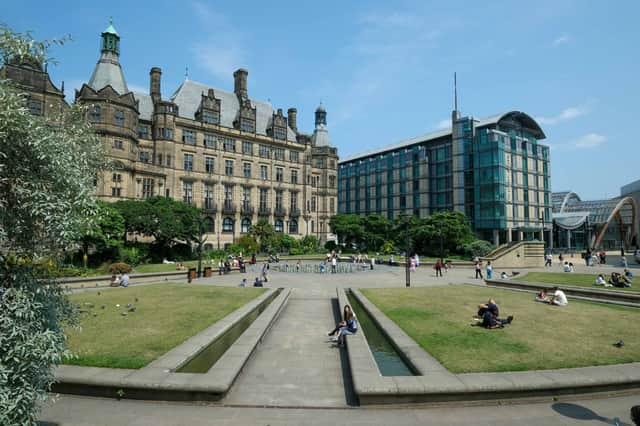
“My lifetime is 65yrs and my Shefftime is 35yrs…If I have to pick only one change…it would be the Peace Gardens,” said Graham Webb.
“When I first went near that place it was very rundown, seedy and enclosed.
“Now it's a modern open space for the public where children can run through little water fountains.”
Others pointed to more restorations.
“The restoration of the Botanical Gardens and more recently the improvement of the General Cemetery,” said Mike Robson.
Several readers reflected on how the city looked decades ago.
“I started working in the Steel City in 1973 when there were steel works everywhere… Left in 74… came back in 2014 so much has changed,” wrote Peter Adams.
“An airport came and went, the Cooling Towers went and The Full Monty put the Steel City back on everyone's mind.”
And for some, one landmark stands above the rest: “Construction of Meadowall,” wrote Timmy Homealone.