
Sheffield Race Equality Commission four years on: 'The conventional ways of thinking have led city to where it is now'
Sheffield’s key anchor organisations threw their weight behind the findings of the city’s Race Equality Commission and vowed to do better. Here is chairman Kevin Hylton’s open letter to the city four years on ...
Dear Sheffield,


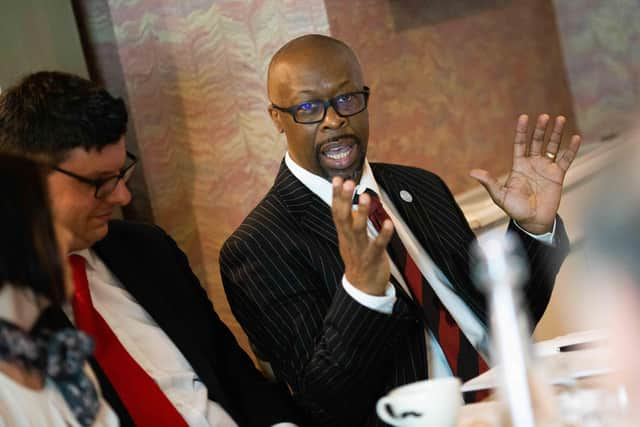
I was recently invited to the second Sheffield People’s Assembly to meet with residents and leaders to discuss progress on race equality in the city. I was invited as the independent Chair of the Sheffield Race Equality Commission and was therefore particularly keen to hear firsthand about the experiences of Sheffielders since the Commission’s Report.
In 2020, the Race Equality Commission was established because the reality of ‘race’ was evident in Sheffield due to everyday racism and racial disparities. It was the role of the Commission to conduct an extensive assessment into the nature and extent of racism and racial disparities in Sheffield.
In my panel talk, I shared that academics and policy advisors (like me), whose task it is to explain society and educate, recognise that this is only part of the race equality agenda. There must be thoughtful, sustained action that follows. So, practitioners who are slow to act or who do so with limited consultation or co-production of solutions with local people, like those in the People’s Assembly, are wasting resources.
From 2020 to 2022, 24 Sheffield-based commissioners gathered documentary and oral evidence in hearings from local people and leaders to develop a deep understanding of the city's racial landscape.
We received over 250 pieces of evidence over 12 days of hearings, attended by 165 individuals and organisations, and documented over 400,000 words of transcripts.
The Race Equality Commission’s report was expected to trigger a measurable, transparent, and accountable citywide response to the 39 Recommendations that would improve the ‘trust and confidence’ in Sheffield City Council and its anchor partners that had been lost over decades in communities impacted by racism and racial inequalities.
From the beginning, the key ‘anchor’ organisations endorsed the Commission and, at the end, pledged to meet the following major deadlines:
24 months – become an antiracist city/organisation
36 months - meet the relevant 39 recommendations of the report
To fast-forward four years after the report launch: 2025 marked 36 months since the report's launch. I have been struck by the relative lack of transparency regarding next steps and progress toward meeting recommendations.
I am aware of many things that have happened in the city since 2022, though these have not demonstrated the necessary joined-up, robust, systematic and sustainable transformation advocated in the report.
At the People’s Assembly, I wondered whether the city was falling into what Ted Cantle described as a ‘doom loop’ in which riots and issues lead to reviews. There seemed to be a lot of commitment in 2020, especially as the global Black Lives Matter movement was so prominent in the city.
However, a section in the Race Equality Commission report offered a word of caution as it stated clearly that since 1995, racialised events in Sheffield have led to similar inquiries. For instance, into local authority equality policies and the Yemeni and African Caribbean communities (1995), A Best Value Review of Services to racially minoritised communities in Sheffield (2003) and its response in 2004 (Margins to the Mainstream). And, related to this, the Fairness Commission in 2013 found significant inequalities across people and places in Sheffield.
What we have seen in the past and continue to see in Sheffield is a focus on ad hoc race-related outcomes and lists that, on one level, can be viewed as positive, but cannot be replicated, sustained, or address the institutionalised and embedded citywide issues reported by the Race Equality Commission.
Those who have focused extensively on antiracism and race equality are clear that we must move away from failed ways of working, which is a reminder that repeating the same approaches to race equality and racism will lead to similar outcomes.
They also remind us that we cannot meet the Race Equality Commission's Recommendations by accident. There must be a specific, resourced approach to this work in and across the city.
This should jolt policymakers and practitioners into pursuing more creative ambitions than in the past. It should also mark the start of an approach to change that includes a diversity of voices to refresh traditional approaches that have struggled not only because of leadership capabilities but also because of institutional cultures that slow innovation.
Using the sentiment of the University of Canterbury and the Māori Futures Collective, Sheffield must “First clear the weeds and then plant”.
If you haven’t read the Sheffield Race Equality Commission Report, I urge you to do so. Especially if you are involved in service or policy development. And more specifically, if you work in the areas that were the focus of the Commission.
The embedded nature of racism and racial disparities, and the need for structural change in organisations, needs to be dramatically better understood and capabilities improved by city leaders. And progress made easily available for all to see. Sheffield must make space for new and innovative approaches that draw on diverse expertise to address persistent, pervasive problems.
The conventional ways of thinking have led Sheffield to where it is now.
The 39 detailed Action Points in the Commission’s Recommendations, which were supposed to have been met in 2025, were drawn directly from those who matter most in the city (its residents and leaders). They directly affect them. And solutions should include them in a coordinated, coherent manner.