
Sheffield Lord Mayor, Safiya Saeed meets the Congolese Community, the Banyamulenge.
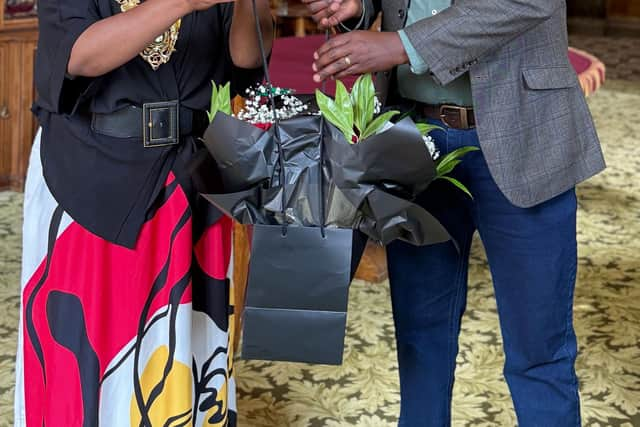
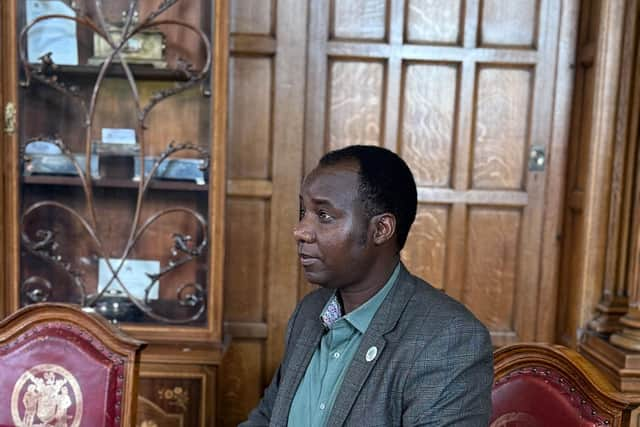
On August 28, a delegation of the Congolese Banyamulenge community living in Sheffield and its surrounding cities met the Right Worshipful Lord Mayor of Sheffield, Cllr Safiya Saeed.
Cllr Alexi Dimond of Gleadless joined the meeting in support to members of the Congolese communities in his constituency who invited the Councillor. Members of the Banyamulenge community in the UK came to share with the Lord Mayor the security situation of their relatives in the Democratic Republic of Congo (DRC).
On August 16, members of the Banyamulenge in the United Kingdom commemorated the 21st anniversary of the Gatumba massacre in Sheffield, UK.
The Gatumba massacre took place in 2004 in Burundi, and 166 civilians were murdered while under the protection of the United Nations. Cllr Alexi Dimond honoured this event to comfort survivors and the Banyamulenge.


Members of the Banyamulenge Community have lived in Sheffield and its surrounding areas for some years now, ranging from five to ten. They are originally from the eastern DRC, namely South Kivu province, one of the violence-prone regions.
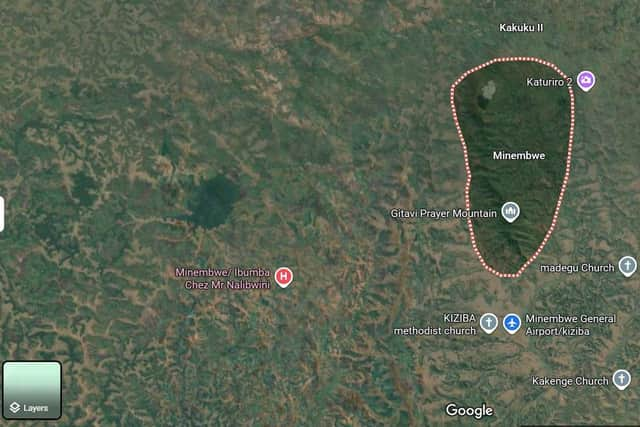
Due to violence in South Kivu that erupted from 2017 onwards, almost all Banyamulenge’s settlements (villages) were burnt to ashes, displacing local inhabitants who currently live in tiny and besieged localities such as Minembwe. Hundreds of thousands have fled to neighbouring countries, Burundi, Rwanda, Uganda and Kenya, to name a few.
Meeting the Sheffield Lord Mayor was an opportunity for them to familiarise themselves with local authorities, learn about the support that Sheffield Council can provide to local communities, including those facing marginalisation in their home countries.
The meeting was also an opportunity to share Banyamulenge’s experiences in Sheffield, and broadly in the United Kingdom. As expressed by the Banyamulenge community chairpersons, Franck Migambi and Alex Rukema, the aim to meet the Lord Mayor was to share with her office how relatives’ security situation in the Democratic Republic of Congo (DRC) affects them.
The Banyamulenge in Sheffield
The United Kingdom (UK), namely Sheffield and Rotherham, has become the new home for hundreds of Banyamulenge families. Other members of the Banyamulenge live in Manchester, Hull, Rotherham, Chesterfield, and Birmingham, which are Sheffield's close cities.
There are other Congolese communities across Sheffield and these neighbouring cities. Members of the Congolese communities in the UK are similarly affected by wars and violence going on in the Eastern DRC. However, the Banyamulenge experience targeted violence that intend to get rid of those portrayed as “immigrants” in their own country, the DRC.
For many decades now, the Banyamulenge have been attacked because they are perceived as “strangers and foreigners” regardless of their centuries-long history in the DRC.
Historically and mostly during the colonial period, the Banyamulenge were portrayed as “newcomers” due to their culture, language, and physical appearances. Colonial messes have set a tone for the persistent discrimination and persecution of the Banyamulenge, Congolese Tutsi and Hutu to a lesser extent, and the Hema. Within the complex security context, chasing ‘invaders’ is the main driver of violence against the Banyamulenge and other Congolese ethnic minorities in South Kivu, North Kivu, and Ituri provinces.
Banyamulenge Security Situation in the DRC
The delegation shared with the Lord Mayor that the Banyamulenge in the UK can only be safe if their relatives in the DRC are likely safe. Though they do not encounter similar forms of violence as those in the DRC, they remain connected with their relatives. The security situation of their relatives in South Kivu is worrisome and alarming. It has pushed the large number to flee across the African Great Lakes region and far beyond. The current situation can be summarised as follows:
Due to an armed siege imposed on the Banyamulenge civilians in Minembwe, for instance, the situation of the local population is extremely uncertain. They struggle to find basic products such as sugar, salt, soap on local markets. In August 2025, for instance, the price of a Kg of sugar is approximately $10, that of salt is $11, while that of a soap is $10. The price increase is approximately 400% compared to how it was in late 2024.
The price is not only high, but it is extremely risky to access these products. Even with such an extraordinarily high price, these basic products are very rare as they can only be obtained at a 50-60 km walk (one way) from Minembwe. A small group of people are obliged to travel during the nights to dodge combatants’ attacks from Minembwe to where they can buy these products. Such a long walking distance is associated with high risks of being killed or attacked by local and foreign armed combatants. Next to that, there are no banks notes; and transactions are incredibly difficult to manage.
Humanitarian Assistance Blockade.
Since 2017, armed groups have imposed blockades to prevent the provision of humanitarian assistance. Because of such an imposed siege, it is impossible to help the casualties and wounded people because health facilities are running out of stock in Minembwe.
From early 2025 onwards, local militias have blocked existing transport routes and destroyed telecommunication facilities. Militias and armed combatants have also blocked means that were used to send financial support to relatives and families in Minembwe and other tiny localities where they now live. For instance, there is no single transport route (no road, no airlift…) through which casualties can be transported (evacuated) outside of Minembwe.
On June 30, an aeroplane was destroyed by a drone in Minembwe. Some sources have claimed the aeroplane was on a humanitarian mission. While it’s yet unclear if the aeroplane was a humanitarian one, the destruction endangers efforts to provide humanitarian assistance to civilians.
Existing health facilities in Minembwe are overwhelmed. Injuries cannot be treated due to a lack of medication and equipment supply. Recent sources have claimed that there are hundreds of injuries in and around Minembwe, for instance. They have nowhere to go, and they are “left to rot”.
In many cases, the socio-security context in the Eastern Democratic Republic of Congo amalgamates civilians into armed confrontations. There are specifics when it comes to attacking the Banyamulenge because of their contested status, seen as not “real Congolese”. Humanitarian organisations, including the International Committee for the Red Cross (ICRC) and many other organisations, have not taken this situation seriously which affects thousands of civilians.
Requests of the Banyamulenge community in the UK
Members of the Banyamulenge in the UK, and specifically in Sheffield, are extremely affected by the situation of their relatives and communities in the DRC. During the meeting, members of the Banyamulenge community in the UK informed the Lord Mayor that such a tragedy is slightly covered by international mainstream media. Community efforts to raise the profile and make it known encounter challenges. The delegation asked the Lord Mayor to advise them on how to deal with it.
As a minority group that has been displaced and dispersed by wars and persistent violence, the Banyamulenge’s culture is under huge pressure to disappear. The delegation requests support to preserve the history and culture; this can include a community centre to educate young people.
Sheffield Lord Mayor's Office support
The Lord Mayor and thanked the Banyamulenge delegation for their initiative and interest to meet her and share their experience in the UK and the DRC. From her personal experience, the Lord Mayor underscores that: “I understand your pains and share the sorrow of yourselves and relatives”.
In her speech and based on an experience she encountered a few years back, the Lord Mayor indicated that she feels how the situation in home countries affects local communities and families even in Sheffield.
The Lord Mayor underlined that she holds a ceremonial role within the Council and has no power to influence the policy. She advised that her office would check some of the requests and get back to the community leadership.
The Lord Mayor invited members of the Banyamulenge to contact their Councillors and talk to them for any wish they want to share with local authorities in Sheffield. Sheffield Council has a list of other local organisations that can be of interest to partner with. The Lord Mayor insisted that the requests can be clearly reformulated and translated into practical actions and the community needs to assess what they are up to and seek support where needed.