
International Women’s Day: Time to talk about electoral reform
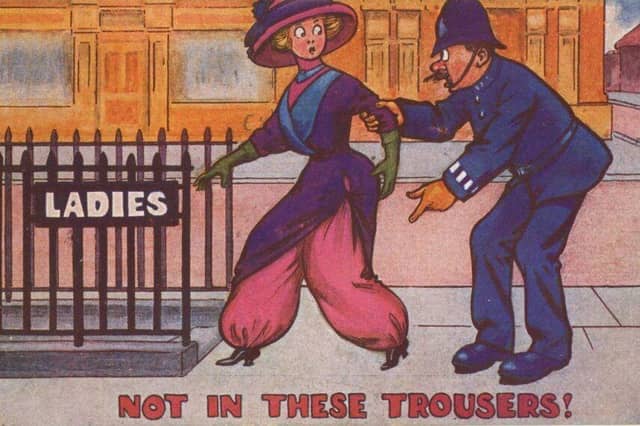

On March 8, International Women’s Day (IWD) will commemorate the women’s rights movement and highlight the progress still to be made concerning gender equality, reproductive rights and gender-based violence.
Throughout Yorkshire, notably in York, Leeds, Hull and Rotherham, events will be held before and on the day to celebrate it. Women’s suffrage – women participating in elections – is one right that is celebrated and endorsed during this holiday.
With the Government’s Representation of the People Bill due to receive its second reading on March 2, electoral reform advocates are campaigning to replace the First Past the Post (FPTP) system with a proportional alternative. Westminster’s current voting system has been criticised for distorting public opinion and denying representation for millions of voters. With the Greens’ surprise victory in the Gorton and Denton by-election, they also argue that it now threatens to destabilise British politics as voters seek options other than Labour and the Conservatives.
While women voting is considered uncontroversial today, there was an organised anti-suffrage campaign during the 1900s and 1910s whose members and leaders included women. With IWD nearly upon us, it is perhaps worth looking back at their arguments to see what they might show us about present opposition to electoral reform.
Political Expediency and Calculation
Governments usually claim to have more pressing matters to attend to. However, while the Liberal Asquith ministry contended with welfare reforms, the European balance of power, industrial strikes and the Irish Question, there were attempts to allow some women to vote in general elections via three Conciliatory Bills introduced between 1910 and 1912.
When considering measures changing how elections operate, electoral disadvantage would be a major partisan concern, although this may be publicly expressed as concerns about efficacy. During parliamentary debate on the 1918 Representation Act, Lord Curzon said that he was “unconvinced that it is either fair, or desirable, or wise, in the manner that is proposed, to add 6,000,000 female voters to the electorate of this country.”
With the current government having won under a third of the national popular vote at the last general election, do their arguments about priorities and propriety seem convincing?
A Threat to Society
It was believed that British society was divided into two separate but equal gendered spheres: the ‘public’ sphere of men which included politics and the ‘domestic’ sphere of women that encompassed the home, family, education and philanthropy. Leading female antisuffragists included accomplished writers, social reformers and philanthropists such as Mary Augusta Ward, Margaret Elizabeth Leigh and Sophia Lonsdale.
It was argued that women engaging in politics would merely imitate men, lose their moral authority and lack the insight to influence national policy. This was even framed in apocalyptic terms, with Sir Charles Hobhouse MP stating that women voting “might mean an immense destruction of the population of the country”, citing declining birth and marriage rates. The violent tactics of the suffragettes – in contrast to the peaceful suffragists – were proof for anti-suffragists that women could not cope with politics.
Comparisons may be drawn to anti-PR arguments that British voters would struggle to understand how to vote – which often involves crossing one or two boxes or the ability to count and express preferences – or that it would lead to chaos by denying single-party governments.
The Wider World
This train of thought extended to Britain’s imperial policy as it was argued that female enfranchisement would weaken Britain’s hold on colonies where societies were male dominated. Viceroy of India Lord Curzon and former quasi-viceregal Controller-General and Consul-General in Egypt Evelyn Baring were leading figures of the anti-suffrage campaign.
Before Britain extended its national franchise to women in 1918, nations both in and outside the Empire had already done so including the dominions of New Zealand, Australia and Canada, Norway, Denmark and Finland (the autonomous Grand Duchy within Tsarist Russia). Eighteen US states had granted women full suffrage by 1918 before the passage of the Nineteenth Amendment.
Opponents of PR will claim that it will cause chaos in the UK despite its use in 130 countries worldwide, many of which have greater levels of satisfaction with governance, social services and the economy. While some may further argue that many of these countries have histories and cultures incomparable to Britain’s, they include our former colonies, namely Australia and New Zealand.
We Already Have It
While it was feared that women would have been too uninformed to vote in general elections, women had been given the right to vote in local elections in 1869. As this right was reaffirmed and extended in 1895, over a million women were registered to vote in English local elections by 1900.
Similar to the debate around electoral reform, opponents of PR for Westminster elections discount its use in local and devolved elections in Scotland, Northern Ireland, Wales and Greater London. Given when it was implemented, there are Britons with at least two decades’ experience of voting under PR.
Looking to the Future
To a modern audience, the objections of the anti-suffrage campaign seem outlandish. Many of them overlooked the fact that women’s suffrage was already a reality outside of Westminster.
Given the many parallels between these objections and those to electoral reform, I wonder what voters after a century of PR may think looking back at the latter?