
On the Wildside: Woodland workers help secure the future of Graves Park’s woods
‘Graves Park’ situated in the south of the city is a jewel in the crown of Sheffield’s greenspaces. This 1920’s acquisition by Alderman J.G. Graves passed incrementally to Sheffield Corporation, and the centenary of the first parkland bequest is this year.
Our ongoing research over more than a decade, highlights how the park landscape includes significant prehistoric, medieval, and early industrial features, plus amazing biodiversity. The modern park has origins rooted in an early medieval deer-park, from the 1200s along with irreplaceable ancient woods. The latter were managed in the past for making charcoal as a mainstay of the regions metal industries. This was probably from around the 1200s until maybe into the 1700s.

Then, with emergence as a grand picturesque landscape park, the wood-colliers departed, coppice trees were probably grubbed up, and large areas of woodland were planted with exotic beech trees, sycamores, horse chestnuts, Italian black poplars, and even the occasional hornbeam.
Some of the replanted trees have associated wildlife and add to the landscape impact, but there are downsides too. Beech and sycamore cast dense, often early-season shade in the woods, suppressing then removing precious woodland wildflowers.
If this occurs on steeply-sloping ground then as vegetation dies back, soil is exposed and quickly erodes leaving hard subsoil at the ground surface. Eroding soils cause major pollution of downstream waterways like the River Sheaf, and subsoil sheds stormwater very fast leading to flooding.
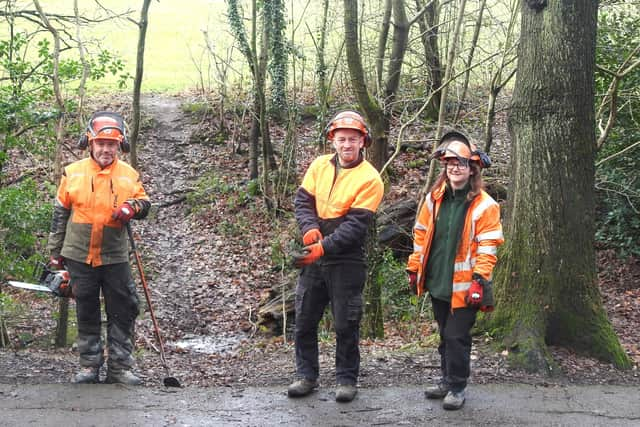
In areas of bare, open woodland, unofficial pathways and tracks tend to proliferate so the woods are fragmented and wildlife declines. These woods have had no planned management beyond emergency health-and-safety works for over 40 years, but working with South Yorkshire Biodiversity Research Group, the city’s countryside ranger team have now stepped in to start the process of recovery. This is the latest phase of our project funded by the J.G. Graves Charitable Trust and called ‘Graves Park & Local People Adapting to Climate Change’. With this modest beginning, the long-term aim is to slow the flow of floodwater, to capture carbon, and enhance biodiversity.
Professor Ian D. Rotherham, researcher, writer & broadcaster on wildlife & environmental issues, is contactable on [email protected]; follow Ian’s blog (https://ianswalkonthewildside.wordpress.com/) and Twitter @IanThewildside
- RELATED: Sheffield's best bits: City resident Darcie Peskir has her say
- RELATED: New heritage champion says Sheffield’s past needs stronger backing
- RELATED: 'The perfect week to welcome back Whitworth to The Star'
- RELATED: A new place for your Sheffield weekend reading is here so you make most of the city