
On the Wildside: Wintertime brings waterfowl to lakes and ponds
As the chill nights follow from cold days, waterfowl of different kinds and various species congregate in and around waterbodies. This might be a hundred or more Mandarin ducks on the River Sheaf at Heeley or small flocks of goosanders on the old Boating Lake at Graves Park.
The types of birds, the numbers that gather, and the time of day all depend on weather conditions, seasons, and the habitat. When some waterbodies freeze over then the birds mass on the remaining open water areas, and there will be big differences between upland reservoirs, lowland rivers, and lowland waters such as Rother Valley Country Park or RSPB Old Moor Wetlands Centre in the Dearne Valley of Barnsley. Habitat quality is important too and the so-called ‘diving ducks’ like the tufted which can swim quite deeply, may choose different sites to the ‘dabbling ducks’ like the mallard which imply upend and dabble in the shallows. Clearly, fish-eating goosanders and cormorants will congregate where there are abundant fish to predate, and so the Graves Park former Boating Lake is a favoured site.
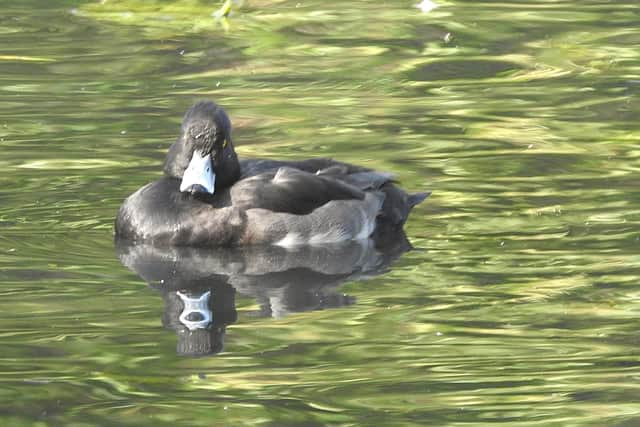

Back in the day this was the stock pond for other fishing locations across the city, and no fishing was allowed and at that time there were no cormorants or goosanders. Of course, the grey heron is another relatively recent arrival in terms of its recovery to the numbers we see today. The little grebe or dabchick has benefitted from cleaner waterways and waterbodies.
Other ducks will also arrive on sites such as park ponds in the urban catchment, with less common species such as the pochard and wigeon. The wetland nature reserves across the region will have numbers of the beautiful and diminutive teal, and of course, the dabchick’s larger cousin, the great crested grebe. The beautiful goldeneye is a rather uncommon winter visitor formerly restricted to upland reservoirs but now perhaps more widely dispersed. The ducks and geese share the wetlands with large numbers of overwintering gulls, and also a variety of wading birds such as lapwings, golden plovers, and oystercatchers.
Professor Ian D. Rotherham, researcher, writer & broadcaster on wildlife & environmental issues, is contactable on [email protected]; follow Ian’s blog (https://ianswalkonthewildside.wordpress.com/) and Twitter @IanThewildside