
On the Wildside: Will the departed swallows return next year?
I mentioned local, breeding swallows last week, and am following this up with some further thoughts. This is a species of bird clearly experiencing serious pressures and associated population declines. However, the situation is even more troubling because of the cultural importance and significance to us, of swallows, and especially their annual return to the breeding sites (around our homes) each spring.
In folklore, swallows were bringers of good fortune, as their return home symbolises the end of winter and the wellbeing and stability of the human domestic situation too. They were associated with protection from curses, diseases, and even fires (the latter being a problem in old-time thatched cottages with open fireplaces). For sailors, the swallow was a good omen as it signalled that land was close by and also these birds carried the souls of the dead up to heaven. So, around the world in many different cultures the swallow is a bird that we love, and yet it seems we struggle to safeguard its future in the face of ongoing human attrition on the planetary ecosystems. This really is very sad.
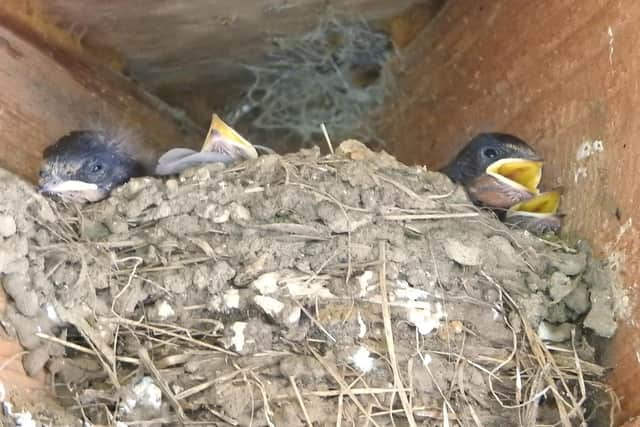

The swallow and its cousins the martins, were also considered very mysterious even up to the early 1800s. This was particularly because in winter they disappeared and at the time, naturalists didn’t understand migration. What they observed was that the birds gathered in large, noisy flocks around reedbeds and similar wetland habitats in late summer and early autumn. They were there one day as night fell, but gone the next, and the conclusion was that they hibernated over winter in the mud of ponds and lakes to reappear in springtime.
Of course, with no idea of migration and the distances that birds can fly, then sleeping through the winter in the sediments of a pond or lake probably seems quite reasonable!
Today however, we do understand the long-distance travelling of these joyous birds, and therefore the hazards and rigors that they negotiate annually. Surely the least we can do is help provide a welcome home on their return.
Professor Ian D. Rotherham, researcher, writer & broadcaster on wildlife & environmental issues, is contactable on [email protected]; follow Ian’s blog (https://ianswalkonthewildside.wordpress.com/) and Twitter @IanThewildside