On the Wildside: Wildflowers bring joy to a summer meadow
Chantreyland Meadow, Graves Park is an exemplary case of a community action project for nature and people giving year-round benefits to local wildlife. Created from the derelict kitchen gardens of old Norton Hall, the site was opened around 15 years ago.
It is wonderful in spring and during summertime too. We used it recently to open up and examine a live-trapping exercise for moths in a garden adjacent to the Park. This was as part of our long-term assessment and monitoring of the Park’s ecology supported as our ‘Graves Park and Local People Adapting to Climate Change’ project by the J.G. Graves Charitable Trust and a local individual sponsor. The moths were attached to light-traps overnight and then safely and carefully examined and released with an audience of around fifteen keen eco-champions. Our next free event is on Friday August 15 in the evening to watch for bats in the Park. (See www.ukeconet.org for details – prebooking is essential). Results of these community surveys are changing our understanding of the Park’s ecology and demonstrating its regional importance. They also provide vital baseline information against which future changes can be monitored and assessed.
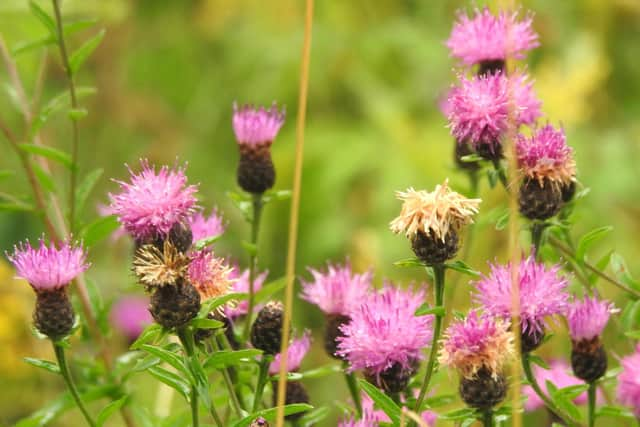
A theme of the project is meadow management and conservation, and this is proving hugely popular but also very beneficial for nature. Wildlife such as pollinating insects, vital for our own survival, need flowers for nectar and pollen and suitable vegetation in which to lay their eggs and for their larvae to grow and overwinter. With this in mind, the Park’s grasslands are, where appropriate, being managed as ‘meadows’ rich in flowers, bees, butterflies, moths, and hoverflies. Indeed, the management team at Sheffield City Council are to be congratulated on their fine achievements and the hard work is paying dividends. Unlike the other ancient meadows, Chantreyland Meadow is an artificial, created site and demonstrates what can be done from ground zero by a small but dedicated team of volunteers. It is quite remarkable and the lesser knapweed flowers (pictured) in bloom through July and August show vividly the results of their labours.
Professor Ian D. Rotherham, researcher, writer & broadcaster on wildlife & environmental issues, is contactable on [email protected]; follow Ian’s blog (https://ianswalkonthewildside.wordpress.com/) and Twitter @IanThewildside