On the Wildside: There's a rich autumn harvest from the humble bramble
Having had a long hot summer and following on from the hottest spring on record, many plants have thrived including the wild bramble or blackberry. Obviously, the equally long and almost unprecedented drought has taken its toll on plants in gardens and in the countryside.
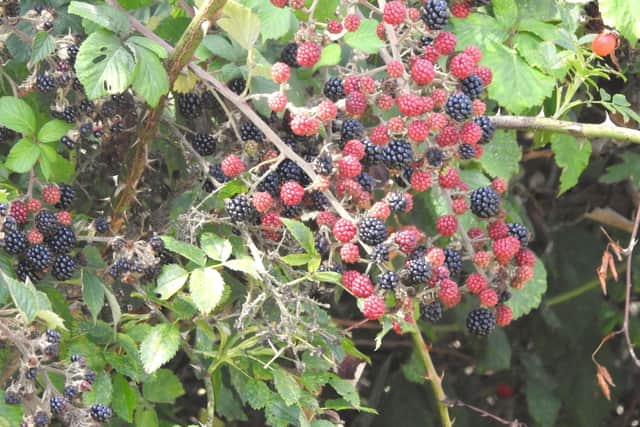
The warm, sunny weather earlier in the season has meant that shrubs like bramble have flowered profusely and also that there were plenty of pollinating insects to ensure a good crop of late-summer berries. These were already ripening by midsummer and whilst rather small, were deliciously sweet. It appears that the rain during recent weeks has make a big difference and many blackberries have bulked up. Blackberry pickers have quickly recognised the rich harvest, and many more accessible bushes have quickly been stripped bare. It some cases such as around Whitwell in Derbyshire for instance, it would appear that a later crop has then ripened as the early berries were taken. The picture shows a gorgeous bramble in a field near Fishlake in Doncaster, and it is absolutely laden with fruit. On private land, this is well out of the way of any would-be pickers aside from the owners and local wildlife!
The bramble is an unsung hero of nature conservation, perhaps so because it is very easy and free to grow. Dense, prickly branches provide excellent cover for wildlife and even in busy urban parks for example, give nature somewhere to hide away. They offer sites for nests of birds and mammals and roosting places too. However, there is much more to the humble bramble than this. In spring and early summer, the profuse flowers are great for pollinating insects from bees and hoverflies to flying beetles and bugs. Then, having done the business of pollination, the bramble stems bear heavy crops of berries gradually ripening through August and into September. In the sunny spots favoured by brambles, such as a woodland edge, a hedgerow, or a woodland ride for example, insects like butterflies and hoverflies love to loaf around on flowers and leaves to catch the sun.
Professor Ian D. Rotherham, researcher, writer & broadcaster on wildlife & environmental issues, is contactable on [email protected]; follow Ian’s blog (https://ianswalkonthewildside.wordpress.com/) and Twitter @IanThewildside