
On the Wildside: The robins herald the onset of autumn
I noticed in early September a sudden change in the birdsong in my garden and in nearby Graves Park, the birds were once again singing. After the summer breeding season is completed, for almost all birds the territorial singing stops and we have a very quiet period from July to September.
Essentially, for most species the breeding territories are abandoned, and the birds are recovering from the rigours of nesting, breeding, and raising youngsters, many of which are exceedingly demanding. In many cases, the adult birds are moulting into a new year’s plumage, and the youngsters are developing into adults. The overall result is that sometime between late June and early July the gardens, parks, and local woods suddenly descend into silence, which is especially noticeable on still, hot, late summer days.
Only the buzzing of insects remains audible.
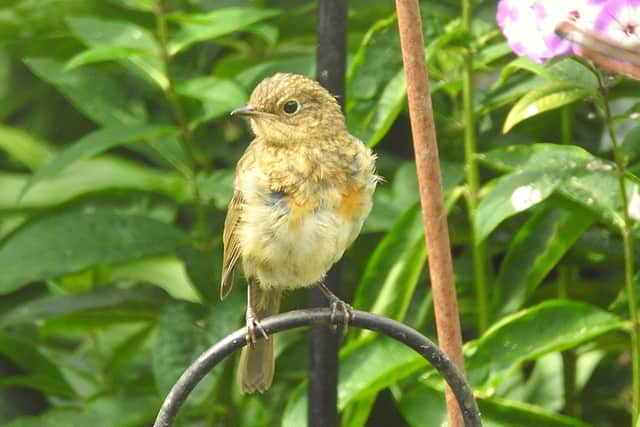
Anyhow, around about early September, quite abruptly as if someone had thrown a switch, the song returned albeit slightly different from that of the spring and summer. This is the autumn and winter song of the robin, and it is subtly different from the breeding season version. Also, by this time the male and female will in theory have established separate territories each one sufficiently large to support one bird feeding on insects, worms, and other small beasties. Both male and female then sing and defend their own patch independently and will aggressively chase off would-be rivals and intruders. However, my garden birds don’t seem to have read the script as they still seem to be hanging around as a pair, and which is quite unusual. By late winter they will probably have paired up once more and will then defined a shared patch of ground.

Another bird which has been very obvious and vocal in recent weeks is the common buzzard. Their far-carrying mewing cries are audible across Norton village and high over Graves Park. It is amazing as they call and circle just over the roof-tops and tree-tops, to think how this once regionally very rare bird, has recovered so dramatically.
Professor Ian D. Rotherham, researcher, writer & broadcaster on wildlife & environmental issues, is contactable on [email protected]; follow Ian’s blog (https://ianswalkonthewildside.wordpress.com/) and Twitter @IanThewildside