
On the Wildside: The early springtime bees are now coming out of hibernation
Occasional sunshine and warmer days trigger activity in nature, from early snowdrops and daffodils to emerging butterflies that have hibernated over winter.
Sunny days stir queen bumblebees into emergence from their wintering sites where they spent the winter dormancy. These female queen bees will have emerged towards the end of last year’s season when they and the newly-emergent males will have mated. Their old colony will have broken down, the matriarchal queen and associated workers died, and the mated new queens dispersed in the landscape to find suitable overwintering sites.
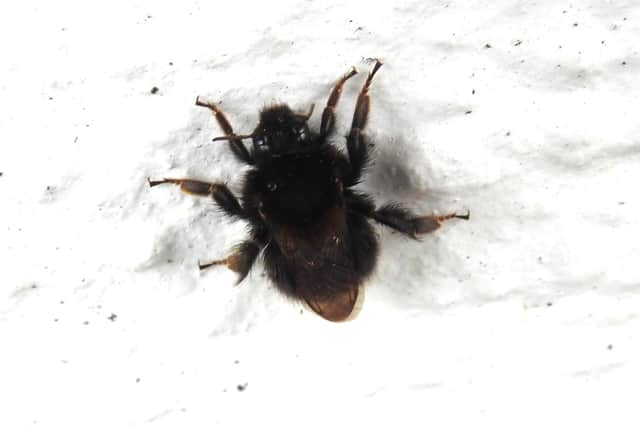

Now a change in the weather as spring develops leads to these large, queen bees appearing in and around the garden flowerbeds. Bumblebees, cuckoo bees, and other relatives are to be seen seeking nectar and pollen from spring flowers like profuse beds of massed crocuses, and early-flowering shrubs such as winter-flowering jasmine for example. Suitable places to spot these bees include sunny walls and the like where they bask in order to gain from the sun’s warmth. This can be a risky business as overnight at this time of year temperatures can quickly plummet and that can spell disaster.
One species of bee that is increasingly noticeable in spring is the ‘tree bee’ which is a recent colonist to Britain and nests in holes in masonry or often takes over bird nesting-boxes. I may revisit this species as it is one that generates a lot of enquiries. However, the species which caught my attention is, I think, the hairy-footed flower bee (Anthophora plumipes).
Jet-black, this was basking on the wall of my house. In this species, the females differ in appearance from the brown-haired males, being distinctively hairy and black all over but for orangey hairs on the hind legs. After mating, they gather pollen on their hind legs which is carried back to the nest. Laying an egg in each cell they provide sufficient pollen to feed the growing larva which is then sealed in. These youngsters develop over the subsequent year to emerge the following spring. And so, the cycle begins again.
Professor Ian D. Rotherham, researcher, writer & broadcaster on wildlife & environmental issues, is contactable on [email protected]; follow Ian’s blog (https://ianswalkonthewildside.wordpress.com/) and Twitter @IanThewildside