
On the Wildside: The cormorant, another bird on the ‘up’!
One of our most distinctive birds is the almost reptilian fish-eater, the cormorant. Historically subject to both pesticide pollution by agricultural chemicals like DDT pesticide, and by persecution from fishing interests, when I was a teenaged birdwatcher, this bird was rather rare.
It was restricted mostly to the seaside and certainly not to be seen in places like urban Sheffield. Furthermore, the widespread, almost ubiquitous, pollution of waterways pretty well banished fish and their predators (piscivores), from the region anyway. However, with all these factors now reversed and also the creation of new wetland nature reserves as well, the cormorants have returned, and in numbers.
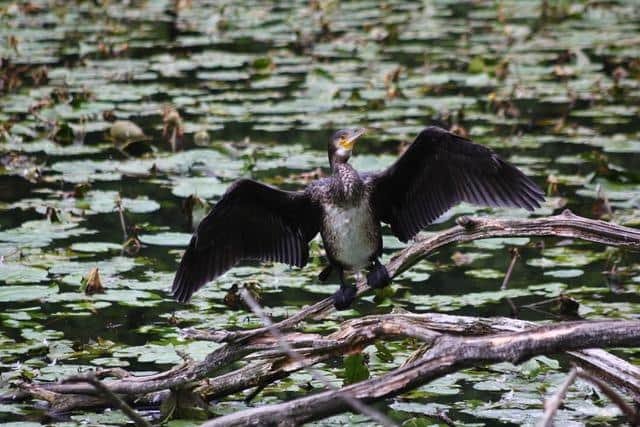
The super picture taken by Karon Mayor, the community officer for the J.G. Graves Charitable Trust-funded project ‘Graves Park & Local People Adapting to Climate Change’, was taken in the park on the lower pond formerly known as the ‘Boating Lake’. Here, local people were treated to tremendous views of up to three immature cormorants sitting out and drying themselves on the trunk of a fallen tree. Because cormorants lack the ability to oil and waterproof their plumage, they have to dry off with their wings spread out, in-between fishing forays. Indeed, this makes the birds very obvious and distinctive when they do drop by. In times past, this somewhat ominous appearance led to country folk associating the cormorant with bad luck, with evil, and essentially as a portent of doom!
I have seen cormorants flying over the area previously, including a couple over the nearby St James Retail Park, the local shopping precinct. Nevertheless, it is unusual for them to visit as they did for a few weeks in August. It seems that these individuals and perhaps adults too, are still visiting into late September.

They will soon be joined by those other fish-eaters, the goosanders which will be on the ponds throughout the winter months. Other regulars are several grey herons which fish and loaf around all three ponds. When they noisily take flight in the evening sunset or at nighttime, they also appear reptilian or dinosaur like!
Professor Ian D. Rotherham, researcher, writer & broadcaster on wildlife & environmental issues, is contactable on [email protected]; follow Ian’s blog (https://ianswalkonthewildside.wordpress.com/) and Twitter @IanThewildside