
On the Wildside: The complex life of the moorhen
One of our most familiar water-birds because it frequents almost every park pond and every canal, the moorhen has many aspects of its life that most people don’t see or at least don’t understand.
First of all, in terms of pairing and mating, they vary from monogamous long-term bonds (perhaps over several years) to short-term multiple matings, and to full-blown polygamy. It is unlikely that they actually mate for life although the dominant behaviour is monogamy for a single season.
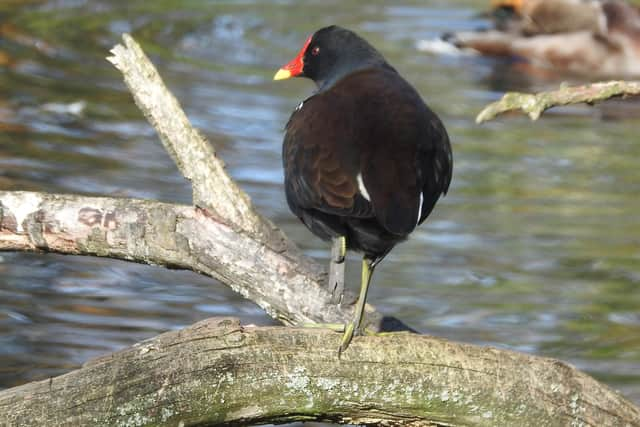

But in what is described as ‘fluid mating’, they undertake everything in-between including complicated pairing and matings in a single season. I imagine the variation depends on the birds’ habitat and both opportunities and constraints, but overall, there is much we just don’t know.
Along with many waterbirds around the world, moorhens have been hunted for their meat, eggs, and feathers in various parts of the world. Indeed, hunting pressure along with wetland habitat loss associated with urbanization and agriculture has impacted on moorhen populations.
Throughout history, along with other common waterbirds, moorhens have featured in literature, art, and folklore, often becoming symbolizing various aspects of life and of nature. Connected with fertility in some cultures, perhaps because of their obvious breeding success on ponds and around lakesides, in others, moorhens were taken as omens and portrayed as such in literature.
Because moorhens are commonplace and familiar, they have acquired various descriptions and folk-names such as ‘marsh hen’ or ‘mere hen’, both reflections of their preferred habitats.
Group names are based on behaviour and occurrence, so a group of moorhens may be a ‘plump’ or a ‘flotilla’. Less frequently used terms are a ‘meeting’, ‘cuddle’, ‘rail’, or rather rarely, a ‘tea party’. Most of these terms derive from observations of moorhens’ excitable and communal behaviour.
My first encounter with a moorhen was near my grandparents’ house in Lincolnshire but went I went back more recently, the pond on the ‘Old Lane’ to Linwood Heath had gone under arable fields. By contrast a few years ago we had a winter-resident moorhen in my Sheffield garden.
Professor Ian D. Rotherham, researcher, writer & broadcaster on wildlife & environmental issues, is contactable on [email protected]; follow Ian’s blog (https://ianswalkonthewildside.wordpress.com/) and Twitter @IanThewildside
- RELATED: Sheffield's best bits: City resident Darcie Peskir has her say
- RELATED: New heritage champion says Sheffield’s past needs stronger backing
- RELATED: 'The perfect week to welcome back Whitworth to The Star'
- RELATED: A new place for your Sheffield weekend reading is here so you make most of the city