
On the Wildside: Suddenly the wildlife garden is full of small birds!
As temperatures drop, especially at night, smaller birds are driven by the need to replenish vital body-fat. Warm-blooded birds and mammals in cold weather lose heat through their body surface.
Importantly, a smaller creature losses proportionately more heat more quickly because the ratio of surface area to body mass increases with decreasing size. This means a smaller bird or mammals loses heat and burns up energy more rapidly. The other factor that comes into play at this time of year is that day-length is much reduced and we experience long, dark, cold nights. So again, this means a longer period to use up those precious energy resources and a much reduced time-period to re-charge the body-fat batteries. The consequence in the wildlife garden is that the flocks of small birds , largely absent during the autumn period, suddenly reappear en masse. They have spent much of the post-breeding time since the late summer forming into large flocks ranging across the wider landscape of woodland edges and hedgerows but now return in numbers.
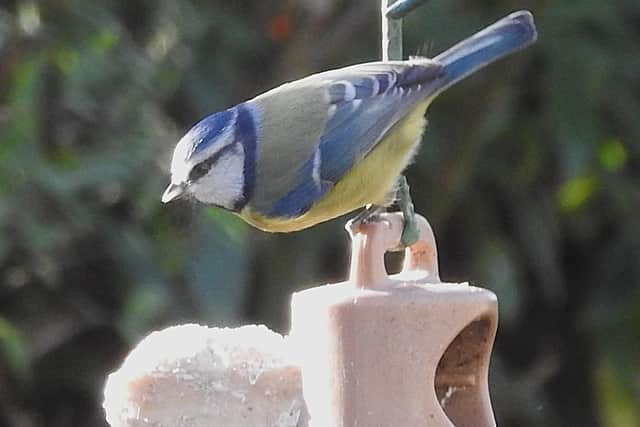

In my own garden, we had smaller flocks of birds feeding throughout the autumn but then all of a sudden, the numbers rose quickly up to say 20 or 30 blue tits, great tits, and coal tits. These were joined by groups of long-tailed tits, chattering flocks of house sparrows, and also finches. The latter are mostly goldfinches with up to 30 birds flitting in the tree-tops around the area and then dropping down to the sunflower heart feeders. Other regulars in the garden include the ever-present pair of dunnocks, our robin, and of course the bigger birds such as woodpigeons. Magpies come down in noisy flock , mostly early in the morning and are clearly wary of disturbance, and they are joined by jackdaws and carrion crows ‘assaulting’ the fat-balls and suet bars with a ‘dive-bombing’ technique. Recent weeks also saw the welcome return of groups of starlings drawn to the dried mealworm holders. Blackbirds, noticeable for their absence, are still feasting on berry-bushes in the wider countryside.
Professor Ian D. Rotherham, researcher, writer & broadcaster on wildlife & environmental issues, is contactable on [email protected]; follow Ian’s blog (https://ianswalkonthewildside.wordpress.com/) and Twitter @IanThewildside