
On the Wildside: Quite a buzz about this insect
An old television advert for hover lawnmowers had the catch-phrase ‘there’s less bother with a hover’ or something along these lines! However, it was the late Austin Brackenbury, Sheffield’s well-known hoverfly expert, who had a similar throwaway line about these insects.
The hoverflies are a fascinating group of insects boasting the remarkable ability to ‘hover’ mid-air with wings beating amazingly fast. Hoverflies are both commonplace and beneficial and are found across the British Isles and with over 280 species described to date.
Noted for their hovering almost stationary, the clue is in the name. Also, as in the example pictured, a lot of the species have evolved to mimic bees and wasps as they sport distinctive black and yellow striped patterns and other markings to ward off predators. Because they buzz and look like wasps, many people worry about stinging, but in spite of resembling such stinging insects, hoverflies neither bite nor sting. Furthermore, they are important and useful pollinators of things like fruit crops, and what’s more, the larvae of some species eat aphids (greenfly). And so, like ladybirds, they are the gardener’s friend and are good for your garden and for agriculture and horticulture too.
The species I have pictured is a truly stunning hoverfly, the hornet mimic hoverfly (Volucella zonaria), here shown at rest in the sunshine. This is a very noticeable and striking insect which, looking like a hornet, even down to the orangey colouration, and buzzing a lot, has enough about it to put off most would-be predators. These really are impressive little beasties, and despite the large size and hornet-like appearance, they of course don’t sting.
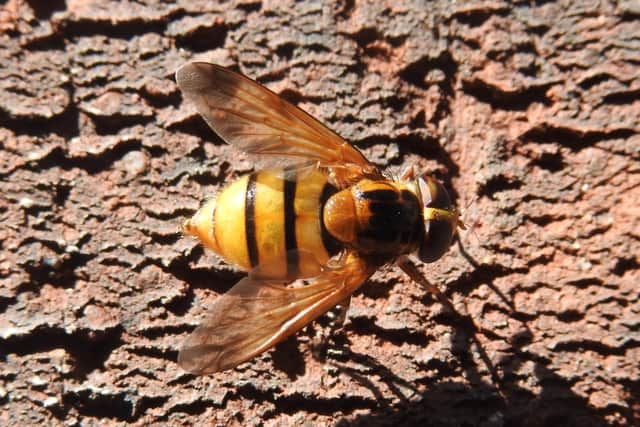

Along sunny woodland edges are good habitats to seek them out and particularly so where there are masses of brambles and common hogweed in flower. An excellent site to spot these and others is along the Old London Road in Graves Park, in the Chantreyland Meadow, or the southern edge of Waterfall Wood. With help from the J.G. Graves Charitable Trust, we are managing these areas to favour bees, butterflies, and hoverflies.
Professor Ian D. Rotherham, researcher, writer & broadcaster on wildlife & environmental issues, is contactable on [email protected]; follow Ian’s blog (https://ianswalkonthewildside.wordpress.com/) and Twitter @IanThewildside