
On the Wildside: Peregrine falcons roaming the suburbs?
Once a great rarity both nationally and regionally – because of pesticide pollution and persecution of wild birds, the peregrine falcon is now back and doing very well. Part of the reason for their increased success has been in their ability to adapt to urban living, with high-rise buildings and super-abundant street pigeons providing a good, easy living!
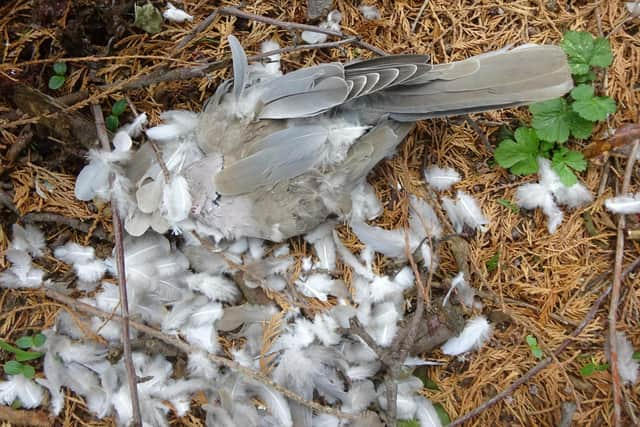
Indeed, for various reasons such as nest-robbing and disturbance in places like the Peak District, these magnificent birds do better in the city and town than in the countryside. We also have increasing populations of plump woodpigeons and more and more, these come to suburban gardens too. So, Michael Parker of Deepcar, Sheffield, drew back the curtains of his bedroom overlooking the back garden, to find a dead pigeon corpse. This was not just a scattering of feathers which, whilst indicating a ‘kill’, might be from a female sparrowhawk, a cat maybe, or even a fox. The bird was a good-sized woodpigeon, possibly a juvenile, and it was minus the head, in other words it had been decapitated. This is almost certainly the evidence and remains of a peregrine kill as they remove the head to eat the brain, which is gruesome I know. But this is a good indication of peregrine and sometime that is becoming more commonplace as their numbers grow.

The peregrine can spot a prey item like a woodpigeon as it soars high above the area. Then, having located its victim it drops with wings almost closed in a dramatic ‘stoop’ at speeds of up to around 200 mph. Needless to say, when the falcon strikes its unsuspecting victim there is no time to react or to take evasive action. Peregrines are strongly territorial around their breeding sites so numbers in the area are always restricted, but the birds breeding in the city centre and their offspring will range around a wide area in which to hunt. Immature birds will be driven out of the core territory to fend for themselves in pastures new. Here they will refine their hunting skills vital for survival.
Professor Ian D. Rotherham, researcher, writer & broadcaster on wildlife & environmental issues, is contactable on [email protected]; follow Ian’s blog (https://ianswalkonthewildside.wordpress.com/) and Twitter @IanThewildside