
On the Wildside: Nursery web spiders emerge from winter hibernation
Gradually, week by week, spring is coming, and wildlife species emerge. In local woods there are great tits, wood pigeons, and mistle thrushes singing, and more insistent with the passing days. At night, tawny owls are also vocal as they announce territorial possession. A fox echoes their calls as it cries loudly with short barks and ‘wow-wow-wow’ contact calls. In so many ways, nature shows signs of an awakening from the winter’s slumbers. Some of the emerging creatures are large and obvious, and others less so.
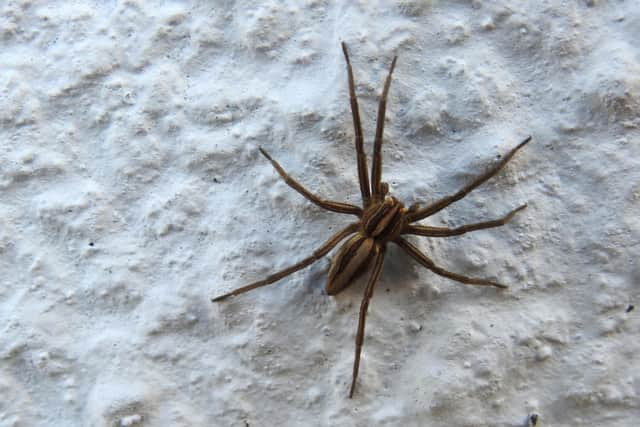
Whilst clearing dead oak-leaves from a drain on my driveway a smallish spider scurried out of the bundle of dried leaves and up the house wall. The nursery web spider (scientific name Pisaura mirabilis) spends the winter months from around November to late February in dormancy. They then emerge to continue their development as youngsters, to achieve full maturity by around May.
These are quite distinctive beasts with a narrow body (the abdomen), and stripes on both this and on the middle body or thorax. The long legs and flat posture of this spider are also quite noticeable. The species is rather variable in colouring and markings, with females generally darker, and the males more strongly marked with contrasting stripes. Their patterning and colouration vary due to polymorphism which generates patterns caused by hairs and pigments, and these change with the growth of the individual.
I think this specimen was a young male as indicated by its organs called ‘palps’ located to the sides of the head, and which are used during courtship and mating. He will have emerged as a youngster last year to grow through the summertime, followed by hibernation and then awakening in spring to become sexually mature, and his short life will end after mating during this summer.

And so, the spider reflects the wider cycle of life. They are found in many habitats such as wet meadows and marshes, but also domestic gardens and allotments. Active predators, these spiders eat flies and other small insects, using strength and agility to catch prey.
Professor Ian D. Rotherham, researcher, writer & broadcaster on wildlife & environmental issues, is contactable on [email protected]; follow Ian’s blog (https://ianswalkonthewildside.wordpress.com/) and Twitter @IanThewildside