
On the Wildside: Most years I have the siskins coming to my garden feeders
The last few weeks brought a late winter visitation by one of our prettiest little finches, the siskin. Quite diminutive and delicate these birds are smaller cousins of the much larger and bulkier greenfinches.
Most years now I have these birds coming to garden feeders from January through into March and this year is pretty typical. The first sign was a female on feeders a good way from the house but since then there have been regular males and females and they seem to get bolder over time. These are acrobatic little birds which love to feed on peanut holders (especially in the old days, when they were especially attracted to red mesh feeders), but now seem drawn to the sunflower hearts.
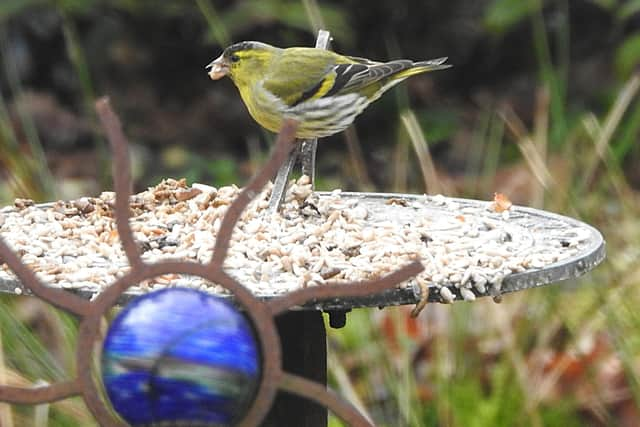

The females are rather duller in their markings whereas the males are brightly coloured with bright yellow and dark markings on the crown and the bib underneath the bill. The back, shoulders, and flanks of both sexes are markedly streaked, and the difference between males and females is the intensity of markings a colours of the former.
Siskins are often gregarious in the winter months and love to forage through birch stands such as along the moorland edge, and alders perhaps along riversides. As winter progresses, they start to visit feeders in the urban and urban-fringe areas, and they may associate with lesser redpolls; the latter being like a miniature, and heavily streaked linnet.
I think one of my garden visitors was a redpoll, but they at distance they can be confused with female siskins. Redpolls as garden visitors tend to reflect colder spells of weather as flocks are pushed down from northern Europe. During a very cold snap many years ago I even had the northern ‘Arctic redpoll’ coming to feeders.
Siskins are mostly winter migrant visitors, but increasingly they also breed in suitable habitats along woodland fringes and wooded riversides, especially where there are coniferous plantations or mixed woodlands. Their acrobatic feeding includes hanging upside-down from twigs in order to forage seeds. The yellow-green stripes, lemon-yellow wing-flash, and tail are obvious in flight.
Professor Ian D. Rotherham, researcher, writer & broadcaster on wildlife & environmental issues, is contactable on [email protected]; follow Ian’s blog (https://ianswalkonthewildside.wordpress.com/) and Twitter @IanThewildside
- RELATED: "Town is a complete shambles" - Reader's letter
- RELATED: Giant horny spiders head into Sheffield homes looking for a mate
- RELATED: Those behind decision to axe famous time signal need to turn back clock and re-think
- RELATED: Readers debate 'tourist tax' in Sheffield saying costs must not put off visitors