
On the Wildside: Looking back to the heat of the summer
Strolling through summertime wildflower meadows like the ancient, deer-park grasslands of Graves Park, it is likely that you disturbed numerous butterflies and especially meadow browns, hedge browns or gatekeepers, and various skippers.
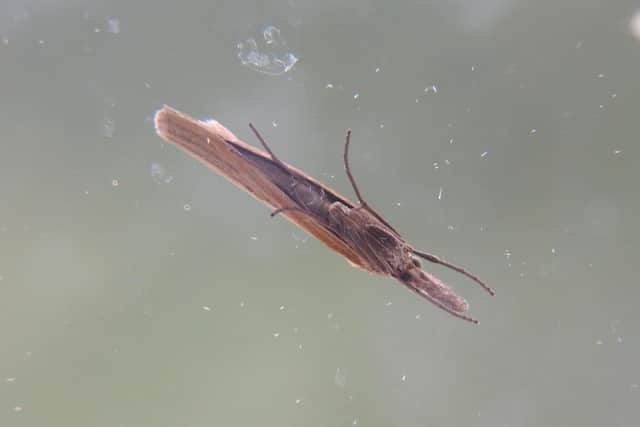
You might also have noticed day-flying moths like black and red cinnabars or the spotted burnets. However, far more abundant but often overlooked are so-called ‘micro-moths’ and especially ‘small white jobs’ or ‘small brown jobs’ to use the technical jargon, particularly the ‘grass moths’. These small creatures are members of the pyralid family which is rather large and has a diversity of species. The grass moths such as the agriphila species are noticeable as they become active when disturbed in the meadows, by you or by an animal pushing through. Otherwise, these moths are active by night and are attracted to lights and so will come to kitchen windows and the like. It was just such a moth that I photographed, and this is one of the six or so common species of grass moths. They are active from July, through the later summer, into the end of September, weather depending. Their foodplants are made up of various grasses, particularly sheep’s fescue, the larvae feeding inside the lower sections of the grass stems.
Whilst abundant in grassy habitats everywhere, these moths are not pests of any sort but are an important component of local biodiversity.
At rest, grass moths are very distinctive as they fold their wings tightly and narrowly along the line of the back, and they have rather peculiar protuberances on the front of the head, essentially like a long snout. Whilst the larvae have chewing mouthparts and are grass-feeders, the adults of some species use their long, coiled tongue (called a proboscis) to consume nectar, juices from fruit, or plant sap. However, some adult grass moths have no functioning mouthparts and so do not feed at all. As the nights draw in and the temperatures drop, then most (but not all) moths will be in their overwintering state as eggs, pupae, or in some cases, in hibernation.

Professor Ian D. Rotherham, researcher, writer & broadcaster on wildlife & environmental issues, is contactable on [email protected]; follow Ian’s blog (https://ianswalkonthewildside.wordpress.com/) and Twitter @IanThewildside