
On the Wildside: Kites flying over Norton
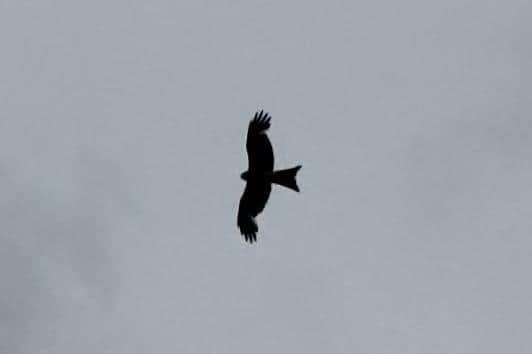
The picture this week is of a recent sighting of Red Kite over Norton by my neighbour Andrew Plant. This is in many ways a classic view to show the long tail with its distinctive fork, and the long, quite thin wings with a noticeable elbow.
Once a common sight in medieval towns these birds were welcomed as scavengers that helped clean the garbage of the unhygienic town-dwellers of that time. However, when the fashionable aristocrats in the countryside took up game hunting then the kites were deemed a serious enemy of the gamekeeper and were driven to near extinction.
By the 1970s, just a handful remained in an isolated and in-bred population in mid Wales. This was boosted by a single female introduced from Germany and soon her genes spread throughout the descendants of that population. The genetic cul-de-sac was over, and the numbers grew.
The success of the conservation scheme triggered one of our most successful and spectacular reintroduction programmes with kites released into a number of supported sites across the UK. They are now definitely on the way up and I have seen them high over my wildlife garden in Norton several years ago and have had regular reports now from across North Derbyshire.

Over the last year, I have seen at least three kites quite low over nearby Graves Park where we have a biodiversity project supported by the Graves Trust, and a heritage project funded by the National Lottery Heritage Fund. Common buzzards are now regular and clearly breeding locally, and it would be exciting to get the kites back and nesting too. This is more a matter of when it may happen rather than if it will.
Another once rare bird on the way back is the raven, and I heard one again today. They were around nearby Oakes Park in early April, and I picked up the sound of one calling though rather distant, this afternoon. I do hope they return although the granting of licenses (by Defra) for Derbyshire farmers to kill them is unhelpful, unnecessary, and unpleasant!
Professor Ian D. Rotherham is contactable on [email protected]; follow Ian’s blog (https://ianswalkonthewildside.wordpress.com/) and Twitter @IanThewildside