
On the Wildside: Cold weather is the key
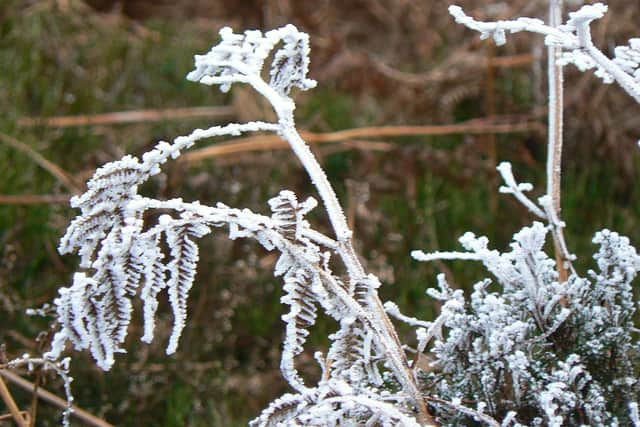
For a few months the golden-brown stems of last year’s bracken illuminate the moors and touched by frost become things of ephemeral, delicate beauty.
Gardeners especially will know that a few good, hard frosts help nature in the garden, reducing pests and diseases next summer. Similarly, for wildlife in the natural world, sharp frosts prepare some plants, and for instance, many seeds, for the spring and summertime. Fungal infections of plants and of some animals can be made worse without a really cold season during the winter.
Moreover, the tendency in recent years has seemed to be a shift towards prolonged mild, damp, rather dismal weather especially in winter, but also, sometimes in summer! These conditions are generally not good and cause problems for wildlife. Indeed, a big issue with climate change (and bear in mind that climates have always changed but there are huge concerns about the speed and direction of current trends), is one of dysfunctional nature and lack of synchronicity. It often appears that nature functions best with predictable seasons and regular cycles, and less well if these patterns become somehow displaced. An example might be the problems of pollinating insects and the flowering periods of their target flowers. If these move out of phase, then insects are short of food and flowers don’t get pollinated – both serious problems. In farming and horticulture of course, the problems extend to us because our crops potentially fail too.
Freezing conditions soon push many plants into their winter dormancy as green leaves shrivel and die, to sometimes leave the dead plant material above ground. For perennial, deciduous plants, most of the nutrients will have been extracted from the leaves and other disposable above-ground parts and stored in above-ground stems or below-growth roots and tubers etc. As the dead plant materials such as the old leaves are shed, they take with them the waste materials dumped there after a year’s growth. The old stems and leaves may also retain some functions like protecting from extreme weather the more delicate buds in young beech and oak trees.

Professor Ian D. Rotherham, researcher, writer & broadcaster on wildlife & environmental issues, is contactable on [email protected]; follow Ian’s blog (https://ianswalkonthewildside.wordpress.com/) and Twitter @IanThewildside