
On the Wildside: Blackbirds are on their way!
At this time of year, it is ‘all change’ for birdlife in our region, both in the wildlife garden and the wider countryside be it urban or rural. Winter visitors are preparing to leave, whilst resident birds are setting up breeding territories or in some cases, are ready to raise new-born offspring.
In the meantime, we are beginning to see or hear the first signs of spring and summer migrant visitors. My local robins are clearly paired up and defending their shared territory, and whilst the blue tits still feed as a flock, some birds are paired and spend time examining possible nest-sites such as suitable bird-boxes.

The thrushes mix those long-since territorial and singing loudly, like the mistle thrushes, and others such as the song thrush which have come into voice relatively recently but that are now obvious with their three-times repeated notes given from on high. They love to sing from a roof-top or the high branches of a suitable tree. Their diminutive cousins, the redwings, are still visiting gardens and flocking on park grasslands, but will soon head back northwards to breed. Their summer grounds are mostly in Iceland and Scandinavia, with just a handful of pairs breeding in northern Scotland.
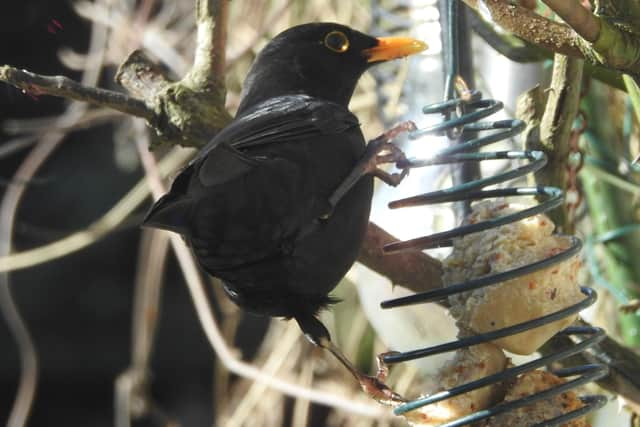
Also, a species of thrush, the blackbird, is a mix of locally resident breeders and long-distance migrants from Europe, plus a few birds coming south from summer breeding grounds in Scotland. By the end of March and into April, the winter-visiting migrants will be heading back home for the spring and summer.
The behaviour of these different groups of blackbirds does vary significantly, because the breeding pairs, on territory perhaps since December, are quite aggressively defensive of their ‘patch’. They take a dim view of uninvited intruders in their home turf and will attempt to chase off any individuals straying in.
The European migrants on the other hand, will have come over in large flocks and scoured the countryside together in search of good feeding and roosting sites. Once they return home the behaviour will of course change to become territorial.
Professor Ian D. Rotherham, researcher, writer & broadcaster on wildlife & environmental issues, is contactable on [email protected]; follow Ian’s blog (https://ianswalkonthewildside.wordpress.com/) and Twitter @IanThewildside