
On the Wildside: Another story of a bird in recovery
Back when I was a teenage birdwatcher, a good while back I accept, the marsh harrier was a very rare and declining bird of prey. Mostly restricted to fenland reedbeds, their habitats had been drained almost sacrificially to the god of intensive agriculture, petrochemical farming, and persistent pesticides.
Just a few pairs remained in surviving wetlands mostly on nature reserves like RSPB Leighton Moss at Silverdale, Lancashire, close to where I went to university. A handful of birds remained in the Norfolk Broads, Suffolk, and the north Norfolk coastal marshes, but overall were scarce and rarely sighted. I recall seeing one on migration near Hollow Meadows, west of Sheffield, whilst with my birdwatching friend, Paul Ardron. That stands out as a ‘red-letter day’.
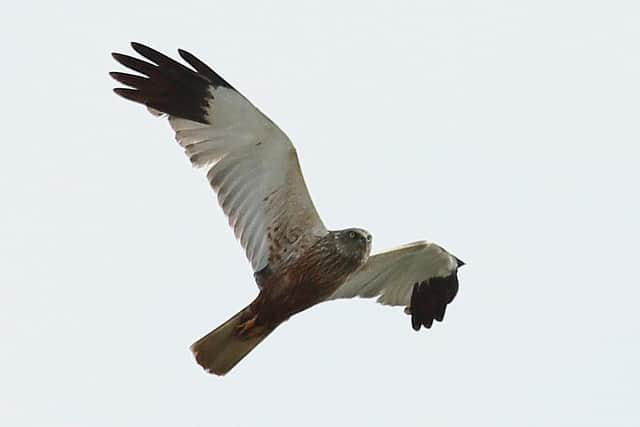

I was reminded of all this when Peter Gribbon sent a picture taken near his holiday caravan on the Lincolnshire coast, because this is a bird whose fortunes have changed dramatically. There are several reasons for its recovery, and these include a decline in the use of damaging pesticides, the creation of new wetland nature reserves, and associated improvements in habitat. However, a remarkable trigger has been the bird’s ability to adapt to the modern farming landscape and particularly fields of oilseed rape or winter wheat, which have spread far and wide across the lowland countryside. As far as the marsh harrier is concerned, these areas provide analogues for wetland reedbeds, and they have helped trigger a surprising recolonisation. From just one breeding female left in the 1970s, there are now over 500 pairs countrywide.
This is a particularly elegant and graceful bird of prey as it quarters over tall vegetation gliding with few flaps, and its wings raised in a characteristic V–shape. The females are larger and overall, are coloured chocolate brown with a honey-coloured head. Marsh harrier males, like the one pictured, have brown on the back and the wing coverts but grey on the wing secondary feathers, and also on the tail. The male’s primary feathers at the tips of the wings are dark black.
Professor Ian D. Rotherham, researcher, writer & broadcaster on wildlife & environmental issues, is contactable on [email protected]; follow Ian’s blog (https://ianswalkonthewildside.wordpress.com/) and Twitter @IanThewildside
- RELATED: Opinion: City of Culture? Sheffield is already that
- RELATED: 'The Star is here to represent the views of this city - we love to get your letters'
- RELATED: Sheffield’s children need adventure and places to play
- RELATED: 'Those objecting to the coming of the small boats are the ones with common sense'